Information
- Home
- others
To ensure the physical and mental health and quality of life of pet rabbits,scientific dietary management is crucial.This guide,taking into account the physiological characteristics of herbivores,systematically outlines the dietary composition of pet rabbits for novice rabbit owners and enthusiasts,including feeding standards for various foods,key differences between wild and domesticated rabbit diets,and precautions to avoid.It aims to provide a feeding reference that is both professional and practical.
I.Core Dietary Principles for Pet Rabbits
Rabbits are purely herbivorous animals.Their digestive system is highly adapted to plant-based foods,and they rely on a high-fiber diet to maintain intestinal motility and dental health.Based on nutritional balance and physiological needs,the daily diet of pet rabbits should strictly adhere to the following proportions:
High-quality hay:Approximately 80%,the core of the diet;
Specialized rabbit pellets:Feeded in small amounts as a supplement of trace elements;
Fresh leafy green vegetables:Added in moderation to enrich the nutritional structure;
Snacks(including fruit):Feeded occasionally,only for flavoring and interaction purposes.
In addition,pet rabbits need a sufficient amount of clean,fresh drinking water daily.It is recommended to provide both a water dispenser and a water bowl to ensure both convenience and cleanliness,preventing urinary or digestive system problems caused by insufficient water intake.
II.Scientific Feeding Guidelines for Various Foods
(I)Hay:The Core Foundation of Diet
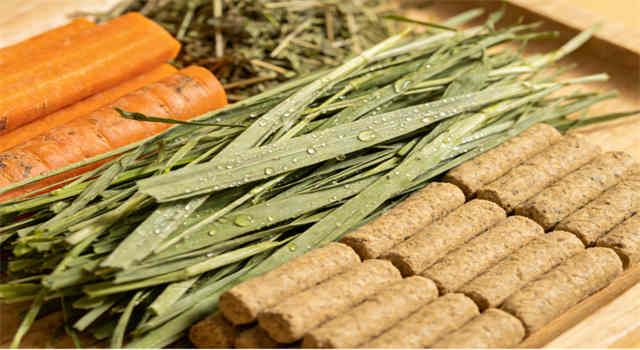
Hay is an essential food source for pet rabbits,requiring an unlimited supply daily.Its core functions are to supplement dietary fiber,promote intestinal peristalsis,and wear down continuously growing teeth through chewing,preventing problems such as overgrown teeth and malocclusion.
Suitable Hay for Adult Rabbits:Timothy hay,orchard hay,oat hay,and pasture hay are preferred.These types of hay have moderate fiber content and a nutritional ratio that meets the physiological needs of adult rabbits.
Suitable Hay for Rabbits in Special Stages:Alfalfa hay is rich in calcium,fat,and protein and is only suitable for rabbits under 1 year old,pregnant and lactating does,meeting their special needs for growth,development,and nutritional supply.
Alfalfa Hay Feeding Contraindications:Rabbits not in the above-mentioned special stages should avoid long-term feeding of alfalfa hay,which should only be used as an occasional supplement.Otherwise,it can easily lead to health risks such as bladder stones and abnormal weight gain.
(II)Rabbit Diet:A Carrier for Micronutrient Supplementation
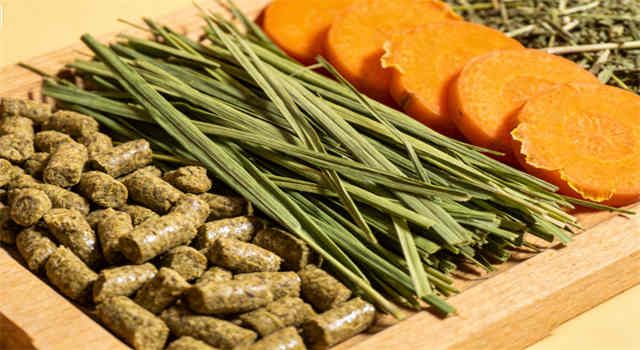
High-quality rabbit diets use high-fiber timothy hay as the main ingredient,which can accurately supplement the micronutrients lacking in hay and vegetables.However,its feeding dosage must be strictly controlled to avoid health problems caused by overfeeding.
Feeding Dosage:Calculated by body weight,for rabbits weighing 1.8-2.3 kg(4-5 lbs),the daily feeding amount is 0.7-1.3 liters(1/4-1/2 cup).Overfeeding can easily cause symptoms such as stomach discomfort,diarrhea,and obesity.
Selection Criteria:Rabbit diets with added seeds,grains,or nuts are strictly prohibited.These ingredients have excessively high fat content,exceeding the rabbit's digestive capacity and easily leading to excessive burden on the digestive system.
(III)Snacks:Strictly Controlled Proportion of Supplementary Foods
Snacks(including fruits and some vegetables)can be used for rabbit behavior training and to add novelty to their diet.However,they must strictly adhere to the principle of not exceeding 10%of their daily total food intake.Overfeeding can disrupt the balance of intestinal flora,leading to diarrhea,slowed intestinal motility,and other problems.
Fruit Feeding Guidelines
Nature:Only as occasional snacks.Fruits are high in carbohydrates and sugars;excessive consumption can easily cause anorexia,diarrhea,and bloating.
Recommended Categories:Prioritize high-fiber fruits such as pears,plums,peaches,and apples.
Precautions:Fruit pits and seeds must be removed to avoid the intake of harmful substances or the risk of choking.
Green Leafy Vegetable Feeding Guidelines
Function:Appropriate addition can enrich the nutritional structure and supplement trace elements and vitamins.
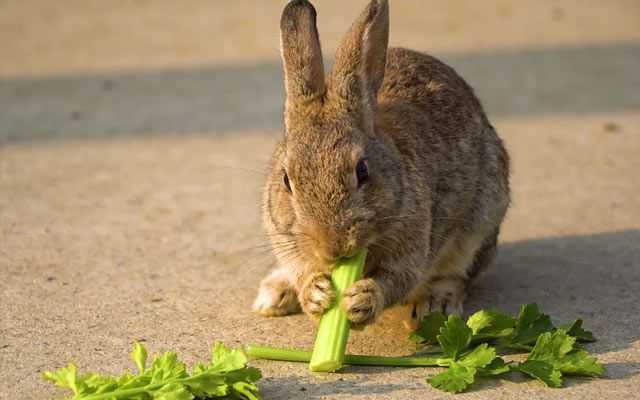
Recommended Categories:Romaine lettuce,carrot tops,chicory,basil,kale,cabbage,pumpkin,Brussels sprouts,dandelion leaves,parsley,celery,etc.
Feeding Method:After washing,cut the rabbit into appropriate sizes and feed it with hay.Gradually introduce new types of food and observe the rabbit's adaptation.
(IV)Nutritional Supplements:Special Interventions Used as Needed
Healthy pet rabbits with a balanced diet do not require additional nutritional supplements.Only when rabbits exhibit poor appetite,post-operative recovery,or weakness should a specialized nutritional supplement be chosen under the clear advice of a veterinarian.Do not add supplements blindly to avoid nutritional imbalance.
III.Dietary Differences and Precautions Between Wild Rabbits and Pet Rabbits
(I)Natural Dietary Structure of Wild Rabbits
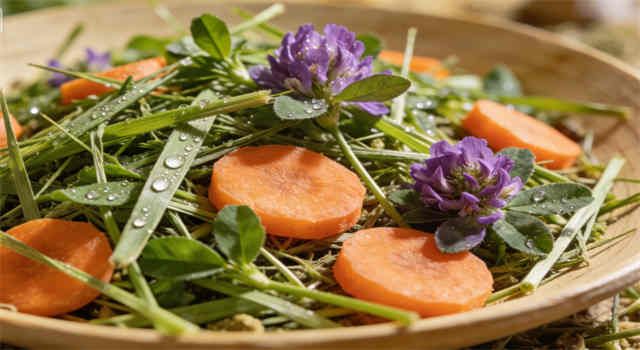
The diet of wild rabbits is centered on abundant natural pasture,supplemented with clover,wildflowers,bark,branches,and a small amount of wild vegetables.Through thousands of years of evolution,the digestive system of wild rabbits has adapted to low-nutrient-value natural plants,from which they can obtain the basic nutrients necessary for survival.(II)Core Differences Between Domestic and Wild Rabbit Diets
The diet of wild rabbits cannot meet the nutritional needs of pet rabbits.There are fundamental differences between the two,and it is strictly forbidden to adjust the diet of pet rabbits to resemble that of wild rabbits.The specific reasons are as follows:
***Nutritional Deficiency:**The nutrient density of wild plants is far lower than that of specialized pet rabbit food.Long-term feeding of wild plants can lead to malnutrition and stunted growth in pet rabbits.
***Health Risks:**Allowing pet rabbits to forage freely outdoors exposes them to pathogens carried by wild rabbits(such as rabbit hemorrhagic disease virus),ticks,and other parasites.Furthermore,outdoor plants may contain residual pesticides,herbicides,and other toxic substances,posing a risk of poisoning.
IV.Selection Criteria for High-Quality Rabbit Food and Hay
(I)Key Points for Hay Selection
***Quality Requirements:**Hay must be fresh,free from mold,soil,and twigs.The color should be a natural green to light green,with low dust content to avoid respiratory diseases caused by dust.
Grade Selection:The nutritional composition of hay varies depending on the harvest time,and selection should be based on the rabbit's physical condition:
***Second-harvest hay(harvested mid-growing season):**Balanced in protein,fiber,and fat,suitable for most healthy adult rabbits.
***First-harvest hay(harvested early growing season):**High in fiber,low in protein and fat,suitable for overweight rabbits that need weight control.
***Third-harvest hay(harvested late growing season):**High in protein and fat,suitable for underweight rabbits that need weight gain.
(II)Key Points for Selecting Rabbit Food
***Nutritional Indicators:**Fiber content should be 18%-22%or higher to meet the digestive needs of rabbits.
***Ingredient Requirements:**Free of seeds,nuts,and artificial additives(such as artificial colors,preservatives,and sweeteners).
***Freshness Check:**Check the expiration date on the packaging when purchasing.After opening,check for any musty or off-odors to avoid feeding expired or spoiled rabbit food.V.List of Foods to Avoid for Pet Rabbits
The following foods can easily cause serious health problems in pet rabbits,such as poisoning,diarrhea,obesity,and digestive disorders.Feeding them these foods is strictly prohibited:
High-sugar,high-fat foods:Chocolate;
Animal-derived foods:Meat,eggs,dairy products(rabbits cannot digest animal protein and fat);
Difficult-to-digest foods:Beans,seeds,nuts;
Processed foods:Bread,biscuits,etc.;
Poisonous foods:Avocados,mushrooms,rhubarb,onions,various poisonous plants;
Dangerous foods:Fruit seeds and pits,moldy hay or vegetables.
VI.Frequently Asked Questions
Do wild rabbits eat lettuce?
If a wild rabbit's activity area is near a lettuce garden,it may eat lettuce,but it is not a natural core food for wild rabbits.
Can pet rabbits eat apples?
Pet rabbits can eat cored apple flesh,but the feeding frequency and dosage must be strictly controlled.It should only be given as an occasional treat;excessive amounts can easily cause gastrointestinal discomfort.
Do wild rabbits eat carrots?
Wild rabbits do not usually dig up carrots(root vegetables),but they will eat carrot tops that grow on the ground.Carrots are not their regular food.