Information
- Home
- others
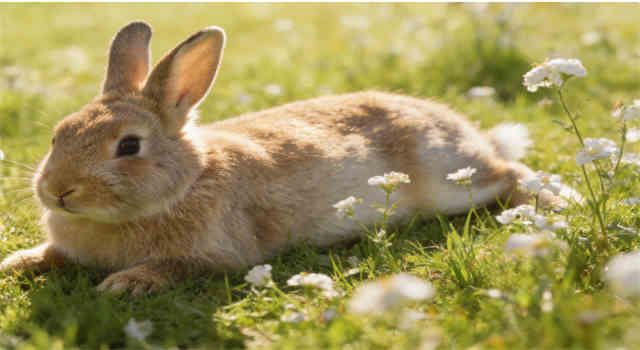
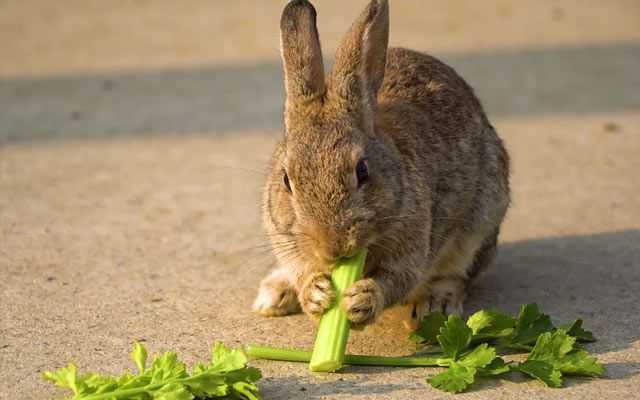
Celery is a low-calorie,high-fiber vegetable,also containing small amounts of potassium and vitamins A,C,and B.As a healthy snack beneficial to humans and many species,celery is often included in a rabbit's diet.However,many rabbit owners wonder:can rabbits eat celery?
The answer is yes:as long as it is handled properly and fed according to regulations,celery is a safe food for rabbits.Below are the key points and precautions regarding feeding celery to rabbits.
Key Points
Rabbits can safely eat celery if handled properly and fed according to regulations.
The recommended proportion of celery in a rabbit's total daily vegetable intake is between one-eighth and one-quarter.
Before feeding,be sure to thoroughly wash all parts of the celery stalks and leaves to remove any residual contaminants.
Celery should be cut into small pieces before feeding to avoid the risk of choking.
Nutritional Value of Celery for Rabbits
Celery can be used as a supplementary vegetable to a rabbit's daily diet.Its low-calorie properties are particularly suitable for rabbits that need to control their weight or are prone to obesity.However,compared to dark green leafy vegetables like spinach,bok choy,and lettuce,celery is lower in vitamins and minerals,and its nutritional value for rabbits is not particularly outstanding.
Therefore,feeding celery as a high-fiber treat is perfectly acceptable,but the amount must be carefully controlled.Overfeeding may cause rabbits to feel full,thus affecting their intake of other highly nutritious foods and failing to meet their overall nutritional needs.In conclusion,as long as it is prepared and fed properly,celery is a safe supplementary food for rabbits.
Can rabbits eat celery leaves?
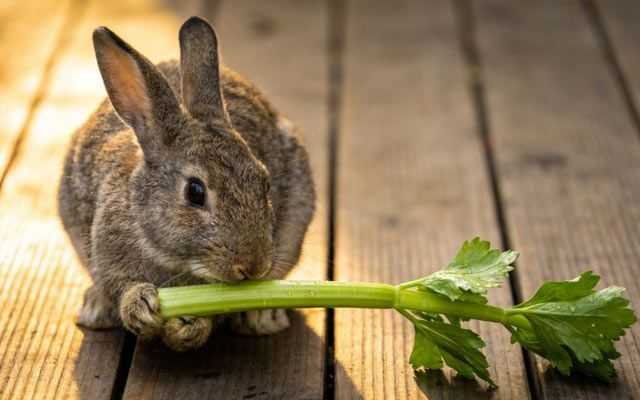
After thoroughly washing to remove pesticide residues,insects,and dirt,celery leaves can be safely fed to rabbits.The nutritional value of celery leaves is generally higher than that of celery stalks;feeding them in moderation is key,and they should be included as part of a rabbit's balanced diet.Because celery leaves are more tender and have a stronger flavor,some rabbits even prefer celery leaves to celery stalks.
Can rabbits eat celery stalks?
Celery stalks,with their crisp texture,are not only a favorite treat for humans but also appealing to rabbits.Before feeding celery stalks,it is essential to thoroughly wash them,as pesticides,fertilizers,and other harmful substances used during cultivation may remain on the stalks and leaves to ensure the rabbit's health.
Appropriate Amount of Celery for Rabbits
Hay(usually Timothy hay or orchard hay)is the staple food for rabbits.In addition,the recommended daily vegetable intake for adult rabbits is 1 cup of vegetables per 4 pounds(approximately 1.8 kg)of body weight.
The core principle of feeding rabbits vegetables is variety.It is recommended to rotate 3 to 5 different vegetables daily to provide sufficient and comprehensive nutrition while enriching their diet and preventing anorexia caused by a monotonous diet.
If,after a veterinary assessment,the rabbit is not underweight or has other health problems,celery can be included in the vegetable rotation list,making up one-eighth to one-quarter of its daily vegetable intake,usually fed several times a week.
The Correct Way to Feed Celery to Rabbits
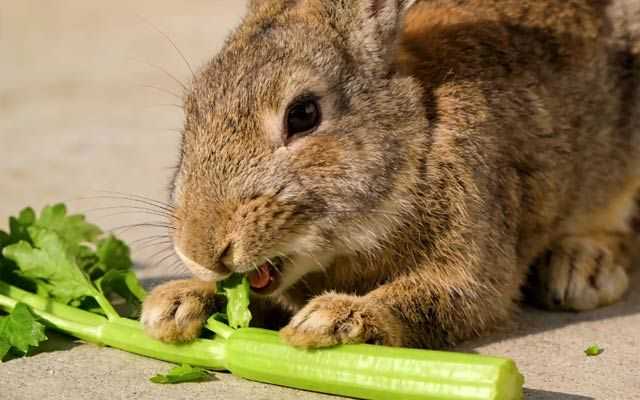
Celery should be chopped into small pieces before feeding to avoid the risk of choking.Considering the different sizes of rabbits,the recommended size for celery pieces is about 0.5 inches(approximately 1.27 cm).For young rabbits or small breeds(such as Netherland Dwarf rabbits),the celery should be chopped even smaller to ensure safe chewing and swallowing.
Most rabbit owners believe that stainless steel or ceramic food bowls are the best choice for feeding vegetables.However,some active rabbits may knock over their bowls and spill food.For these rabbits,a non-tipping bowl can be used to improve feeding convenience.
In addition,some owners will hide a small amount of vegetables in the cage or a safe indoor area(requiring constant supervision)to simulate a natural foraging scenario and increase the fun of feeding for the rabbits.
Regardless of the feeding method,leftover food should be cleaned up and the food bowl washed daily to prevent food from molding and spoiling,and to avoid health risks such as intestinal infections.
Other Vegetables Rabbits Can Eat
A rabbit's diet should be based on an unlimited supply of hay,supplemented with a small amount of high-quality rabbit pellets and appropriate amounts of vegetables.Fruits and other treats can easily disrupt the balance of gut microbiota and cause serious diseases,so their feeding amount must be strictly controlled.
Besides celery,the following vegetables can also be chosen as daily vegetable options for rabbits,forming a diverse vegetable diet:kale,chicory,dandelion leaves,mustard leaves,parsley,snow peas,romaine lettuce,red or green leaf lettuce,watercress,basil,bok choy,broccoli,coriander,clover,red chicory,beetroot,carrot leaves,and turnip leaves.
It is recommended to consult a veterinarian to customize the most suitable dietary plan based on the rabbit's breed,age,and health condition.