Information
- Home
- others

Guinea pigs can occasionally eat small amounts of bananas as a treat,but because bananas are high in sugar,the amount fed must be strictly controlled."Can guinea pigs eat bananas?"This is a common concern for many owners.Bananas are a favorite food for most pets,and guinea pigs generally accept them readily;feeding them in moderation is safe for them.It is crucial to emphasize that before introducing any new food to guinea pigs,you should consult a veterinarian to assess food compatibility and feeding plans.
I.Key Points
-Guinea pigs can eat bananas,but due to their high sugar content,only small amounts should be given,and excessive amounts are strictly prohibited.
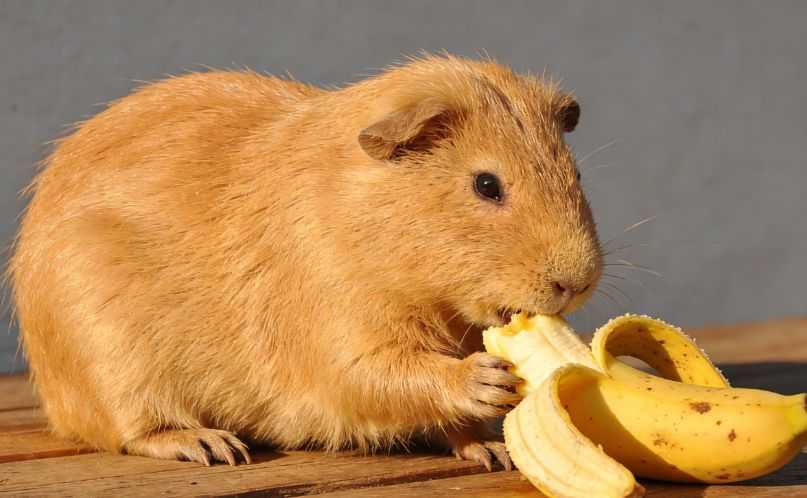
-Bananas are rich in Vitamin C,potassium,and dietary fiber,and can be used as a nutritional supplement,but they cannot replace specialized nutritional supplements or a balanced diet,and should not be used as a staple food.
-Banana peels can be fed in moderation,but they must be thoroughly washed to remove any residual pesticides,fertilizers,or other harmful substances to avoid poisoning.
-Some guinea pigs may be allergic or intolerant to bananas.If you notice symptoms such as skin swelling,itching,or gastrointestinal discomfort in your guinea pig,stop feeding bananas immediately and contact a veterinarian for treatment.
-The safe feeding standard is no more than three times a week,with only a thin slice of banana each time.If other fruit snacks have already been given that day,the amount should be further reduced.
II.Benefits and Potential Risks of Bananas for Guinea Pigs
(I)Main Benefits
Bananas have certain health benefits for guinea pigs.Their most prominent advantage is that they are an excellent natural source of vitamin C and potassium.Potassium,as a key electrolyte,helps maintain the normal physiological function of guinea pig organs and stabilize blood composition.Guinea pigs cannot synthesize vitamin C themselves and must obtain it through their diet;bananas can serve as a supplementary source of this nutrient.
In addition,the dietary fiber in bananas can promote intestinal peristalsis in guinea pigs and help improve digestive function.However,it should be noted that excessive intake of dietary fiber may have the opposite effect,causing diarrhea,bloating,and other gastrointestinal discomfort.Therefore,the amount fed should be strictly controlled.
(II)Potential Risks
The core drawback of bananas is their high sugar content,a major reason why guinea pigs love them.Because guinea pigs have a low tolerance for sugar,excessive sugar intake can easily lead to obesity,gastrointestinal disorders,and other problems.Long-term overfeeding may also increase the risk of metabolic diseases.Therefore,"moderation"is the core principle of banana feeding.It is recommended to feed them bananas every 3-4 days,and only a small amount of pulp each time.
III.Feeding Recommendations for Banana Peels
Most veterinarians agree that guinea pigs can eat banana peels in moderation,but the same moderation principle as with the pulp must be followed,and proper handling is essential.If banana peels are chosen as the feeding method,the bananas must be thoroughly washed repeatedly to remove any pesticides,fertilizers,or other chemicals that may remain from the planting and transportation process—these substances are highly toxic to guinea pigs and can be life-threatening in severe cases.At the same time,labels,tape,and other debris on the banana surface must be completely removed to prevent guinea pigs from accidentally ingesting them and causing intestinal obstruction.
IV.Allergic Reactions and Management
Guinea pigs are less likely to be allergic to bananas,but it's not entirely impossible.Owners should be alert to two typical allergic reactions:
-Anaphylactic shock:This manifests as sudden swelling of the throat,leading to suffocation,difficulty breathing,and other acute conditions.In such cases,the guinea pig must be taken to the vet immediately;delaying treatment may result in death.
-Gastrointestinal upset and skin itching:The former can manifest as diarrhea,vomiting,and loss of appetite,while the latter often presents as skin redness,itching,and hair loss.If not addressed promptly,these symptoms may worsen.
Regardless of the type of adverse reaction,immediately stop feeding bananas and consult a veterinarian to develop a targeted care and treatment plan based on the symptoms.
V.Safe Feeding Methods and Dosage
(I)Feeding Dosage
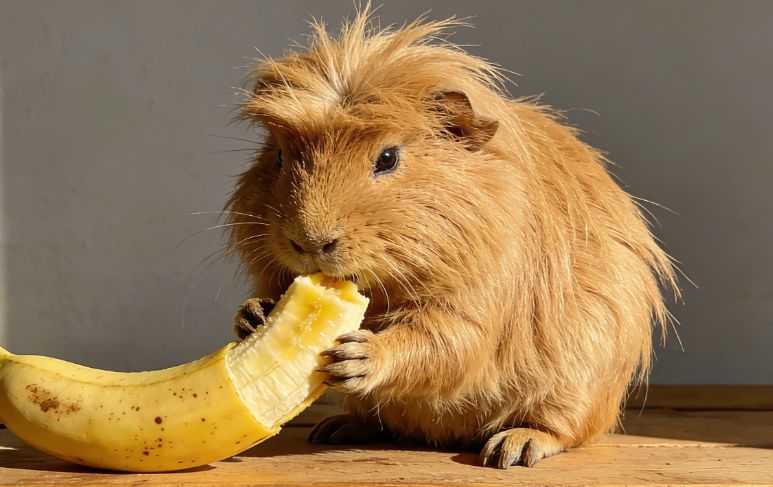
The total percentage of fruit and snacks in a guinea pig's diet should be controlled below 5%.Excessive intake of sugar,carbohydrates,or dietary fiber may lead to diarrhea,obesity,diabetes,and other problems.Generally,each guinea pig should only eat one banana at a time,and feeding should not exceed three times per week to avoid overburdening its metabolism.(II)Feeding Methods
Freeze-dried and cooked bananas lose significantly their nutritional value and may cause gastrointestinal upset due to changes in processing methods;therefore,they are not recommended for feeding.It is recommended to use fresh,ripe bananas,cut into thin slices or small cubes approximately 1.25 cm thick.This makes them easier for guinea pigs to eat and slows down their eating speed.
Most guinea pigs prefer to eat bananas from their usual food bowl or foraging bowl.This increases the enjoyment of eating and prevents choking caused by eating too quickly.Frozen bananas can be given as an occasional treat,but extra caution is needed—frozen banana pieces are harder and may pose a choking risk.Before feeding,ensure the pieces are small enough.
When introducing any new food for the first time,closely observe the guinea pig's condition throughout the process,even if the guinea pig seems fine while eating regular food.Ensure all food pellets are of appropriate size to avoid choking risks.Typical symptoms of guinea pig choking include drooling,gagging,and coughing.In severe cases,suffocation may occur due to oxygen deprivation.If these symptoms appear,immediate first aid and veterinary care are necessary.
VI.Guinea Pig Dietary Recommendations
A guinea pig diet should be centered around hay.Timothy hay is the most commonly used type.Ensure guinea pigs have unrestricted access to high-quality guinea pig hay.Insufficient or poor-quality hay can lead to excessive tooth growth and intestinal obstruction.
You can supplement a guinea pig's diet with 1-2 tablespoons of high-quality guinea pig pellets daily as a nutritional supplement,but this should not replace the core role of hay.
Besides bananas,other fruits and snacks that guinea pigs can occasionally eat include cantaloupe,apples,strawberries,blueberries,and oranges,following the same principle of feeding small amounts.Approximately one cup of fresh vegetables should be provided daily;common suitable varieties include parsley,romaine lettuce,leaf lettuce,carrots,clover,and dandelion leaves.It is recommended to rotate the types of vegetables regularly to ensure a balanced diet.
VII.Frequently Asked Questions
1.Can guinea pigs eat bananas every day?
Daily feeding is not recommended.Bananas have a high sugar content,and long-term daily feeding can lead to obesity,gastrointestinal disorders,and may even cause chronic metabolic diseases such as diabetes in guinea pigs.The safe feeding amount is no more than three times a week,with only one thin slice of banana each time.
2.Can guinea pigs eat banana chips?
It is recommended to avoid feeding them banana chips.Commercially available banana chips are often processed through frying and sugar coating,resulting in excessive fat and sugar content,making them unsuitable for guinea pigs.Even sugar-free dehydrated banana chips have a high sugar concentration,which may cause indigestion and bloating in guinea pigs.
3.Can young guinea pigs eat bananas?
It is not recommended.Young guinea pigs have underdeveloped digestive systems and are highly sensitive.Their diet should consist of hay,fortified pelleted feed,and leafy green vegetables.It is recommended to wait until they reach adulthood and their digestive system is stable before introducing small amounts of bananas or other fruits.
4.Can guinea pigs eat banana leaves?
It is generally not recommended.Banana leaves may contain pesticide residues and have low digestibility.Their nutritional value is far less than that of safe and suitable leafy green vegetables such as parsley and dandelion leaves.Feeding them banana leaves has limited benefits and poses safety risks.