Information
- Home
- others
Cockatiels are intelligent,sociable,and gentle,making them ideal pets for many families.With proper socialization training,cockatiels easily establish close relationships with humans and enjoy daily petting and interaction.
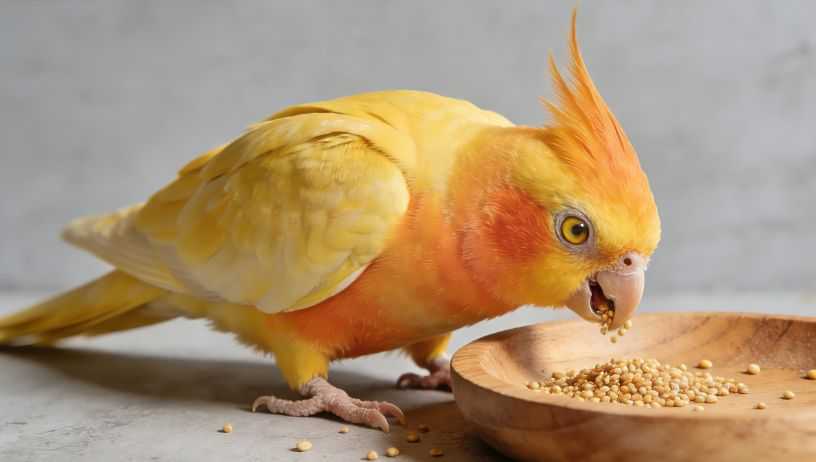
Female cockatiels are continuous egg-laying birds.If not kept with a male,they will typically lay unfertilized eggs every other day.The egg-laying process depletes the female's body of key minerals and calcium,potentially leading to dystocia(difficult labor).Dystocia is a serious condition where the female cannot expel eggs normally.If this occurs,the bird should be taken to a veterinary hospital immediately.
Cockatiels have sensitive respiratory systems.During their care,they should be kept away from items that may release toxic fumes,such as electrical appliances with non-stick coatings,candles,air fresheners,and various aerosol sprays.
The ideal cage size for a single cockatiel should be at least 24 inches(approximately 60 cm)long,24 inches(approximately 60 cm)wide,and 30 inches(approximately 76 cm)high.The spacing between the cage bars should be no more than half an inch(approximately 1.3 cm)to prevent the parrot from escaping or getting its head or legs stuck in the bars.
The cage must provide sufficient space to allow the cockatiel to comfortably stretch its limbs and flap its wings.If conditions permit,a larger cage should be provided to meet its activity needs.
Homemade cages or any cages made of wood or galvanized wire are not recommended.These materials may expose the cockatiel to toxic chemicals,which,if ingested,can easily cause serious health problems.
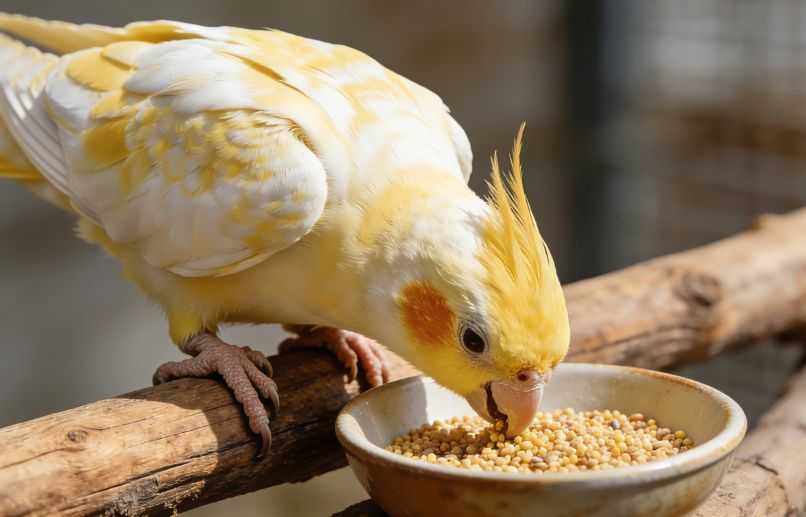
Cockatiels have a relatively diverse diet,which may include birdseed,pellets,vegetables,fruits,and small,occasional treats.During their captivity,ensure that the cockatiel has access to fresh,clean drinking water at all times.
Owners should be careful not to feed their cockatiels food from their own mouths or food bowls.Human mouths contain various microorganisms that can cause illness in cockatiels.
A balanced diet for cockatiels should include high-quality pelleted food,specifically formulated for them.Nutritionally complete pelleted food should comprise 60-70%of their daily diet.
The amount of vegetables,fruits,and other table foods should be strictly controlled,not exceeding 30%of their total daily diet;treats(including seeds)should not exceed 10%of their total diet to avoid overfeeding and affecting their normal eating and health.
Cockatiels can eat most common vegetables,but onions and garlic should be avoided.Most fruits can be given as supplementary food,but avocados and any fruits with pits should never be given to cockatiels.
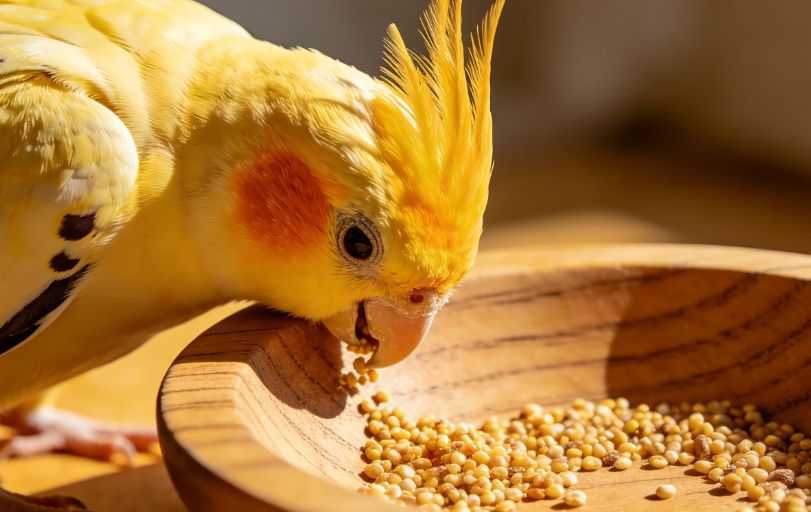
Fortified seeds and millet can be fed to cockatiels as treats.Cockatiels will remove the seed coat themselves before eating,so there's no need to provide grit to aid digestion.
It is crucial that any uneaten fruits and vegetables be discarded after 10 hours.Such food spoils easily and may cause infectious diseases if ingested by the cockatiels.
Drinking water should be changed daily to ensure freshness and cleanliness,preventing illness caused by poor water quality.
Cockatiels must never be given chocolate,caffeine,or alcohol,as these substances are toxic and can cause serious illness or even death.
Do cockatiels require meticulous care?
Compared to other birds,cockatiels are not particularly difficult to care for and do not require overly meticulous care.However,it is important to understand that they require a significant amount of attention from their owners and a diverse living environment to ensure their health and longevity.If improperly cared for or fed an unbalanced diet,cockatiels will develop health problems much faster than other non-avian pets.They are also more sensitive to neglect and are highly susceptible to various health risks due to inadequate care.
What items should be provided in a cockatiel's cage?
A cockatiel's cage should be equipped with various perches,a swing,a food bowl,a water bowl,and a bird bath(if daily bathing is not provided elsewhere).Additionally,various toys,especially foraging toys,should be provided to meet their activity and psychological needs and prevent boredom-related abnormal behaviors.
Do cockatiels like to be held?
Cockatiels are highly social animals and enjoy being with their owners.They usually follow their owners and are willing to stay in their hands for extended periods.However,compared to being held,they prefer to perch on their owners;this behavior is closer to a hug between cockatiels and is a way for them to express affection.