Information
- Home
- others
Dehydration is a physiological state in which the body loses more water than it ingests,leading to an imbalance in the body's water balance.Sugar gliders,as small mammals with unique dietary habits,are often affected by the misconception among some owners that they only need to be fed pelleted food,making dehydration a common health problem in sugar glider farming.It is crucial to emphasize that any signs of dehydration should not be ignored.If dehydration symptoms are not addressed promptly,a sugar glider may become completely dehydrated and die within 12 hours.
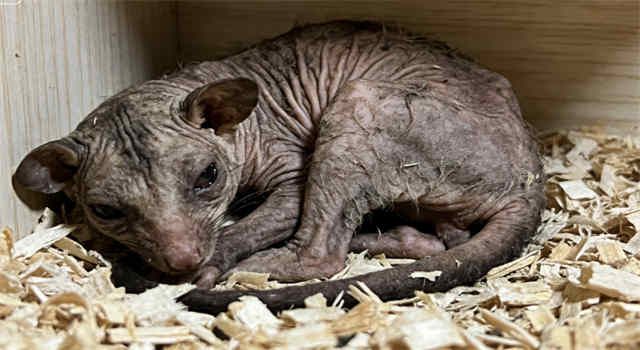
If an owner suspects their sugar glider is dehydrated,they should immediately contact a professional veterinarian for diagnosis and treatment.Do not attempt to treat it yourself,as this may delay proper care.
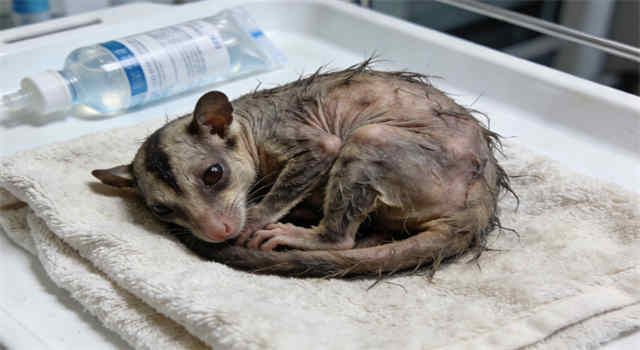
Healthy sugar gliders are typically active and energetic,with agile limbs and good climbing and grasping abilities;bright,clear eyes;a moist nose;healthy pink gums;smooth,glossy fur;and elastic skin.If a sugar glider exhibits any of the following symptoms,it may be dehydrated,and a veterinarian should be contacted immediately:
-Dry nasal and oral mucosa,lacking moisture;
-Dull,sunken eyes with a listless expression;
-Lethargy,significantly reduced activity,and sluggish response to external stimuli;
-Weakened limbs,unable to climb or grasp objects normally;
-Loose,inelastic skin that does not easily spring back after being pinched;
-Abnormal respiratory rate,including rapid,weak,or irregular breathing;
-In severe cases,neurological abnormalities such as seizures may occur.
Causes of Dehydration in Sugar Gliders
(I)Unsuitable Habitat Temperature
The suitable temperature range for sugar gliders is 60–90 degrees Fahrenheit(approximately 16–32 degrees Celsius),with 27–31 degrees Celsius(80–88 degrees Fahrenheit)being the optimal growth temperature.When habitat temperatures remain consistently below 16 degrees Celsius or above 32 degrees Celsius,sugar gliders will exhibit decreased activity,reduced appetite,and decreased water intake.Prolonged exposure to such conditions can easily lead to dehydration.
(II)Improper Diet
An unbalanced diet or insufficient fluid intake is one of the main causes of dehydration in sugar gliders.Diarrhea in sugar gliders accelerates water loss.Furthermore,their diet should follow a specific ratio:approximately 50%should consist of plant-based sugars,preferably tree sap,nectar,or commercially available artificial nectar products;the remaining 50%should include various insects sprinkled with calcium powder,commercially available pellet feed,and small amounts of fresh fruit,nuts,or vegetables.Nutritional imbalances caused by an unbalanced diet can also indirectly lead to dehydration.
(III)Insufficient Water or Inability to Drink Water
Sugar gliders require a large daily intake of water to maintain normal metabolism.It is recommended to provide at least two independent water sources in the enclosure.Hanging water bottles are an ideal water supply method,but they require daily inspection and cleaning:the water outlet at the top of the bottle is prone to buildup of dirt or mechanical blockage,leading to poor water flow and failing to meet the sugar glider's drinking needs.Keepers should regularly check this area to ensure the sugar glider can easily access drinking water.
(IV)Disease Factors
Various diseases causing gastrointestinal dysfunction,such as vomiting and diarrhea,can lead to rapid water loss in sugar gliders,resulting in dehydration.Normally,a sugar glider's feces are similar in consistency to toothpaste;if the feces are wet,thin,or watery,the glider should be taken to a veterinarian immediately to determine the cause.
Veterinary Diagnosis of Dehydration in Sugar Gliders
The veterinary diagnosis of dehydration in sugar gliders mainly consists of two stages:preliminary physical examination and further auxiliary examinations.The specific procedure is as follows:
(I)Physical Examination
The veterinarian will first conduct a comprehensive physical examination of the sugar glider,focusing on the condition of its eyes,mouth,nose,and fur texture to preliminarily determine signs of dehydration.Simultaneously,a simple skin"tent test"can be used to assess the body's water content:gently pinch the skin between the sugar glider's shoulder blades and quickly release it.If the skin remains erect in a"tent"shape and does not return to its original state within 1-2 seconds,dehydration is clearly confirmed.
(II)Auxiliary Diagnostic Examinations
If the initial examination cannot determine the degree of dehydration or rule out potential causes,the veterinarian will sedate the sugar glider(to minimize its stress response)and conduct further examinations:X-rays can rule out potential diseases that may cause dehydration,such as pneumonia or internal masses;simultaneously,the veterinarian may recommend blood tests such as hematocrit(PCV),complete blood count(CBC),and blood biochemistry to determine the degree of dehydration and whether there are complications such as internal organ damage.
Treatment of Dehydration in Sugar Gliders
(I)Home Emergency Treatment(Before Veterinary Consultation)
Before taking the sugar glider to the veterinarian,the owner can perform emergency rehydration at home,preferably with a glucose solution.This solution is easy to prepare:dissolve 1 part regular honey(do not use raw or unfiltered honey)in 10 parts warm water,for example,half a teaspoon of honey mixed with 5 teaspoons of warm water.If honey is unavailable,Gatorade®or Pedialyte®can be used as a substitute.It is important to note that the amount of fluid replacement should be determined based on the sugar glider's weight and degree of dehydration.It is recommended to consult a veterinarian in advance to avoid overfeeding and causing discomfort.

(II)Veterinary Treatment
After examination and diagnosis,the veterinarian will administer electrolyte solutions to the sugar glider via injection to quickly correct dehydration and restore water and electrolyte balance.For complications or potential causes of dehydration,the veterinarian may prescribe appropriate medications,such as antibiotics,antidiarrheals,and deworming medications.Some medications can be injected on-site by the veterinarian,while most oral medications need to be purchased by the owner and administered according to the veterinarian's dosage and frequency.In addition,the veterinarian will conduct a comprehensive investigation and targeted treatment of any potential causes of dehydration to prevent recurrence.
Recovery and Daily Management of Sugar Glider Dehydration
The recovery period for sugar gliders after dehydration varies significantly from individual to individual,and full recovery usually takes a considerable amount of time.Keepers can help sugar gliders recover faster and prevent dehydration recurrence through scientific home care and daily management:
(I)Daily Care Points
Provide sugar gliders with at least two clean drinking water sources daily.A combination of shallow bowls and hanging water bottles can be used.Clean and change the water sources regularly to avoid contamination.Keep the enclosure,nest box,and food bowl clean and hygienic,and disinfect them regularly.If fresh food remains uneaten for 2-3 hours,remove it promptly to prevent bacterial growth and gastrointestinal diseases,which can indirectly lead to dehydration.It is important to note that sugar gliders are nocturnal animals;their environment should maintain a regular diurnal rhythm,avoiding factors such as light and noise that could interfere with their normal rest and eating/drinking.
(II)Supplemental Feeding
If a sugar glider's appetite decreases and it is unable to eat independently due to dehydration,artificial feeding is necessary.Commercially available sugar glider-specific feed and nutritional supplements can be used,fed slowly using a needle-free syringe or dropper.Alternatively,commercially available rehydration feed or a homemade modified Bourbon's diet can be prepared.If properly formulated,this diet can meet the nutritional needs of the sugar glider during its recovery period.Consult a veterinarian for specific preparation methods.
(III)Long-Term Health Management
Early intervention and treatment are crucial for the rapid recovery of sugar gliders from dehydration.Prolonged dehydration without effective correction can easily lead to various complications,such as urinary tract diseases(bladder infection,urinary crystals,urinary tract stones,etc.),kidney damage,and liver disease.These diseases are often lifelong,requiring long-term medical management.Therefore,owners need to closely monitor the daily condition of their sugar gliders,take them for regular checkups,detect abnormalities promptly,and intervene to reduce the risk of dehydration and various complications.