Information
- Home
- others
Pigeons are elegant and gentle birds,considered symbols of peace in many cultures.This guide outlines the basic care requirements for several breeds of pigeons,including the Ring-necked Dove and the Diamond Dove.
Pigeons and doves belong to the Columbidae family.Although hundreds of pigeon species are known,the Diamond Dove and the Ring-necked Dove are two of the most common pet pigeons.
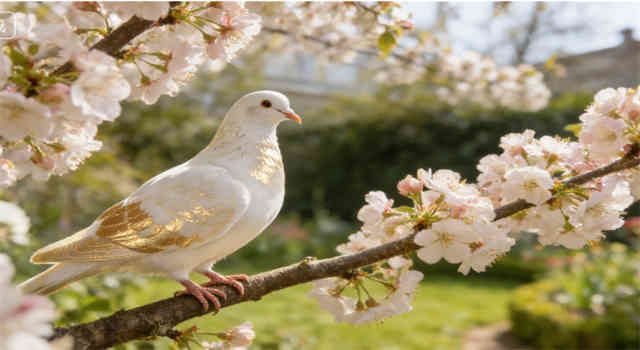
The Diamond Dove is native to Australia.It has bluish-grey plumage with white spots on its wings and a red ring around its eyes.
The Ring-necked Dove is native to Africa.It has light brown and white striped plumage and a striking black ring around its neck.Compared to the Diamond Dove,the Ring-necked Dove is generally larger and more robust.
In sunny weather,pigeons can thrive in enclosed outdoor aviaries.However,it's important to note that pigeons have almost no natural defenses against predators such as hawks and snakes.Therefore,it is crucial to ensure that any outdoor space where pigeons are kept is safe and secure,preventing them from being attacked by predators.
I.Dietary Guidelines for Pet Pigeons
Pigeons primarily feed on grains and seeds,but also enjoy various supplementary foods such as leafy green vegetables,insects,or fruits,which can be given occasionally as treats.During the breeding season,pigeons may prefer boiled eggs to supplement calcium and meet their reproductive needs.Furthermore,pigeons should always have access to fresh,clean drinking water.
Pet owners should be careful not to feed pigeons food from their own mouths or food dishes.Microorganisms in the human mouth can cause illness in pigeons and harm their health.
A nutritionally balanced pigeon diet should include the following food groups:
(I)High-quality pelleted feed specifically formulated for pigeons
Nutritionally balanced pelleted feed should make up at least 60%-70%of the pigeon's daily diet,providing all the nutrients needed for growth and development.
(II)Digestible grit(made from crushed oyster shells)
Digestible grit acts as a calcium supplement,helping pigeons lay eggs healthily and develop their bones.It is recommended to place the digestible grit separately in a food bowl and feed it to them in measured amounts daily.
(III)Indigestible Grit
Unlike parrots,pigeons swallow seeds whole,so only a small amount of indigestible grit is needed to help them digest the seed coat in their stomachs.Note that excessive feeding of indigestible grit may lead to malnutrition,intestinal obstruction,and other problems.
(IV)Snacks,Vegetables,and Fruits
Snacks should not exceed 10%of a pigeon's daily diet.When feeding fruits and vegetables,be sure to chop them into small pieces,and prioritize soft varieties.Suitable snacks include chopped leafy greens and chopped orange and yellow vegetables(such as sweet potatoes,pumpkins,and carrots).
(V)Small Seeds
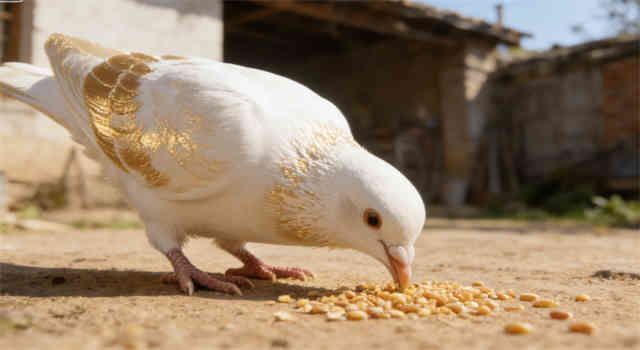
Small seeds(such as millet,canary seeds,hemp seeds,sorghum,and wheat)can be occasionally fed,along with grit supplements.However,it should be understood that seeds are not nutritionally complete and should not be a primary food source for pigeons.
(VI)Other Precautions
Small amounts of hard-boiled eggs can be occasionally given as snacks;drinking water should be changed daily to ensure freshness and cleanliness.
Pigeons must be strictly prohibited from eating avocados,fruit seeds,chocolate,caffeinated foods,and alcoholic beverages.These foods are toxic and may cause serious illness or even death in pigeons.Owners should also avoid feeding them high-salt,high-fat snacks.Furthermore,any uneaten fruits and vegetables should be discarded within 10 hours to prevent spoilage;if ingested by pigeons,they may cause infection.
II.Pigeon Care Tips
(I)Utensil Use Taboos
Avoid using non-stick cookware and other utensils with non-stick coatings(such as those made of Teflon™).Non-stick coatings contain polytetrafluoroethylene(PTFE)polymers,which release colorless and odorless fumes when heated,potentially life-threatening if inhaled by pet birds.
(II)Outdoor Activity Management
Piglets can be allowed to roam outside their cages daily to help them develop social behaviors.However,they must be supervised while outside to prevent them from colliding with objects and injuring themselves.All open doors and windows should be closed,mirrors covered,and ceiling fans turned off to eliminate safety hazards.
(III)Wing Trimming Precautions
-Trimming wings can temporarily prevent pigeons from gaining lift and flying away;
-Proper wing trimming allows pigeons to land safely without lift;
-Only professionally trained personnel or those trained in feather trimming should trim pigeon wings.Incorrect trimming methods may cause serious injury to the pigeon;
-If done correctly,trimming the outermost"flight feathers"can effectively prevent the pigeon from accidentally flying away and getting injured;
-Pet owners should consult a veterinarian before attempting to trim their pigeon's feathers;
-Because feathers regrow,wing trimming needs to be repeated every few months.
(IV)Bathing and Care
The water bowl should be large enough to ensure the pigeon can bathe properly.For pigeons that do not bathe themselves frequently,their bodies can be gently sprayed with warm water in a clean spray bottle several times a week to help them clean themselves.
(V)Nail and Beak Care
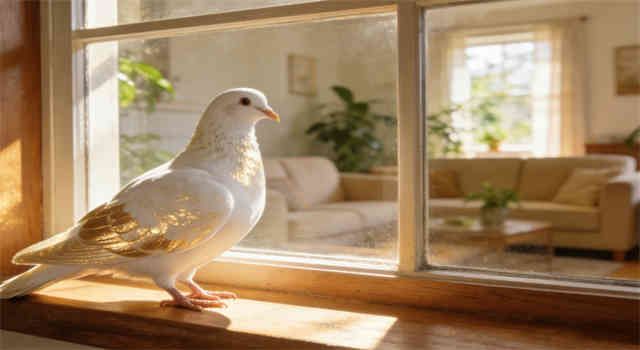
Pigeon nails need to be trimmed as needed based on their growth.The frequency of trimming can be adjusted between several weeks and several months.Nail trimming should be performed by a trained professional,avian veterinarian,or other personnel trained in avian nail trimming to avoid injury.If bleeding occurs during trimming,styptic powder can be used to quickly stop the bleeding.
Most pigeons do not require beak trimming;their daily activities maintain a healthy beak.However,some underlying diseases(such as liver disease)or deformities caused by trauma may lead to abnormal beak growth.In such cases,prompt diagnosis and treatment by an avian veterinarian are necessary.
III.Pigeon Temperament and Behavioral Characteristics
Some pigeons will gradually adapt to their owner's gentle stroking over time,while others prefer solitude.Pet owners can enjoy watching pigeons and listening to their melodious cooing.It should be noted that pigeons are not suitable as pets for children who enjoy petting and cuddling.
IV.Characteristics of Pigeon Calls
Unlike parrots,pigeons do not make screeching or hissing sounds,but they do emit a continuous"cooing"sound,which is more noticeable,especially in group settings.