Information
- Home
- others

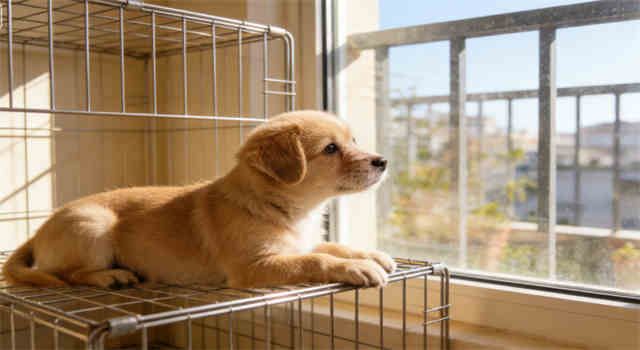
The complexities of taking puppies outside far exceed the expectations of most new pet owners.While most owners hope to take their puppies out of the house as early as possible to meet other dogs and complete socialization training,the external environment does pose many potential risks to puppies.
The most significant concern is that puppies may contract diseases from other dogs or the environment.Some of these diseases are fatal,and currently,there are no effective treatments other than supportive care.Therefore,minimizing the risk of infection for puppies is one of the core goals of pet ownership.
For these reasons,it is not recommended to take puppies to public places before they have completed all their vaccinations.
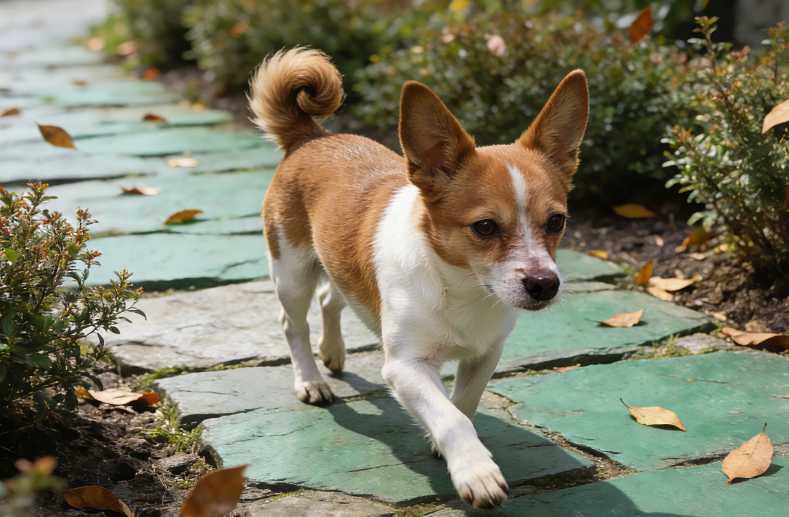
However,this principle often leads to a dilemma:socialization training for puppies needs to begin as early as possible,with the critical period for socialization being 3 to 12 weeks of age;while puppies typically do not complete all their vaccinations until 18 to 22 weeks of age.This raises the core question:When is it safe for puppies to interact with other dogs and engage in social activities?
The following provides a detailed overview of core knowledge regarding puppy safety and socialization training,offering a scientific reference for new owners.
Key Points
-Puppies should not be taken to public places for two weeks after completing their final round of core vaccinations(usually between 18 and 22 weeks of age).
-Generally,your backyard is a safe area for puppies if no sick animals have been seen recently.
-Never allow puppies to interact with dogs whose vaccination history is unclear,nor should they be taken to areas where sick dogs may have been seen recently,such as dog parks.
-Veterinarians can provide safe socialization advice before the completion of vaccinations,based on the puppy's specific situation,to help with the scientific implementation of socialization training.
When can puppies go outside for the first time?
It is not recommended for puppies to go to public places before completing all their vaccinations.
While there are individual differences in the timing of puppy vaccinations,the core limiting factor is the completion of vaccines against canine distemper,canine adenovirus,canine parainfluenza,and canine parvovirus(DHPP).These types of vaccines are typically booster shots every three weeks until the puppy is 16 to 20 weeks old.
A puppy is considered fully vaccinated two weeks after completing its final vaccination and can then safely go outside.For example,if a puppy completes its final vaccination at 16 weeks,it can safely go outside at 18 weeks;if the last vaccination was at 17 weeks,it can safely go outside at 19 weeks.
Furthermore,if no sick animals have been present in your backyard in the past year,the puppy can safely roam within that area.
It is important to clarify that there is a fundamental difference between a backyard and a public park:a backyard is usually a controlled environment(especially a fenced backyard),while in a public park,any dogthat comes into contact with the puppy may carry pathogens,and sick dogs may have already contaminated the park environment.
Public parks and similar locations can harbor a variety of diseases,including:
-Canine parvovirus
-Canine distemper virus
-Kennel cough(caused by parainfluenza virus,influenza virus,Bordetella,etc.)
-Leptospirosis
-Adenovirus(lower probability of infection)
-Rabies(lower probability of infection,but not entirely risk-free)
Most of these diseases are either incurable or require treatment costing thousands of dollars.To maximize the safety of puppies,avoid taking them to public places until they have completed all their vaccinations to reduce the risk of infection.
When can puppies go for walks?
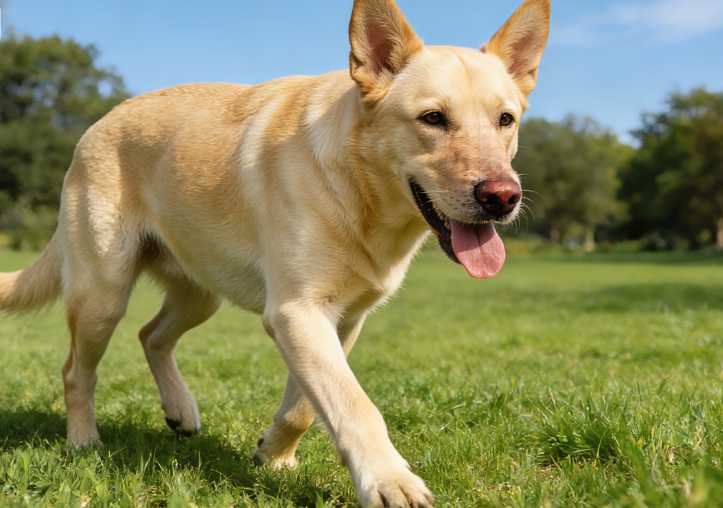
Puppies should only be taken for walks after completing all their vaccinations(usually around 18 weeks of age).
It is important to reiterate that most vaccines take two weeks to become effective(except for the rabies vaccine,which becomes effective 28 days after vaccination).Therefore,do not take puppies to parks or other public places immediately after they have received their last booster shot,as the vaccine has not yet fully provided protection.
Puppy Vaccination Schedule
Vaccination recommendations vary by region.Therefore,always consult your veterinarian before taking your puppy out to determine the most suitable vaccination schedule.
Core vaccines required for all puppies include:
-Canine distemper,canine adenovirus,canine parainfluenza,and canine parvovirus(DAPP)vaccines:These are usually given for the first time at 6-8 weeks of age,followed by booster shots every 3-4 weeks until the puppy is 16-20 weeks old.
-Rabies vaccine:This is usually given when puppies are 12-15 weeks old,and puppies must be at least 12 weeks old to receive this vaccine.
-Leptospirosis vaccine:This disease is a bacterial infection primarily transmitted through the urine of infected animals or through soil,water,food,and bedding contaminated with urine.This vaccine can be given as early as 12 weeks of age,with a booster shot required three weeks later.
In addition to core vaccines,it is recommended to consult a veterinarian to determine whether the puppy needs the following lifestyle-related vaccines,based on its living environment and potential risks:
-Bordetella vaccine:Prevents Bordetella infection,one of the main pathogens causing kennel cough.Puppies can be vaccinated as early as 8 weeks of age.Depending on the disease prevalence in the area and the type of vaccine available at the veterinary clinic,a booster vaccination may be required three weeks after the initial vaccination.
-Canine influenza vaccine:Prevents canine influenza,another major pathogen causing kennel cough.Similar to the leptospirosis vaccine,puppies can be vaccinated as early as 12 weeks of age,with a booster vaccination required three weeks after the initial vaccination.
-Lyme disease vaccine:Protects puppies from Lyme disease(a tick-borne disease).Puppies can be vaccinated as early as 12 weeks of age,with a booster vaccination required three weeks after the initial vaccination.
-Rattlesnake vaccine:Whether a puppy needs this vaccine depends on the distribution of rattlesnakes in the area.It's important to note that receiving this vaccine does not mean a puppy bitten by a rattlesnake will not need veterinary care;it only buys more time for treatment(to facilitate the administration of antivenom).Furthermore,this vaccine is usually the last one a puppy receives(between 18 and 22 weeks of age)and should not be administered simultaneously with other vaccines.
How to safely conduct puppy socialization training?
Core principle:Puppies should not be taken to public places before completing all vaccinations,but socialization training should begin as early as possible.A balance between the two can be achieved scientifically.
1.Arrange interaction with healthy,vaccinated dogs
Socialization training can begin at home and within a close-knit circle.Take your puppy to visit friends or family members who own healthy,fully vaccinated dogs.Interactions can take place in your backyard,a friend's house,or their backyard,provided that no sick dogs have recently been seen in the area.
2.Attend a formal puppy training class
A formal puppy training class is an excellent channel for early socialization of puppies.Just ensure that the class explicitly requires all participating dogs to present their latest vaccination records.While the risk of infection remains extremely low,it is generally under control.
3.Using a Pet Stroller for Short Social Outings
Before a puppy completes all its vaccinations,a pet stroller can be used for short outings to indirectly conduct socialization training.Ensure the puppy cannot escape from the stroller and prevent unfamiliar dogs from approaching it.Even when in a stroller and off the ground,the puppy can still contract diseases through nasal contact,saliva,or from the sneezes or coughs of nearby dogs;extra caution is required.
After the puppy completes all its vaccinations,it can go out normally to public places such as pet stores and interact extensively with other dogs to complete its socialization training.
In addition,during the puppy's vaccination period,socialization with other species(such as cats)can be arranged.Most diseases do not spread between species(except for a very few,such as rabies);that is,viruses carried by cats will not infect dogs,and viruses carried by dogs will not infect cats.Such contact does not need to be deliberately avoided.
Practical Tips for Protecting Your Puppy
-Consult your veterinarian to determine the types of vaccines your puppy needs and complete all necessary vaccinations as recommended.
-Discuss the appropriate number of vaccinations for your puppy in a single dose with your veterinarian.Over-vaccinating can increase the risk of vaccine reactions,especially for small dogs.
-Avoid taking your puppy to public places,especially areas frequented by dogs,such as dog parks and pet stores.
-Always hold your puppy when entering and leaving veterinary clinics.Although veterinary clinics take various precautions to protect puppies,there is still a possibility that sick dogs may have passed through parking lots or contaminated areas that staff have not yet disinfected.Holding your puppy minimizes the risk of infection.
-Never allow your puppy to come into contact with dogs whose vaccination history is unknown.
-Avoid letting your puppy sniff animal feces outdoors to prevent fecal-borne infections.
-Ensure that all dogs in your household have up-to-date vaccination records to avoid cross-infection.
-Allow puppies to roam freely in your fenced backyard,satisfying their outdoor activity needs while ensuring their safety.
-Inform your neighbors about the new,unvaccinated puppy and remind them to properly manage their dogs and avoid unnecessary contact.