Information
- Home
- others
The behavior of dogs eating feces(known as coprophagia in veterinary medicine)can be caused by various factors,including normal physiological factors and abnormal pathological and behavioral factors.These include instinctual drives,curiosity,emotional anxiety,health risks,and learned behaviors seeking attention from their owners.
Although this behavior is relatively common—especially in puppies—most pet owners do not want this habit to be reinforced.
If you have noticed your dog eating feces,there is no need to be overly anxious;this is not uncommon in pet ownership.The following will explain in detail the specific causes of coprophagia in dogs and the scientifically corrective measures that can be taken.
Analysis of the Causes of Coprophagia in Dogs
The reasons why dogs eat feces are diverse.Some are normal physiological phenomena,while others may be a signal of underlying health or behavioral problems.
The normal causes of coprophagia in dogs mainly include…
Maternal behavior during lactation,instinctual drive,and taste preference
…Abnormal causes include:
Seeking owner attention,abnormal bodily functions,emotional anxiety,and avoiding punishment for defecation errors
The following will explain each cause in detail:
1.Instinctive Behavior During Lactation
Lactating mother dogs often eat their puppies'feces to maintain a clean nest environment and ensure the puppies'survival.
2.Continuation of Instinctive Behavior
According to a 2018 study published in the journal*Veterinary Medicine and Science*,canine coprophagia may originate from the survival instincts of their wolf ancestors.Wolves typically eat fresh feces(stored for no more than two days)to eliminate intestinal parasites that may be transmitted through feces in the nest,reducing the risk of group infection.
3.Influence of Taste Preference
Some dogs will eat the feces of other species.While the feces of animals like horses and cats may contain some beneficial nutrients,they can also carry harmful bacteria.Therefore,pet owners are advised to intervene promptly to prevent their dogs from coming into contact with and eating feces.
4.Acquired Behavior Seeking Owner Attention
Some dogs may exhibit fecal-eating behavior in their puppyhood,initially stemming from exploratory instincts and viewing it as a form of play.
For example,puppies may explore by chewing on feces during their growth and development.When owners discover this and quickly approach with a loud"put down"command,some puppies may be frightened and abandon the feces,avoiding further contact;however,others may misinterpret the owner's call as an invitation to interact,thus reinforcing this behavior.
As dogs mature,this behavior can evolve into a fixed habit for gaining owner attention.In fact,owners often find it difficult to ignore fecal-eating behavior,further perpetuating the behavior.
5.Signs of Abnormal Bodily Functions
If your puppy or adult dog is eating its own or another dog's feces,it is recommended to take it to a veterinary hospital for examination as soon as possible.Coprophagia may be related to intestinal diseases,and in some cases,it may also be associated with lesions in other parts of the body such as the liver and brain.
If an adult dog has never exhibited coprophagia before but suddenly develops this habit,accompanied by symptoms such as weight loss,lethargy,physical discomfort,abnormal behavior,vomiting,or diarrhea,an immediate veterinary appointment is necessary for diagnosis.
The veterinarian will use professional diagnostic testing to determine if the dog has pica,intestinal parasite infection,malnutrition,or gastrointestinal diseases,among other potential health problems.
6.Compensatory Behavior for Emotional Anxiety
Some dogs,when anxious,will eat feces to distract themselves and relieve stress.If an anxious dog is restricted in its activity area,it may eat its own feces after defecating to cope with negative emotions.
Reasons that may cause anxiety in dogs and lead to coprophagia include:
-General anxiety
-Worry about activity restrictions
-Separation anxiety from their owners
-Lack of entertainment when restricted in their activities,leading to emotional repression
7.Defensive behavior to avoid punishment
Some puppies,if repeatedly punished by their owners for accidentally defecating at home,may develop a habit of eating feces to cover up the traces and avoid further punishment.
It is particularly important to note that when potty training puppies or adult dogs,a positive reinforcement method should be used,and punishment should never be used for training.
Scientific methods to correct coprophagia in dogs
If your puppy or adult dog exhibits coprophagia,the key to correcting this habit is prevention.Use scientific methods to prevent the dog from coming into contact with feces and gradually guide them to abandon the bad habit.
I.Limiting opportunities for fecal contact
For dogs that like to eat cat feces and puppies with a coprophagia habit,it is crucial to control their contact with feces.The most direct and effective methods are installing pet isolation facilities and promptly cleaning up feces.
Specific prevention techniques are as follows:
1.Install pet gates or barriers to ensure cats can freely enter and exit the litter box while preventing dogs from entering the area.
2.Place the litter box on a higher platform(such as a large table)where cats can reach it by jumping,while dogs cannot due to their height limitations.
For puppies with coprophagia(eating feces),potty training can be combined with intervention.Specific techniques are as follows:
-Help puppies establish regular potty habits,fixing the time and place for elimination.
-After the puppy eliminates,promptly give verbal praise and a delicious treat as a reward.
-Quickly clean up the feces while the puppy is eating the treat to prevent it from coming into contact with it.
This method not only effectively prevents puppies from coming into contact with feces,avoiding coprophagia at its source,but also reinforces the effectiveness of potty training,avoiding negative reactions caused by punishing puppies for accidental defecation.In addition,crate training can accelerate the development of potty training habits in puppies.Choose a suitably sized crate,ensuring the puppy can stand,lie down,and turn around normally inside;it shouldn't be too large.Dogs have an innate instinct to keep their sleeping area clean.If the crate is too large,the puppy may defecate in a corner far from the sleeping area,negating the training effect.
II.Intervention with Supplemental Products
1.Coprophagia Supplements:If a dog has developed a coprophagia habit due to a preference for the smell of feces,try using coprophagia supplement chewable tablets.These supplements reduce the dog's interest in feces by altering its odor and taste,thereby reducing coprophagia.
2.Probiotics:Probiotics can help relieve stomach discomfort in dogs and regulate the balance of intestinal flora.If a dog's coprophagia stems from intestinal inflammation or malnutrition,probiotics can improve intestinal condition to some extent and reduce coprophagia.It's important to note that common probiotics like Pro Plan FortiFlora and Nutramax Proviable primarily regulate gut health and cannot prevent coprophagia by changing the smell of feces.
III.Alleviating Canine Anxiety
For dogs exhibiting coprophagia due to restricted activity,adjusting the restrictions can alleviate their anxiety.Some dogs need more space to play or a quieter environment,while others need to be distracted by engaging toys to reduce stress and alleviate negative emotions.
For dogs experiencing separation anxiety and unable to be alone,consider pet daycare or,if possible,taking the dog to their workplace.These dogs can also seek professional guidance from a veterinarian or certified animal behaviorist to develop a personalized anxiety relief plan.
IV.Strictly Avoid Punishment
If a dog has developed a coprophagia habit,never try to correct it through punishment.This will only cause fear,distrust,and may even exacerbate the coprophagia.Some dogs may have been punished by their previous owners.For these dogs,positive reinforcement should be consistently used to guide them,while strictly limiting their contact with feces.
Once the habit of eating feces is formed,the correction process requires considerable patience.It's necessary to continuously encourage the dog to avoid feces through positive reinforcement,gradually abandoning the bad habit.
V.Reinforcing Positive Behavior Through Distraction
If an adult dog exhibits persistent coprophagia,the following suggestions can be followed:
-Take the dog to its designated potty area each time it needs to defecate;
-After the dog finishes defecating,immediately call it to the designated area and give it verbal praise and a treat;
-After rewarding the dog,guide it back indoors,or distract it by throwing toys for it to chase,while quickly cleaning up the feces;
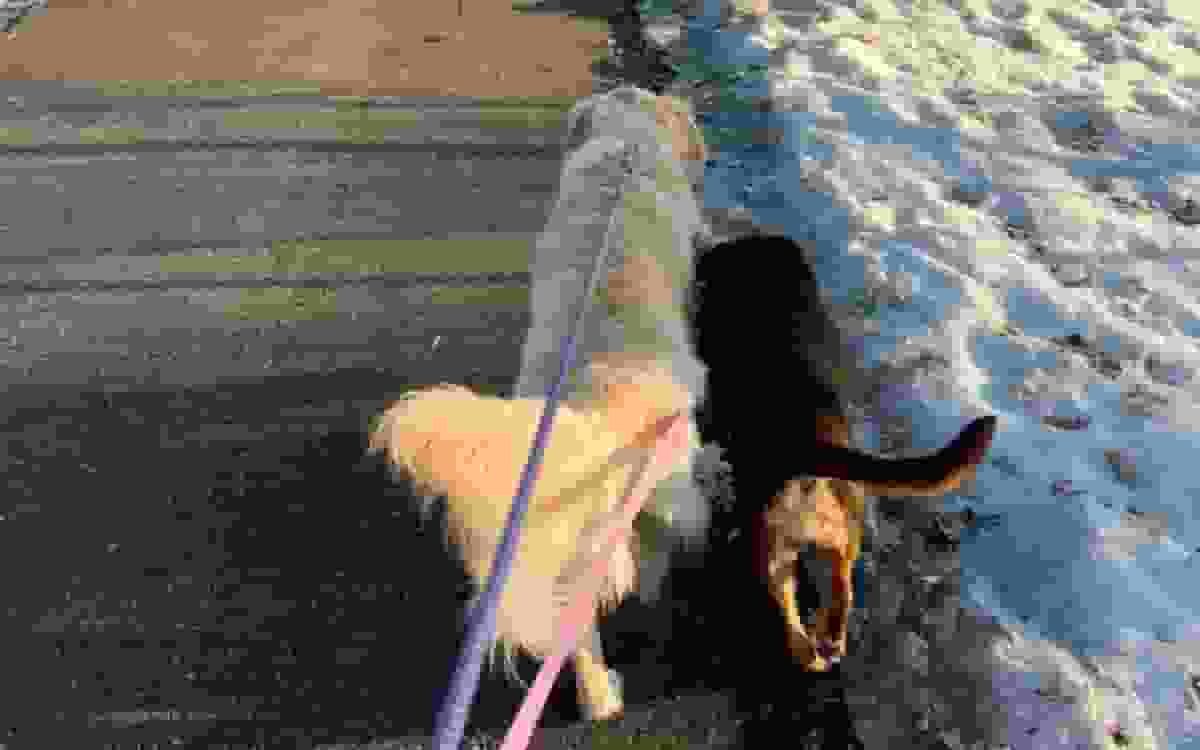
-If the dog immediately turns to eat the feces after defecating and does not obey commands,use a leash to remove it from the potty area to prevent it from contacting the feces.
The key to correcting a dog's coprophagia(eating feces)lies in consistent environmental management and behavioral guidance.Strictly limiting the dog's contact with feces is crucial to prevent recurring behavior.Some pet owners have successfully helped their dogs break the habit by training them to use commands like"stay,""come,"and"sit,"combined with positive reinforcement.
It is important to note that when a dog doesn't immediately eat its feces after defecating,it's essential to give it ample praise and reward.To enhance training effectiveness,it's recommended to choose treats that the dog particularly likes and only give them when the dog exhibits the positive behavior of avoiding feces.This reinforces the conditioned reflex and helps the dog gradually develop good habits.