Information
- Home
- others

Angelfish are among the most popular ornamental fish in aquariums.These fish are prized for their vibrant colors,unique shapes,and high ornamental value,and they also have a relatively long lifespan,consistently ranking high on lists of popular aquarium fish.
Let's test your knowledge of angelfish with these interesting facts:
Not all angelfish are as docile as"angels"
Judging from their name,one might assume angelfish are naturally gentle,but this isn't entirely true.
During their breeding season,angelfish exhibit strong territoriality and will attack other fish in the tank if they sense a threat.Even outside of breeding season,angelfish may show aggression towards their tankmates in cramped conditions.However,in a properly sized and well-cared-for aquarium,they generally remain docile,a trait particularly evident outside of breeding season.
Found in both freshwater and saltwater environments
Whether you keep a freshwater or saltwater aquarium,you can find suitable angelfish varieties.
Freshwater angelfish originate from the tropical waters of South America,with the Amazon River basin being their primary habitat.They are typically triangular in shape.Marine angelfish,on the other hand,inhabit the tropical coral reefs of the Atlantic,Pacific,and Indian Oceans,and their bodies are usually more oval in shape.
Due to significant differences in their native habitats,the care and requirements for freshwater and marine angelfish differ considerably.
Body Color and Pattern Variety
Angelfish exhibit a remarkable diversity in color and pattern.Wild freshwater angelfish are often silver-white with black vertical stripes,but through long-term artificial breeding,numerous new strains have emerged,resulting in increasingly diverse appearances.
Body Color Classification
Common body colors for freshwater angelfish include white,silver,gold,and black.Furthermore,genetically modified glossy angelfish(GloFish)can emit a bright fluorescence under specific lighting(such as LED white-blue glow sticks specifically designed for glossy angelfish).
Marine angelfish typically exhibit more vibrant and striking colors,often adorned with blue,green,yellow,and even orange markings.
Marking Types:Common markings in freshwater angelfish include stripes,marble patterns,solid colors,and koi-like patterns.
Marine angelfish also display a rich variety of markings.Some species have vertical or horizontal stripes,some have unique markings on their heads or backs,and a few species are entirely a single color.
Communicating Through Body Language:Angelfish are adept at using body language to convey information.This method of communication is particularly common in courtship,territorial disputes,and social hierarchy.
Male angelfish attract mates by waving their fins or extending their fin blades.If they sense danger,they will also use this method to expand their silhouette and deter potential threats.The"biting"behavior that occurs when two angelfish confront each other,seemingly intimate like a kiss,is actually a form of aggression;for females,this behavior is more often a test of the male's strength.
Juvenile angelfish sometimes exhibit irregular swimming movements to reduce their chances of being preyed upon.
Lifespan can exceed ten years.The lifespan of angelfish varies depending on the species,but most species can live past ten years.Freshwater angelfish have an average lifespan of 8-12 years,while saltwater angelfish have an average lifespan of 5-15 years.
With proper care,angelfish can enjoy a healthy and long life.There are differences in the care methods for freshwater and saltwater angelfish.The ideal water quality parameters are shown in the table below:
Water Quality Parameters Saltwater Angelfish Freshwater Angelfish
Temperature 72–80°F 75–84°F
pH Value Alkaline,8.1–8.4 Neutral to slightly acidic,6–7.5
Hardness Hard water,8–12 dKH Medium hardness,3–8 dKH
Aquarium Size Small varieties:at least 55 gallons
Large varieties:at least 125 gallons,some varieties require over 250 gallons Single fish:at least 20 gallons
Multiple fish:ideally at least 55 gallons,horizontal aquarium recommended
Salinity 1.020–1.025 Specific Gravity Not applicable
Keep aquarists can use a water quality testing kit to regularly check the water quality parameters in the tank.
The triangular body shape is a product of evolutionary survival.Wild angelfish have evolved a unique triangular body shape as an adaptation to their natural environment and a way to increase their survival rate.Their flattened body structure allows them to easily maneuver through vegetation and narrow spaces,thus evading predators.
The angelfish's coloration and markings also serve as camouflage,helping them blend better into their native environment.This trait is particularly important for freshwater angelfish,which inhabit densely vegetated waters;while saltwater angelfish,with their bright colors,blend seamlessly into coral reef environments,making it easier to hide in confined spaces when needed.
Parental care behavior exists.Freshwater angelfish,and even some saltwater angelfish species,exhibit monogamous pairings.This single-pair reproductive pattern is rare among fish and is highly valuable for observation.
Pairing behavior plays a crucial role in protecting eggs and fry.During the rearing process,the male and female fish cooperate,with one guarding the territory and the other foraging for food.
Besides guarding their eggs,parent fish constantly fan the eggs with their fins.This action provides ample oxygen to the eggs and removes debris and fungi attached to them,improving the hatching rate.
Not always a docile companion.
When choosing companions for angelfish,their potential aggression must be carefully considered.The following tips can be used:
Avoid choosing very small fish,as they may be preyed upon by the angelfish;
Avoid long-finned fish such as bettas,goldfish,and guppies,as angelfish may bite their fins;
Be wary of larger fish,as they may be seen as competitors,leading to fights;
Prioritize fast-swimming fish,allowing them to evade attacks;
Choose species with similar environmental requirements to angelfish,ideally those that inhabit the lower layers of the aquarium—angelfish primarily live in the upper and middle layers.
Potential Companions for Freshwater Angelfish:
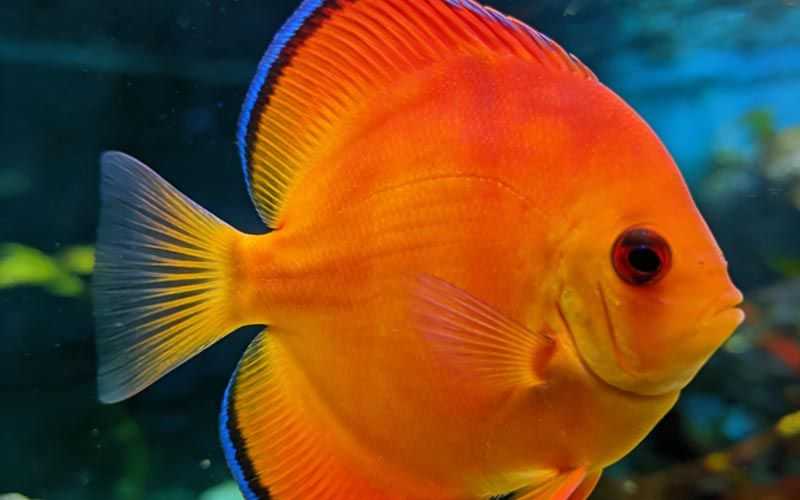
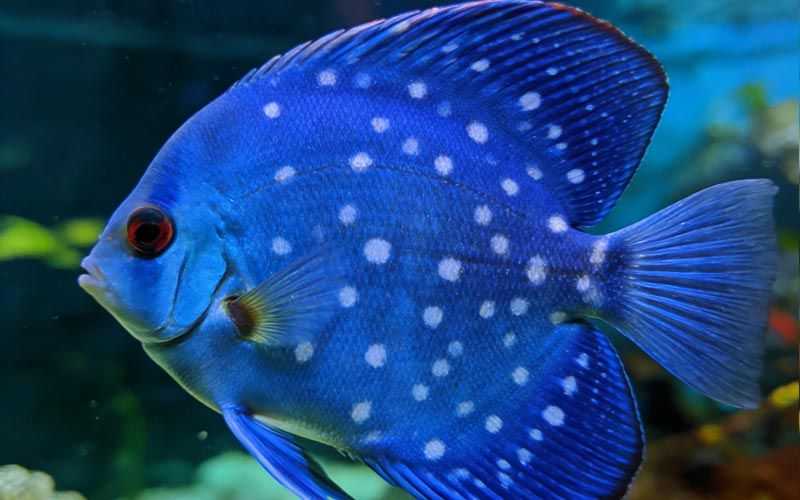
Depending on aquarium size,suitable companions include plecos,corydoras,mollies,zebra danios,larger tetras,dwarf cichlids,and small,mild-mannered or semi-aggressive cichlids(such as discus and Crippenthys).
Potential Companions for Marine Angelfish:
Most marine angelfish are not suitable for keeping with coral reefs.However,planktonic species(such as the Golden Angelfish)are generally acceptable,as they rarely bite corals due to their feeding habits.
Small marine angelfish can generally be kept with larger members of the same species,but caution is advised when keeping multiple large marine angelfish together.
Depending on aquarium size,suitable companions include butterflyfish,batfish,boxfish,clownfish,damselfish,gobies(more suitable for keeping with small angelfish),parrotfish,and tangs.
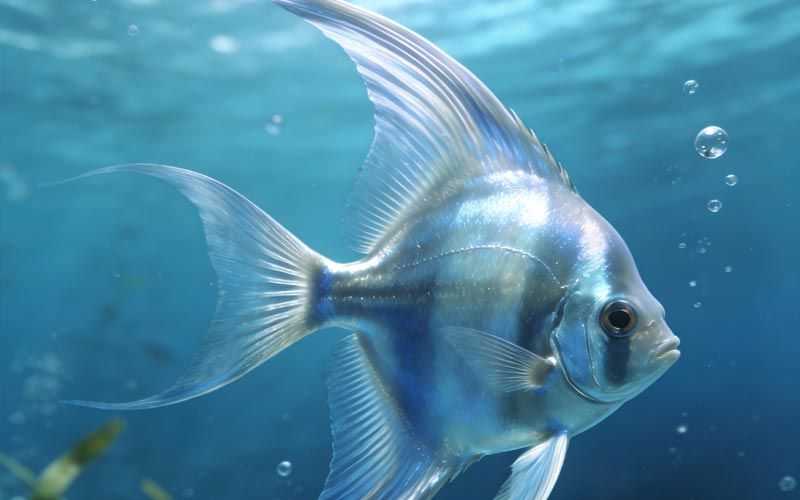
Body Color Changes with Age and Emotions:
Some marine angelfish undergo significant color changes during their growth.Many juvenile angelfish are dark blue before adulthood,gradually developing bright and vibrant colors as adults—a natural camouflage strategy that helps them survive better in environments with numerous predators.
Freshwater angelfish also exhibit color changes,but these changes are usually temporary,often triggered by nervous system stress or interaction with other angelfish.However,it's important to note that persistent color changes may be a sign of illness.
Some species possess the ability to change sex.
Some angelfish species exhibit sex reversal;individuals born female can transform into males under specific conditions.Some species can even achieve secondary sex reversal,changing back from male to female.This phenomenon is relatively rare in freshwater angelfish but not uncommon in saltwater angelfish,such as the rusty angelfish and the black-spotted angelfish.
Typically,when the dominant male in a population disappears or dies,larger females in the population will initiate hormonal and physiological changes,developing into males.However,if a new dominant male appears,an individual that has already undergone sex change may revert to female.
In conclusion,angelfish possess many unique habits and amazing characteristics that can be shared and discussed by keepers and visitors.With thorough research and consideration of the specific conditions of one's aquarium,the most suitable angelfish species can be selected.