Information
- Home
- others

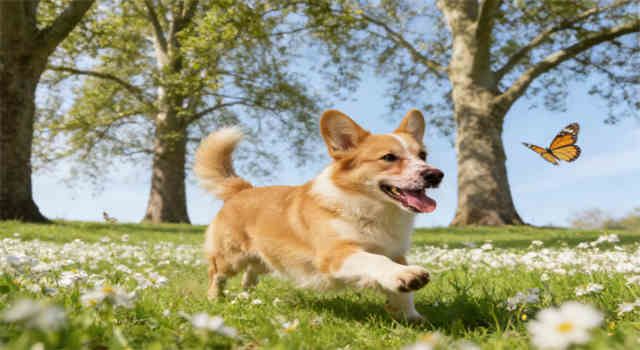
Have you ever wondered why dogs eat grass?We often observe dogs munching on grass during walks or park activities.
There are several theories and speculations about why dogs eat grass.Many believe it's a natural instinct for dogs to induce vomiting and expel unpleasant substances from their bodies.
Some pet owners see it as a sign of gastrointestinal discomfort.
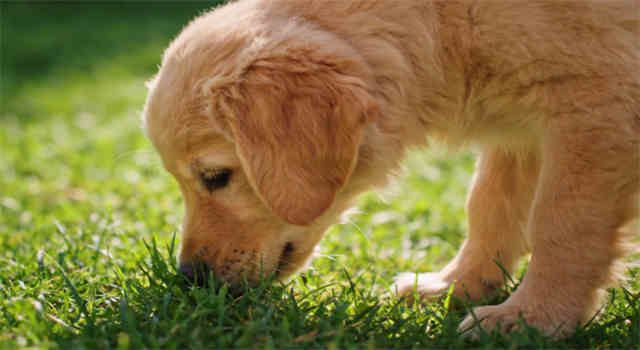
Others suggest that grass contains an important nutrient needed by dogs,or that its high fiber content aids digestion and absorption.
They also believe that grass may have a laxative effect,helping constipated dogs defecate.
So,what is the scientific basis behind dogs eating grass?
Why do dogs eat grass?
Many speculations and theories have been proposed about why dogs eat grass,but research on the exact cause of this behavior is relatively limited.
In fact,there is currently no definitive answer to explain dogs'grass-eating behavior.
However,scientists have proposed some relevant theories based on existing research and have refuted some misconceptions.I.Instinctive Behavior
Some scientists speculate that grazing is an instinctive behavior in dogs,originating from their wolf ancestors.
Studies on wolves have found that plant matter makes up approximately 2%to 10%of their stomach contents.Furthermore,wild canids(including wolves,jackals,foxes,and coyotes)have been observed grazing.
II.Supplementing Deficited Nutrients
One case report shows an 11-year-old miniature poodle with a seven-year history of grazing,experiencing vomiting after each meal.
After switching the dog to high-fiber commercial dog food,its grazing and vomiting problems were completely resolved.This case demonstrates that the dog supplemented its diet with missing nutrients by eating grass and plants;once sufficient dietary fiber was ingested,the grazing behavior naturally disappeared.
Can dogs digest grass?
Dogs are essentially carnivores,meaning they primarily feed on meat.However,recent research indicates that dogs have gradually evolved the ability to digest some carbohydrates during their co-evolution with humans.Carbohydrates include sugars,starches,and dietary fiber,primarily found in fruits,grains,vegetables,and dairy products.
So,if dogs can digest some carbohydrates,does that mean they can digest grass?The answer is no.Grass is largely indigestible for dogs and is excreted directly through their intestines.
III.Normal Dog Behavior
In another 2007 study,researchers found that dogs'grass-eating behavior is influenced by their level of hunger and the time of day.
Dogs eat grass less frequently after eating and more frequently before eating;furthermore,they eat less frequently later in the day.
Researchers conclude that eating grass is normal behavior for dogs and does not necessarily indicate any disease.
IV.Relieving Stomach Discomfort
One study divided experimental dogs into two groups:one group was fed a diet containing fructooligosaccharides(FOS),while the other group was fed a standard diet.
Fructooligosaccharides(FOS),extracted from beets,pass undigested through the small intestine into the large intestine,where they ferment.
High FOS intake can cause watery,loose stools in dogs.Studies have shown that dogs fed a standard diet eat grass more frequently than dogs fed FOS-fed diets and exhibiting diarrhea.
This result suggests that dogs with gastrointestinal upset are less likely to eat grass.
It's important to note that the diarrhea in this study originated in the large intestine;therefore,it cannot be used to infer grass-eating behavior in dogs with gastrointestinal upset in the stomach or small intestine.
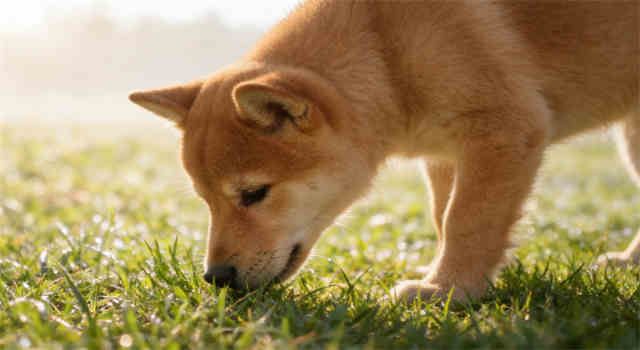
V.Driven by Curiosity
Dogs,especially puppies,often explore their world through their mouths.Eating grass may be one such exploration tactic,similar to some toddlers accidentally ingesting soil.Furthermore,some dogs may even find the taste of grass appealing.
VI.Seeking Owner Attention
Some dogs may discover that eating grass attracts more attention from their owners.Owners might interact with their dogs more frequently or offer treats to encourage them to stop eating grass and instead eat treats.
Sometimes,owners pull their dogs away from the grass,but this restriction might actually encourage the dogs to eat grass whenever they see it—because prohibition stimulates their curiosity and desire to explore.
Do dogs eat grass to induce vomiting?
Although research on the reasons why dogs eat grass is limited,there is evidence that most dogs do not eat grass to induce vomiting.
In one study,researchers asked two groups about their dogs'grass-eating habits—veterinary students and pet owners.
Almost all respondents said their dogs had eaten grass,but almost none reported their dogs frequently vomiting after eating grass.Furthermore,most of the dogs in the study did not show any symptoms of illness before eating grass.
The results suggest that dogs are unlikely to eat grass to induce vomiting.
Can dogs eat grass?Is it safe?
There are certain safety risks associated with dogs eating grass.
Some potential health risks don't stem from the grass itself,but rather from harmful substances that may be present on its surface.
Grass surfaces may contain residual environmental toxins(such as pesticides and insecticides),leading to poisoning and illness in dogs.They may also harbor parasites,bacteria,and even viruses,which dogs can contract by ingesting the grass.
If a dog ingests large amounts of grass,it can also cause intestinal blockage,leading to intestinal obstruction.This risk increases significantly when grass is mixed with other non-food substances.
If you have a pet and a backyard,ensure your dog doesn't come into contact with any substances on the grass that could harm its health.
Here are some of the most common safety hazards associated with dogs eating grass:
1.Pesticides
Pet owners must ensure that the grass their dogs eat is free of pesticides,as pesticides can cause poisoning in dogs.
If you suspect your dog has ingested grass sprayed with pesticides,take it to your local veterinary clinic immediately.
Dogs that ingest grass sprayed with pesticides may exhibit the following symptoms:
-Excessive drooling;
-Nausea;
-Vomiting;
-Diarrhea;
-Loss of appetite.
2.Fecal Contamination
Grass may be contaminated with the feces of other dogs and animals.Dogs that eat contaminated grass may become ill.
Some intestinal diseases,such as canine parvovirus,can be transmitted via the fecal-oral route.This virus can cause severe gastrointestinal illness in unvaccinated dogs and puppies,and in some cases,even death.
The feces of other dogs and animals may also contain eggs or larvae of intestinal parasites.Dogs infected with intestinal parasites may experience symptoms such as weight loss and diarrhea.
Normally,dogs should be dewormed monthly.This type of deworming medication is usually included in a monthly heartworm prevention medication for dogs.In addition,regular fecal examinations should be performed to screen for intestinal parasites.
It's important to note that some intestinal parasites require specific medication for treatment.
What if my dogeats grass?
If you notice your dog eating grass,stop it immediately.
You need to ensure your dog is fed dog food that meets AAFCO standards and is suitable for its life stage(puppy,adult,senior)to ensure it gets all the vitamins and minerals it needs for good health.
Popular dog food brands recommended by veterinarians include Hill's Science Diet,Eukanuba,and Purina Pro Plan.
If you have any questions about your dog's diet,it is recommended to consult a professional veterinarian.
When should I take my dogto the vet if it eats grass?
If your dog shows any signs of discomfort before or after eating grass,it is recommended to take it to the vet promptly to ensure its health and safety.
If the lawn your dog is eating has recently been sprayed with pesticides or insecticides,it is also recommended to have it checked.
When taking your dog to the vet,try to bring the relevant product label with you.This will help the vet determine whether the product will harm your dog if it eats contaminated grass.
How to stop your dog from eating grass?
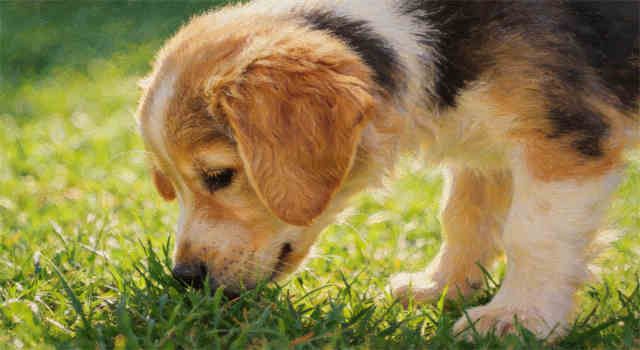
Here are some suggestions to prevent your dog from eating grass:
-Always keep your dog on a leash when walking through grassy areas to prevent them from eating grass freely;
-Take your dog out for a walk immediately after they have eaten to reduce the likelihood of them eating grass due to hunger;
-Schedule your dog's activity time reasonably,allowing them to access grass later in the day(as mentioned in previous research,dogs eat grass less frequently at this time);
-Use positive reinforcement to encourage your dog's alternative behaviors;
-When your dog tries to eat grass,calmly interrupt the behavior(by diverting their attention rather than scolding them)and guide them to other activities,such as interacting with their owner to earn treats or chasing toys;
-You can grow your own dog-specific grass for them to eat.Some researchers believe that eating grass is a normal behavior for dogs,and growing your own can prevent them from ingesting toxins or intestinal parasite eggs and larvae from external grass.