Information
- Home
- others
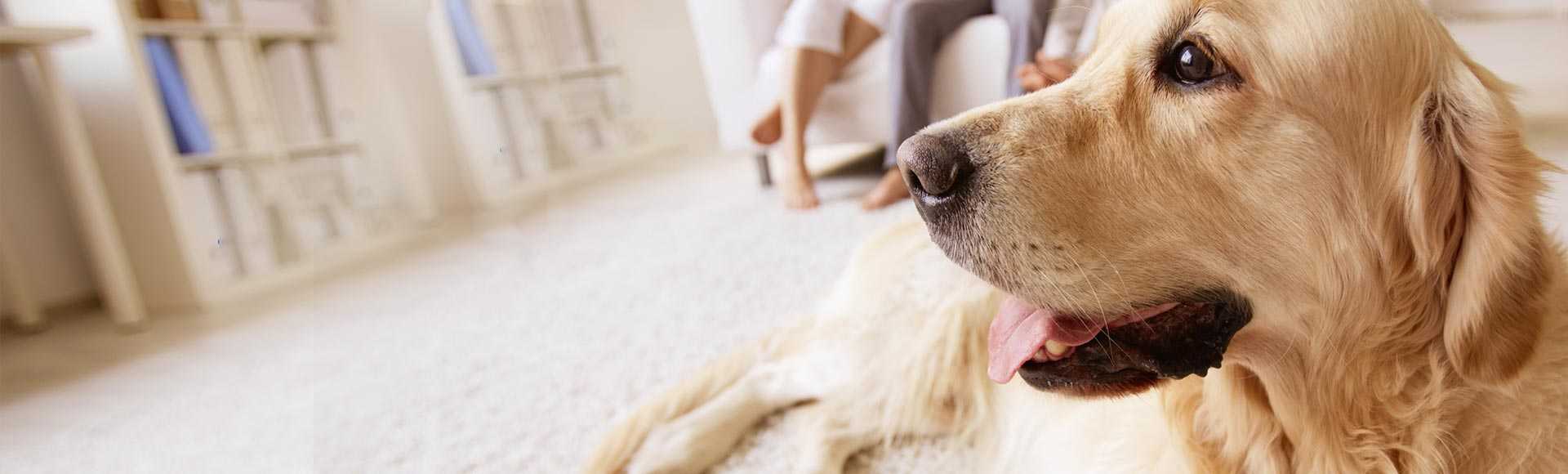
Have you ever had this feeling:it's as if a gaze is fixed on you,and when you look up,you find your own dog staring intently at you?Many pet owners experience this and can't help but wonder:why do dogs frequently stare at people?Is this behavior normal?Based on pet behavior research,the following will analyze in detail the various reasons why dogs stare at people,methods for judging this behavior,and scientific ways to deal with it,helping owners more accurately understand their dog's"eye language."
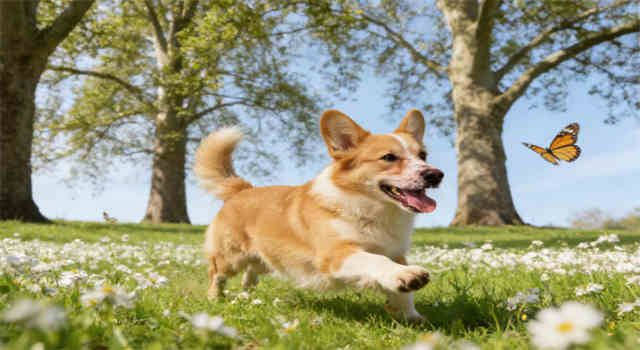
From a pet behavior perspective,eye contact is one of the normal communication methods between dogs and humans,and among other dogs.However,the information conveyed by a gaze in different contexts can be completely different.A dog staring at its owner could be an expression of affection,a transmission of needs,or even a warning of negative emotions.A comprehensive judgment requires considering the context and the dog's body language.
I.The Core Reasons Why Dogs Stare at You(with Behavioral Basis)
According to animal behavior research,a dog's staring behavior is closely related to its central nervous system's emotional regulation and social cognition.The core reasons can be categorized as follows,each with clear behavioral logic:
(I)Conveying Needs:Gaining Attention or Satisfying Physiological Needs Through Staring
Having lived with humans for a long time,dogs have developed conditioned reflex-like social cognition—they have discovered that eye contact with their owners quickly attracts their attention,thereby fulfilling their needs.This behavior aligns with"operant conditioning"in animal behavior,meaning that by repeatedly staring,dogs obtain responses from their owners(such as feeding or taking them out),thus reinforcing the frequency of this behavior.
For example,around dinnertime,a dog's physiological hunger will prompt it to gaze at its owner,signaling a need for food.If a dog stares at its owner and gently scratches them with its paw,or actively walks towards the door,it's using this gaze combined with body language,based on past experience,to remind its owner to take it outside to relieve itself—this is a natural expression of the dog's association of"gazing"with"the need to go outside,"and it reflects its adaptation to human life and proactive communication.
Furthermore,some dogs will bow(or lower dog)after gazing at their owner.This is known in behavioral science as an"invitation to play,"essentially attracting the owner's attention through gazing,thereby guiding the owner to participate in interaction and satisfying their social and physical needs.
(II)Emotional Expression:Gazing is a way for dogs to express love and dependence.
Animal behavioral studies have shown that prolonged gazing between a dog and its owner promotes the release of oxytocin(also known as the"cuddle hormone")in the dog's brain.This hormone not only strengthens the emotional bond between the dog and its owner but also gives the dog feelings of pleasure and security.Therefore,if your dog stares at you for a long time while relaxed(body outstretched,tail wagging naturally),it's likely expressing affection and indicating that you hold an important place in its heart;it craves your attention and companionship.
However,it's important to note that some dogs with separation anxiety may also exhibit frequent,tense staring at their owners.From a behavioral perspective,this is"excessive attention"stemming from fear of their owner leaving,an outward manifestation of anxiety.If your dog frequently stares at you with a tense body and a blank gaze,and exhibits barking or destructive behavior when you leave,it's recommended to consult a professional veterinarian or certified animal behaviorist.Their anxiety can be alleviated through behavioral training,sedative interventions,and pheromone collars/diffusers.
(III)Warning Signals:Staring May Indicate Aggression or Discomfort
In the animal kingdom,a direct gaze often carries connotations of"provocation"or"warning."Dogs also follow this natural law—this stems from the social behavior of their wolf ancestors.Wolves use direct eye contact to convey"territorial assertion"and"do not approach."As descendants of wolves,dogs have retained this primitive behavioral characteristic.
If a dog stares at you with stiff body posture,erect ears,and a taut,drooping tail,it is highly likely that it feels uncomfortable,threatened,or is guarding its"private property"such as food or toys.In this case,the gaze is a warning to"stay away."Furthermore,some dogs,when faced with strangers,may respond with a stare and stiff body posture if the stranger initiates eye contact.This is because,in their perception,such direct eye contact is a"threat signal,"just as humans feel uneasy when stared at by a stranger with sharp eyes;dogs will also become alert or even fearful.
(IV)Observational Learning:Interpreting Owner's Body Language and Intentions Through Gazing
Dogs possess exceptional observational and environmental adaptability.According to pet behavior research,dogs can interpret their owners'emotions and intentions by observing their body language and facial expressions,and gazing is a crucial method of observation.Many dogs habitually stare at their owners from time to time,essentially"monitoring their owner's movements":curious about what you're doing,judging whether you intend to feed them treats,take them out,or sensing your emotional state.
Research has found that dogs are extremely sensitive to their owners'emotional changes:when their owners are relaxed and happy,dogs will actively approach,seeking attention and interaction;when their owners are tense or angry,dogs will detect this emotion through gazing and then choose to avoid conflict;when their owners are sad or frustrated,dogs will gaze at them,even actively approaching and rubbing their heads against them—this is their way of expressing comfort and a manifestation of their high empathy.
(V)Proactive Communication:Guiding Owner's Interaction Through Gaze
Eye contact is one of the core ways dogs communicate with humans.Some dogs will attract their owner's attention through gaze,combined with other body language,to convey more specific information.For example,if a dog looks at its owner and then makes playful signals such as bowing or wagging its tail,it means it wants you to play with it;if it looks at its owner and then walks to the leash,it's reminding you that it's time to take it out.This combination of gaze and body language is an efficient communication pattern that dogs have developed through long-term interaction with humans.
II.How to Scientifically Determine the Real Reason a Dog Is Gazeing at You?
Based on the logic of pet behavior,a dog's gaze itself does not have a clear"good"or"bad"meaning.The key is to combine the"context,the owner's body language,and the dog's body language"for a comprehensive judgment.This is also the core principle for interpreting the meaning of a dog's gaze:
1.Judging by the Context:Observe the current time and environment—is it almost mealtime(most likely a need for food)?Have you picked up its toys or treats(most likely expecting interaction or treats)?1.Are you in a tense or angry state(this is likely what the dog senses and chooses to observe or avoid)?
2.Judge by your own body language:Reflect on your current actions—are you looking directly at the dog(which the dog might interpret as a threat)?Have you approached the dog's food or toys(which might trigger protective behavior)?Are you in a relaxed state(the dog is more likely to approach and express affection)?
3.Judge by the dog's body language:This is the most crucial basis for judgment.A dog's body language directly reveals its emotions.Combined with staring behavior,it can quickly clarify its intentions(see the"Coping Methods"section below for details on interpreting body language).
III.Scientific Responses to Dogs'Staring Behavior(with Behavioral Suggestions)
Different approaches are needed depending on the underlying reasons for a dog's staring behavior.The core principle is to"respect the dog's emotions,avoid reinforcing undesirable behaviors,and guide positive interaction."Specific methods are as follows:
When you notice your dog staring at you,first stop what you're doing and avoid direct eye contact.This is because if the dog is alert or uncomfortable,direct eye contact will exacerbate its anxiety;if the dog is in a needy state,excessive response will reinforce the perception that"staring provides satisfaction."After pausing for a few seconds,observe the dog's body language and then take targeted measures.
Interpreting Dog Body Language to Determine Whether to Interact
Based on pet behavior standards,you can determine the dog's emotional state through the following four dimensions to decide whether to interact:
-Posture:A stiff,upright posture indicates the dog is tense and alert;a relaxed,natural posture,or even slightly swaying posture,indicates the dog is relaxed and willing to interact.
-Tail:A taut,drooping tail,or even tucked under the body,is a sign of fear and discomfort;a relaxed,gently swaying tail indicates pleasure and relaxation.
-Ears:Ears erect and pointing forward may indicate alertness or anticipation;ears pulled to the sides or completely flat against the head indicate fear or submission.
-Facial Expressions:A fierce gaze and a tight mouth are warning signs;a gentle gaze and relaxed face indicate friendliness and anticipation.
If a dog displays tense or alert body language(such as stiffness,tail tucked,ears flattened),it doesn't want to interact.In this case,you should back away,giving it enough space to avoid further stimulation.If the dog displays relaxed and friendly body language,you can call it over for gentle interaction,but it's recommended to let the dog approach first to avoid forced interaction.