Information
- Home
- others

Have you ever wondered about the evolutionary origins of birds?There are many different kinds of birds,with approximately 11,000 species existing worldwide.Surprisingly,these uniquely shaped creatures actually originated from reptiles.So,why are birds classified as reptiles?
I.Are Birds Reptiles?
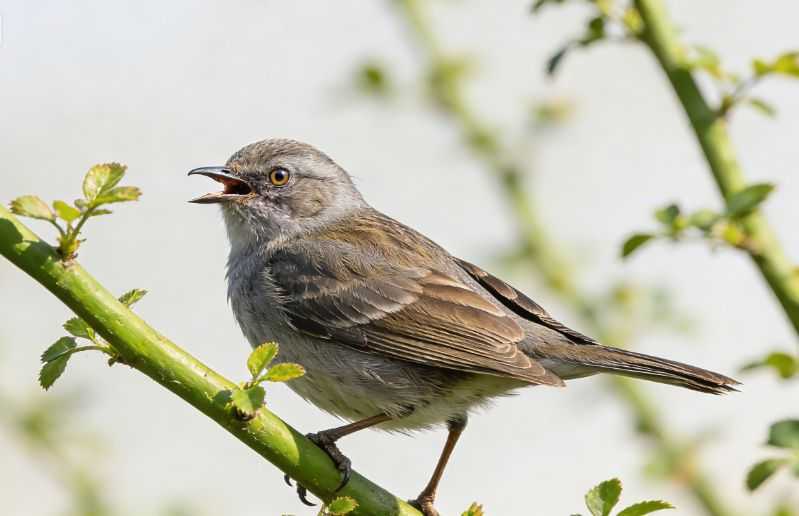
From a scientific classification perspective,birds do indeed belong to the reptile family.The reason this conclusion is easily confusing lies in the fact that scientists use two different classification systems:Linnaeus's system separates birds from reptiles into different groups;while phylogenetic classification explicitly classifies birds as a branch of reptiles.
Linnaeus's system originated in the 1730s,proposed by Carl Linnaeus.This system primarily distinguishes and classifies organisms based on their physical characteristics.
Physiogenetic classification was created in the 1940s.Its core function is to help scientists trace the ancestral origins of different species.This system uses DNA analysis and genetic research to identify kinship similarities between species,thereby tracing the evolutionary lineage of organisms.
“The core of Linnaeus’s classification system is to distinguish organisms one by one based on their differences.Therefore,when we observe birds and reptiles,we can clearly see the differences in their physical appearance,”explains Thaís Thomazini,an evolutionary biologist and ornithologist who has conducted research on the genetic populations of burrowing owls in the São Paulo region of Brazil.
Although birds and other reptiles share a common ancestor,they embarked on distinct evolutionary paths millions of years ago,gradually developing their own unique biological characteristics.
While Linnaeus’s classification system helps us understand the ecological place of animals in nature,it cannot help us interpret the genetic background and evolutionary history of organisms.To achieve this,scientists mainly rely on phylogenetic research methods.
“Without genetic knowledge,it is impossible to clearly explain the evolutionary process of organisms,”Thomazini says,“because genetics is the core key to maintaining phylogenetic research.”
Once humans mastered the principles of phylogenetics and learned to obtain biological genetic information through DNA analysis,they began to classify organisms based on their similarities.Phylogenetic studies have revealed the genetic links between modern animals and their ancient ancestors,including the core fact that"birds are reptiles,but not all reptiles are birds."
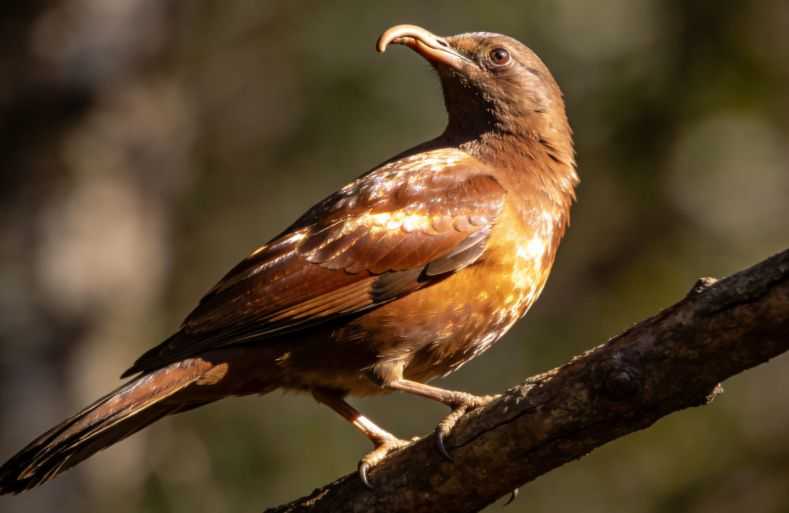
Mark Pyle,a reptile educator and former president of the Dallas-Fort Worth Herpetological Society,agrees with this view.He explains that although birds differ significantly in appearance from other reptiles,they still share many common characteristics,including:
1.Bird feathers and reptile scales are composed of the same material;
2.Bird feet are still covered with scales,a feature that retains a primitive trace of reptile behavior;
3.Not all reptiles are completely ectothermic(i.e.,dependent on external heat sources,such as heat lamps,to maintain body temperature).Some monitor lizards can control their body temperature to some extent,while some pythons can generate heat by rapidly contracting muscles(similar to shivering)to regulate their own temperature.
In genetic research,DNA barcoding technology can be used for species identification.Using mathematical models,DNA barcoding can also provide scientists with crucial information about animal evolutionary history—for example,the timing of the emergence of typical avian features such as flight ability and hollow(air-filled)skeletons.
II.The Evolutionary Journey from Reptiles to Birds
Evolution is a slow,gradual process,often requiring thousands or even millions of years to show significant differences.The earliest reptiles appeared approximately 315 million years ago,while dinosaurs originated from these early reptiles,dating back to approximately 245 million years ago.
Pyle explains that in studying the fossil record,we can find fossils of typical dinosaurs such as pterosaurs and stegosaurs,as well as fossils with feathers,beaks,and even primitive wings.However,the timing of the appearance of these avian features is not uniform;Archaeopteryx is a typical example.
Archaeopteryx is a key species in the evolution of birds from reptiles.It is a bird-like dinosaur that lived during the Jurassic period,approximately 150 million years ago.As a transitional species,Archaeopteryx possessed characteristics of both birds and dinosaurs,including teeth,a long bony tail,and flight feathers.Because of this,some scientists disagree on its classification,debating whether it should be classified as a bird or a reptile.
It needs to be clarified again:birds are a branch of reptiles,but not all reptiles are birds.
We might habitually assume that the evolution of birds is a linear,logical process from dinosaurs or reptiles to modern birds,but in fact,evolution is the cumulative result of a series of random DNA variations.Over a sufficiently long period,these tiny random variations eventually lead to significant changes in an organism's morphology and physiological characteristics.
"It all happens by chance,"Tomazzini explains.Some animal groups are fortunate enough to acquire beneficial variations or mutations that increase their chances of survival;while other groups,lacking these beneficial variations,struggle in natural selection and may even face extinction.
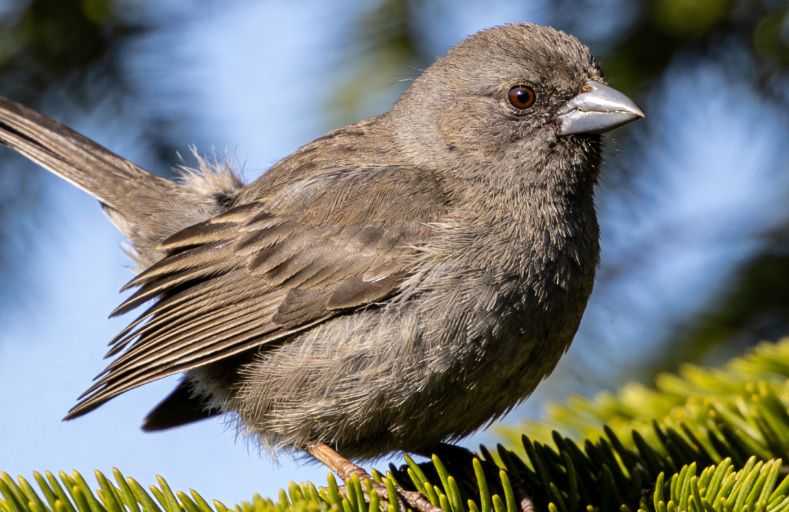
For example,within a bird population,an individual might develop a stronger beak due to a random mutation.This trait enables them to peck open seeds that other birds cannot,thus obtaining an additional food source.An abundant food supply increases the individual's reproductive chances and passes on the advantageous gene of a"stronger beak"to offspring.After several generations of breeding,eventually all individuals in the population possess this stronger beak trait.
III.Timeline of Bird Evolution
The following is a timeline of key milestones in bird evolution,clearly showing the evolutionary process from early reptiles to modern birds(time unit:MYA=millions of years ago):
1.Earliest Reptiles:315 million years ago;
2.Earliest Dinosaurs:245 million years ago;
3.Crocodiles:235 million years ago;
4.Bird-like Dinosaur(Archaeopteryx):150 million years ago;
5.Microraptor:125-120 million years ago;
6.Sinosauropteryx:120 million years ago;
7.Oviraptor:75 million years ago;
8.Earliest"Modern"Bird(Asteriornis maastrichtensis):66.7 million years ago;
9.Cretaceous-Paleogene Extinction Event:65 million years ago.
IV.Why Don't Birds Look Like Other Reptiles?
Although birds and other reptiles share a common ancestor,they diverged millions of years ago,embarking on different evolutionary paths.Over a long period,minute variations in DNA accumulated,eventually giving rise to the entirely new species of birds.
Evolution is inherently about constant change;therefore,the various animals we see today may have presented drastically different forms 10,000 years ago.In the process of natural selection,some species survived and continued to evolve to adapt to environmental changes;while others went extinct due to various factors,such as extreme climate change and intensified resource competition.
(I)The Impact of Mass Extinction Events
The extinction of many species is closely related to mass extinction events,with the Cretaceous-Paleogene(K-Pg)extinction event being the most representative example.Scientists believe that approximately 66 million years ago,a giant asteroid with a diameter of about 6 to 9 miles(about 10 to 14.5 kilometers)struck Earth,triggering the Cretaceous-Paleogene extinction event.This extinction event wiped out 75%of the world's plant and animal species,including almost all non-avian dinosaurs,numerous mammals,some birds,plants,and all pterosaurs.
Even the species that survived this extinction event faced numerous survival challenges,such as food scarcity and difficulty finding mates to reproduce.However,these difficulties did not necessarily lead to extinction;some species adapted and gradually overcame these challenges,ensuring the continuation of their populations.
(II)The Role of Genetic Mutation
Tommazzini explained that a population can be established by a small number of individuals,but limited genetic diversity easily leads to genetic mutations.Some genetic mutations have adverse effects on the health of a species,while others have positive effects,increasing the genetic diversity of the population and providing possibilities for the species to adapt to the environment.
"For example,if many closely related individuals in a population reproduce,their offspring may all grow seven fingers.After many generations of reproduction,eventually all individuals in the entire population will exhibit the characteristic of having seven fingers,"Tommazzini illustrated.
(III)The Impact of Geographical Isolation
Tommazzini states that geographical isolation is also a significant factor contributing to biodiversity.For example,a river may divide an animal population into two parts,preventing them from interacting and reproducing.As isolation persists,the two populations may obtain different food sources,and their behavioral patterns will gradually differ.Eventually,these two populations will no longer consider each other the same species,ultimately forming two entirely new species.
V.The Miracle of Adaptation
Birds and their rich biodiversity fully demonstrate nature's astonishing ability to adapt to environmental changes.Beneath the colorful plumage of birds lies a clear lineage shared with reptiles;this phenomenon is a perfect example of the infinite possibilities of biological evolution and highlights the magical power of natural selection.