Information
- Home
- others

Adequate nutrition constitutes a fundamental component in sustaining the health and well-being of equines.Notably,there is no universally applicable nutritional regimen,as the dietary needs of each horse are contingent upon its individual lifestyle and physiological conditions.Nevertheless,forage(plant-based feed)serves as the cornerstone of every equine diet,while certain horses may require supplementary pelleted grain,concentrated feed,or nutritional supplements to address specific deficiencies.
Key Takeaways
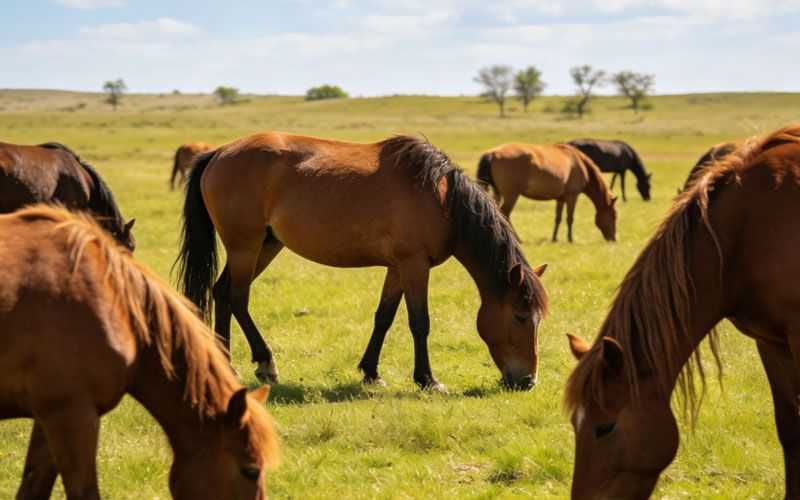
Forage(including grass and hay)forms the foundation of an equine diet,with additional feed or supplements to be incorporated only to meet specific requirements such as nutrient deficiencies or elevated energy demands.
Horses possess a relatively small stomach capacity and thus require multiple daily feedings to mitigate the risk of digestive disorders,including gastric ulcers.
Essential nutrients for equine health encompass carbohydrates(primary energy source),fats(concentrated energy),proteins(providing amino acids for bodily maintenance),minerals,vitamins,and water.
Common feed options include hay,pasture,concentrates(e.g.,oats and other grains),and commercial complete feeds.Supplements should be administered solely when necessary,based on targeted dietary assessments.
Understanding the Equine Digestive System
The complete passage of food through the equine digestive tract typically takes 45 to 72 hours.The digestive system is divided into two primary segments:the foregut and the hindgut.
The foregut comprises the stomach and small intestines,whose primary function is to digest and absorb the majority of starches,proteins,fats,vitamins,and minerals present in the diet.The hindgut,consisting of the cecum,large colon,small colon,and rectum,harbors a complex microbial community(including bacteria and protozoa)that facilitates the digestion of dietary fiber derived from roughage(fibrous plant material that is otherwise difficult to break down).
Relative to their body weight,horses have a small stomach,which can only hold a limited volume of food at one time.The stomach is divided into glandular and non-glandular regions.Unlike humans,who secrete gastric acid only during active digestion,horses produce gastric acid continuously—a physiological adaptation to their natural grazing behavior in pastures.
It is critical to feed horses at least twice daily on a consistent schedule;many equines benefit from three or more feedings distributed throughout the day.This feeding pattern supports optimal digestive function and helps prevent the development of gastric ulcers.
In general,horses should consume 1%to 2%of their body weight in forage daily.For instance,a 1,000-pound horse requires 10 to 20 pounds of forage per day.When introducing new feed or modifying an existing diet,the transition must be gradual,spanning 5 to 7 days,to avoid digestive disturbances such as diarrhea,colic,or laminitis.
Required Nutrients for Horses
Nutrients essential for equines are classified into six categories:
Carbohydrates
Carbohydrates serve as the primary energy source for horses and other animals.They are categorized into structural carbohydrates and non-structural carbohydrates(NSCs).Cellulose,a key structural carbohydrate,is abundant in hay and grass.For horses with endocrine or muscular disorders—such as Polysaccharide Storage Myopathy(PSSM)or Cushing’s disease—restriction of NSCs(e.g.,starch and sugar)is necessary.
Fats
Fats and oils function as an alternative energy source for horses.With 2.25 times the energy density of carbohydrates per gram,fats are highly concentrated in energy.However,fats and oils should not exceed 10%of an equine’s total diet.They are particularly suitable for horses with low tolerance to NSCs.
Proteins
While feed labels often list protein content,the actual dietary requirement for horses lies in amino acids.During digestion,proteins are broken down into amino acids,which are absorbed into the bloodstream via the intestines and transported to various bodily tissues.Amino acids are integral to the formation and maintenance of muscle,internal organs,bones,blood,skin,hair,hooves,and other structures.Unused amino acids are either converted into energy or excreted through the digestive tract.
Minerals
Minerals are inorganic compounds(lacking carbon-hydrogen bonds)required in small quantities for equine health.Common essential minerals include iron,copper,phosphorus,calcium,and magnesium.Iron plays a vital role in oxygen transport within blood cells,while calcium and phosphorus are critical for bone and tooth formation and maintenance.
Vitamins
Vitamins are required in minute amounts but are indispensable for equine health.Horses with access to adequate grazing typically obtain sufficient vitamins from grass;however,vitamin supplements may be necessary for horses with limited pasture access.
Water
Water constitutes 70%to 75%of a horse’s body weight and supports core physiological processes such as metabolism and body temperature regulation.Daily water intake ranges from 10 to 15 gallons,depending on the horse’s size,environmental conditions,and activity level.
Types of Horse Feeds
Equine daily nutritional needs can be met through a variety of feed sources,often combined to ensure balanced nutrition:
Hay
As a primary forage source,hay should constitute the majority of an equine’s diet.It may be grass-based(e.g.,orchard grass)or legume-based(e.g.,alfalfa).Alfalfa hay,with its high calorie and energy content,is particularly suitable for performance horses or lactating mares with elevated nutritional demands.Grass hay is ideal for easy-keeping horses or those in light work.Most nutrients in hay are concentrated in the leaves,making leafy hay a valuable nutritional source.
Pasture
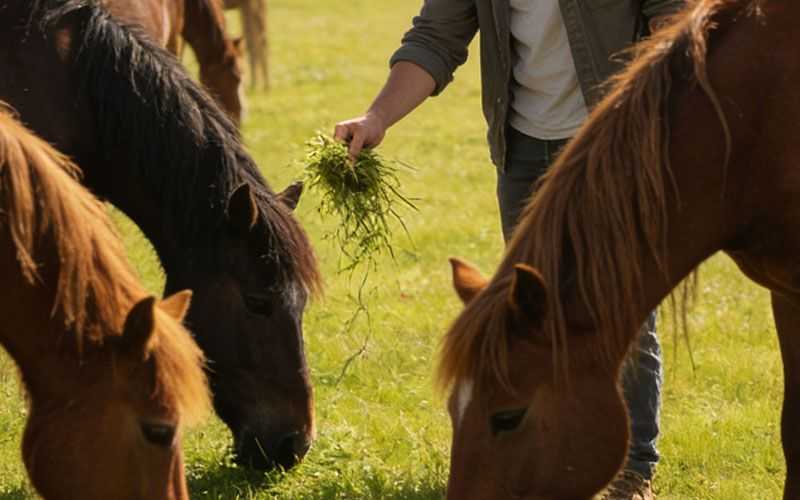
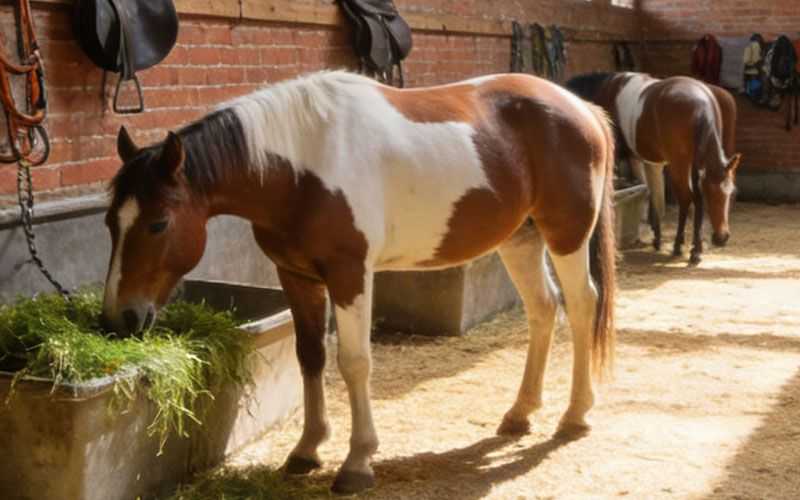
Well-managed pasture serves as an excellent forage source,reducing feed costs while meeting the horse’s energy,protein,vitamin,and mineral requirements.Pastures should be maintained to avoid excessive lushness or overgrowth,ensuring optimal grazing conditions.Grazing also provides horses with daily exercise.
Concentrates
Concentrates include small grains such as corn,oats,and barley.Compared to hay and pasture,concentrates are lower in fiber and higher in energy.Feed quality is as critical for grains as it is for forage.Oats are generally considered the safest and most digestible grain for combination with hay,as they are higher in fiber and protein and lower in energy than corn.Overfeeding concentrates can induce intestinal inflammation and excessive reflux,leading to colic.Most grains are naturally low in calcium and high in phosphorus.
Supplements
The equine supplement industry is extensive,but supplements should only be added to address identified nutritional gaps.Grains themselves are classified as energy supplements in a forage-rich diet.Prior to introducing any supplement,consultation with a veterinarian is mandatory to ensure compatibility with the horse’s overall diet.
Commercial grain mixes often combine grains with supplements to enhance nutritional content.Complete feeds are high-fiber grain mixtures formulated to meet the specific needs of horses based on age,activity level,or health status.These feeds offer convenience and ensure balanced nutrition when properly administered.
Core Feeding Principles
Regardless of age or lifestyle,horses require a consistent feeding schedule.Grain meals should be provided in small portions,with multiple daily feedings preferred over one or two large meals.Free-choice hay or pasture grazing is optimal for supporting the equine digestive system.All dietary changes or new feed introductions must be gradual(over 5 to 7 days)to minimize the risk of colic,laminitis,diarrhea,or other digestive complications.For concerns related to diet or nutritional needs,consultation with a primary veterinarian or board-certified equine nutritionist is recommended.