Information
- Home
- health

Some sounds can trigger fear in dogs because their hearing is far more sensitive than humans'.Loud,sudden,or unpredictable noises can induce a panic response in a dog's brain,especially in dogs with noise phobia,where the reaction is more intense.
Noise phobia is extremely common in dogs—it's estimated that up to 50%of dogs are affected.This phobia not only causes physical and psychological distress for dogs but can also lead to injury,damage to household property,and damage to the emotional bond between owner and pet.
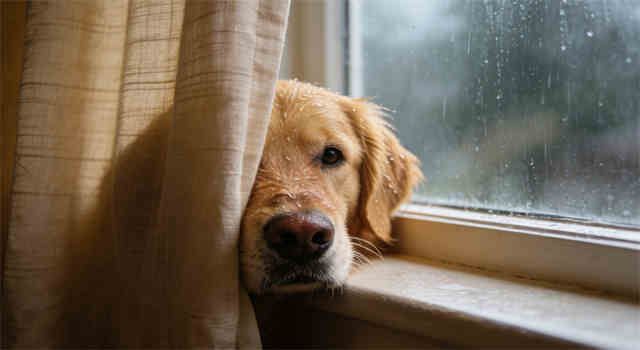
What is noise phobia in dogs?
A fear of loud noises can help dogs protect themselves in potentially dangerous environments,but sometimes the level of fear doesn't match the actual level of danger.
This is the core difference between noise phobia and a dog simply disliking loud noises or having an aversion to noise.
Noise aversion:The dog will clearly show discomfort,may actively seek comfort or try to move away from the noise source,but will not exhibit complete panic.
Noise phobia:The dog will react strongly to noise—usually manifesting as complete panic,and may not be able to calm down on its own even after the noise stops.
Unfortunately,noise phobia often worsens gradually.What begins as a simple aversion to noise can develop into a phobia;or a dog may initially react to only one type of noise but eventually develop a fear of multiple noises.A dog's brain can associate noise with intense fear after only a few exposures.
Common Noises That Fear Dogs
Sounds associated with noise phobia are mostly loud,repetitive,unpredictable,and difficult to avoid.Common triggers for dogs with noise phobia include:
-Thunderstorms
-Fireworks
-House or car alarms
-Noise from large vehicles
-Noise from a vacuum cleaner
What Causes Noise Phobia in Dogs?
Genetic factors may play a role in determining whether a dog will develop noise phobia.Selective breeding may explain why some breeds(such as hunting dogs)have relatively lower aversion to noise.
However,learning and early socialization are more important than genetic factors.Studies show that mixed-breed dogs have the highest risk of developing noise phobia,possibly because they may have lived in less-than-ideal environments during their puppyhood;purebred puppies,on the other hand,are usually raised by breeders who understand the importance of positive early experiences and undergo more standardized socialization training.
Health problems can also be associated with noise phobia.For example,dogs in pain often have significantly increased sensitivity to noise;dogs with other behavioral problems(such as separation anxiety)are also more prone to noise aversion or noise phobia.
Symptoms of Canine Noise Phobia
Dogs with noise phobia typically exhibit some of the following symptoms:
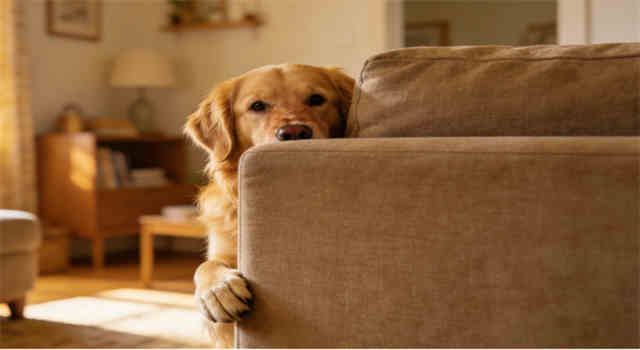
-Hiding and avoiding objects
-Excessive panting
-Pacing back and forth
-Whining,howling,or persistent barking
-Excessive drooling
-Destructive behavior in the home
-Attempting to escape their current environment
-Inappropriate defecation indoors
The severity of canine noise phobia determines the intensity of the symptoms and the duration of the symptoms after the triggering sound stops.
Treating Canine Noise Phobia
Effective treatment for canine noise phobia requires a combination of care methods.
1.Environmental Management
While it's usually impossible to completely avoid a dog's exposure to noise triggers,pet owners can take several measures to reduce noise intensity and create a soothing environment for their dog.
Designing a Safe Room:Ideally,this would be a windowless room or a large closet;if the dog already has a preferred hiding place,this area can be used directly.Partial noise blocking can be achieved by hanging thick curtains or using cardboard or sound-absorbing foam to cover windows(this also blocks light,which is often a trigger for dogs with thunderstorm phobia).
Modifying the Dog's Crate:Dogs that have been crate-trained usually consider their crates a safe area;their comfort can be further enhanced by adding a canopy,soft bedding,fun toys,favorite treats,and chew toys.
Increasing Background Noise:Playing soothing music,using a white noise machine,or turning on a fan can mask the noise that triggers the dog's fear.
Note:Never make these environmental modifications when the dog is already stressed.1.**Guiding your dog to become familiar with and adapt to a safe room and crate when they are calm,establishing a sense of comfort.**
2.**Behavioral Modification**
Various behavioral modification techniques can help dogs relax when faced with loud noises.The most common method is to guide the dog to associate the feared sound with positive things.
The owner can stay with the dog in the safe room and comfort them when they feel scared.Each time the triggering noise is heard,provide the dog with its favorite treat or toy;or place lickable treats,such as a licking pad with dog-specific peanut butter,in the crate.
A veterinarian or veterinary behaviorist can develop a comprehensive and personalized behavioral modification plan for your dog.
3.**Medications,Supplements,and Other Assistive Tools**
Dogs with severe noise phobia usually require prescription medication.Without medication,the dog cannot relax on its own and therefore cannot learn new coping mechanisms.
-Sileo:A fast-acting sedative gel that is absorbed through the oral mucosa.
-Benzodiazepines:Such as alprazolam,which can effectively relieve anxiety and should be administered approximately one hour before the stressful situation.
-Trazodone:Can be used alone or in combination with other medications to reduce fear responses in dogs.
-Anti-anxiety medications:Such as clomicalamine and reconciliation,which require long-term use to reduce overall anxiety levels in dogs.
Canine sedative supplements can be used in combination with medications or alone to treat milder cases of noise phobia.Common products include:
-VetriScience Max Veterinary Grade Soothing&Confident Chicken Flavored Chewable Tablets:Main ingredients include colostrum,L-theanine,L-tryptophan,and lemon balm.
-Zylkene:Contains alpha-casein,a calming component derived from milk.

-Purina Pro Plan Veterinary Prescription Food Soothing&Nutrient Powder:Contains probiotic strains to help dogs maintain emotional stability.In addition,anti-anxiety vests for dogs and other soothing clothing that provides comfort and pressure(similar to a hug),as well as soothing pheromone sprays and diffusers,may also help alleviate a dog's noise phobia.
Contraindications
When a dog suffers from noise phobia,the last thing pet owners should avoid is using harsh punishment.
While behaviors associated with noise phobia can be distressing,any form of punishment—such as yelling,hitting,or using an electric shock collar—will only reinforce the dog's fear,causing its noise phobia to worsen rather than improve.
Why is my dogsuddenly sensitive to noise?
If your dog suddenly becomes sensitive to noise,it is recommended to schedule a veterinary check-up as soon as possible,as this may be a symptom of an underlying health problem.Even after ruling out health factors,the earlier you intervene in your dog's noise aversion or noise phobia,the better the outcome.