Information
- Home
- cats
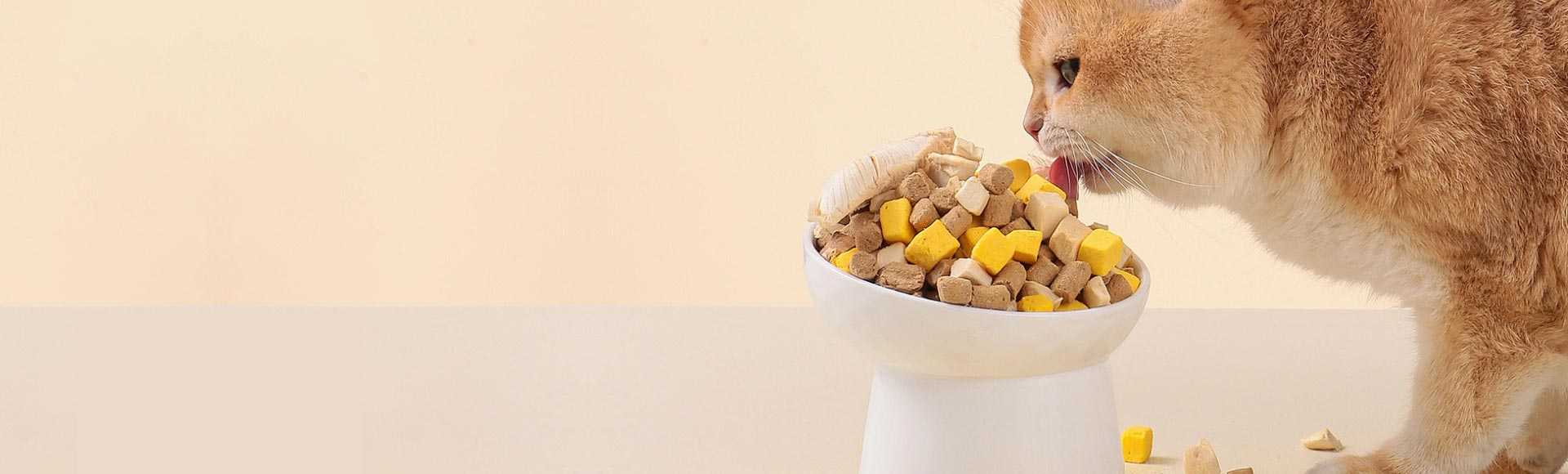
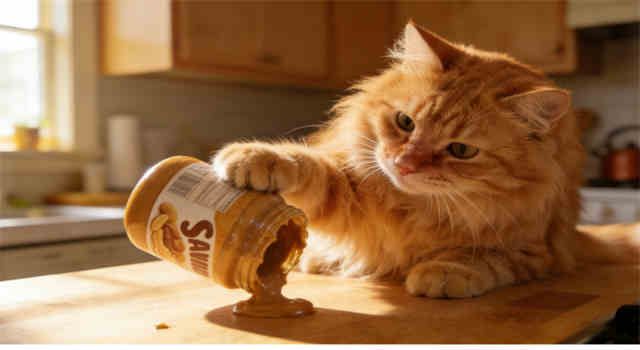
Peanut butter is a common treat that dogs love,so owners might wonder if cats can eat it too.The answer is yes—cats can eat peanut butter.However,before feeding it to them,owners need to consider several factors,including:What are the nutritional benefits of feeding peanut butter to cats?What are the potential risks?How can you safely feed peanut butter to your cat?To answer these questions,it's necessary to have a basic understanding of feline nutritional needs and consult a veterinarian to ensure your cat's dietary health,taking into account their specific circumstances.
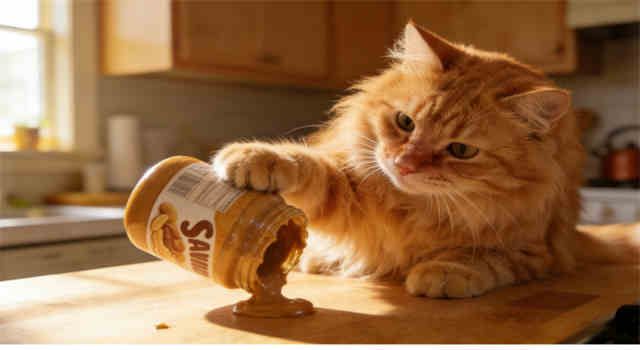
Nutritional Benefits of Feeding Peanut Butter to Cats
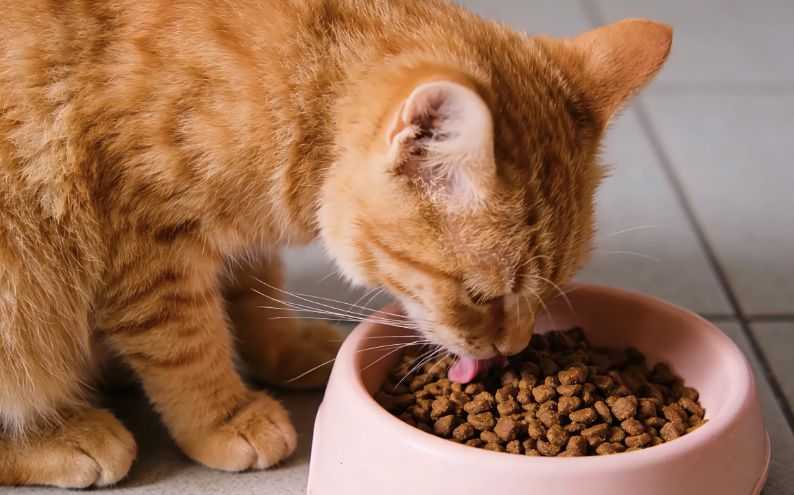
According to the Small Animal Clinical Nutrition Service at the University of Missouri-Columbia,cats have specific nutritional needs that must be met through their diet,and these needs differ significantly from those of humans.As strict carnivores,cats can only obtain the nutrients they need from animal-based foods.“The simplest and most efficient way to meet a cat’s nutritional needs,”explains the Clinical Nutrition Service,“is to provide them with a nutritionally complete and balanced commercial cat food formulated by a certified veterinary dietitian or an expert with a doctorate in animal nutrition.”
This means that if a cat gets all the necessary nutrients from its regular diet,treats like peanut butter do not provide additional nutritional value.It’s also important to note that more is not always better when it comes to nutrition.In some cases,providing cats with excessive nutrition can actually lead to various health problems.
Potential Risks of Feeding Cats Peanut Butter
While the Clinical Nutrition Service lists peanut butter as a safe food for cats,it also clearly points out some precautions,as follows:
Peanut butter is generally considered safe for healthy cats;therefore,this general rule does not apply if the cat has any medical conditions.
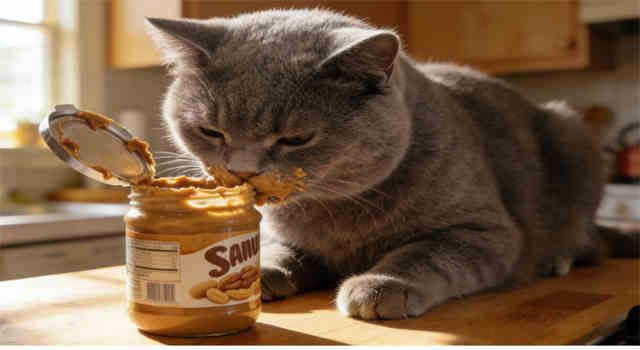
Each cat’s constitution is different,and their tolerance to various foods may vary considerably.“It must be assessed on a case-by-case basis for each cat,”explained the clinical nutrition service.“Some cats may experience no adverse reactions to certain foods,while others may experience vomiting,diarrhea,or other adverse effects after consuming the same food.”
The majority of a cat’s daily calorie needs should come from specially formulated food that provides all of its essential nutrients.Human foods like peanut butter should only be given occasionally,and in strictly controlled quantities.
Because of its thick and sticky texture,peanut butter poses a choking risk to cats.
Peanut butter typically contains a sweetener called xylitol,which is toxic to cats.Xylitol can cause symptoms such as vomiting,lethargy,and ataxia in cats,and in severe cases,can lead to seizures and liver failure.Therefore,the simpler the ingredients of the peanut butter you feed your cat,the better.Owners should carefully check the product nutrition label and choose peanut butter containing only peanuts whenever possible.
If a pet owner knows or suspects that their cat has ingested peanut butter with added xylitol,they should contact a veterinarian as soon as possible or call the American Society for the Prevention of Cruelty to Animals(ASPCA)Animal Poison Control Center hotline(888-426-4435)for professional assistance.
How to Safely Feed Your Cat Peanut Butter
Based on the above precautions and the nutritional needs of cats,the following are general principles that pet owners should follow when feeding their cats peanut butter:
(I)Consult a Veterinarian Beforehand
Before feeding your cat any new human food,even if the food is generally considered safe for pets,consult a veterinarian beforehand to confirm that it is suitable for your cat's constitution and health condition.
(II)Calculate Feeding Amounts Scientifically
To determine the safe amount of peanut butter for your cat,pet owners need to perform simple calculations.The Clinical Nutrition Service recommends that the calories provided by treats should not exceed 10%of a cat's total daily calorie intake.For example,if a cat needs 250 calories per day,only 25 calories can come from treats.Owners should check the nutrition label on the peanut butter jar to understand the calories per tablespoon.Because peanut butter is high in calories,the amount fed must be strictly controlled to a very small range.At the same time,the ingredient list should be carefully checked again to ensure it does not contain ingredients that cats should avoid,especially xylitol.Each cat's daily food requirements are different and should be adjusted according to its ideal weight.If owners are unsure of their cat's daily calorie needs and ideal weight,they should consult a veterinarian to develop a personalized nutrition plan for their cat.
(III)Close Observation of Reactions
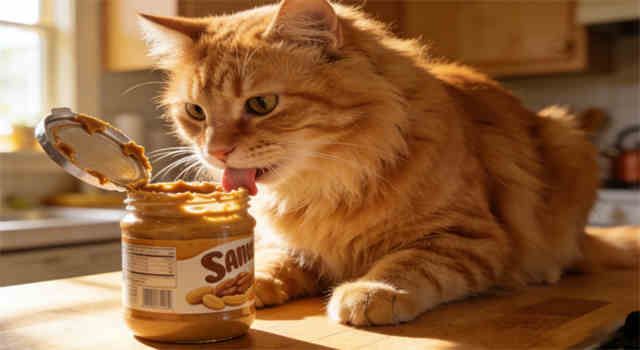
The clinical nutrition service center points out that even safe and edible foods can trigger unexpected reactions.Therefore,after feeding a cat a new food,it is necessary to closely observe for signs of gastrointestinal discomfort,such as vomiting or diarrhea.It is recommended to introduce only one new food at a time,so that if the cat shows signs of discomfort,the owner can more easily troubleshoot the problem.If an adverse reaction to peanut butter is suspected,a veterinarian should be contacted immediately.
Conclusion:Can cats eat peanut butter?
In conclusion,a cat's nutritional intake is far more important than the treats themselves.Peanut butter is not a necessary component of a cat's balanced diet and may pose certain risks;therefore,it should not be intentionally given to cats.However,if a cat shows curiosity about peanut butter,or if the owner needs to use a small amount of peanut butter to help administer medication,strictly follow the guidelines above to ensure feeding safety.
If the owner is unsure whether their cat is getting enough nutrition from its daily diet,they should consult a veterinarian promptly.The veterinarian can assist in developing a suitable dietary plan for their pet.If you notice that this article repeatedly emphasizes"consulting a veterinarian,"this is precisely our core message—maintaining open and honest communication with a veterinarian is crucial for ensuring the cat's health and safety.Any issues related to the cat's diet(or treat selection)should be discussed with a veterinarian.