Information
- Home
- cats

"Can cats eat dog food?"is a common question veterinarians ask pet owners.
In short,while small amounts of dog food won't cause poisoning or direct long-term effects in cats,from a nutritional perspective,it's not conducive to maintaining optimal health.The following will explain in detail why it's not recommended to use dog food as a primary diet for cats long-term,based on their nutritional needs.
Can cats safely eat dog food long-term?
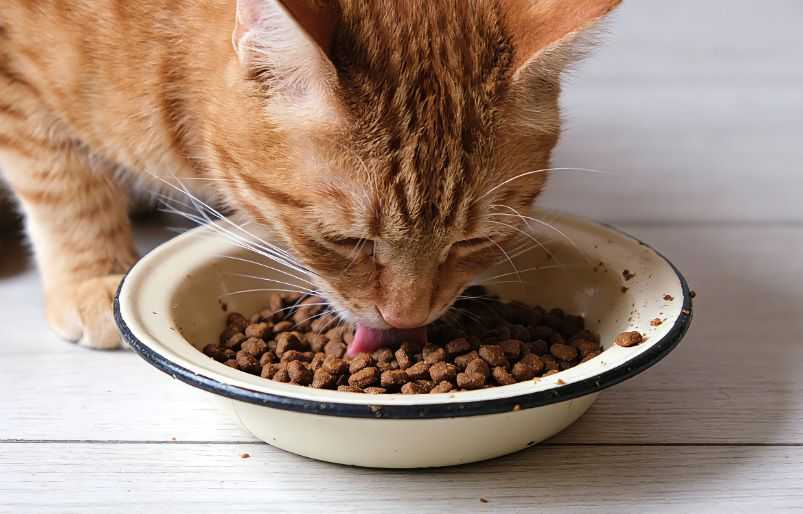
The answer is no—cats should not be fed dog food as their primary diet long-term.Feeding a cat exclusively dogfood for an extended period can have harmful or even fatal consequences.The fundamental reason is that dog food and cat food are formulated based on the different nutritional needs of cats and dogs,and their core nutritional components differ significantly.
Nutritional Differences Between Cats and Dogs
Although both cats and dogs are common companion animals to humans,evolution has resulted in distinctly different physiological characteristics,leading to different nutritional needs:
Cats:Strict Carnivores
The physiological structure of cats dictates that their core diet must consist of meat protein and animal fat to maintain the normal functioning of their digestive,nervous,and other physiological systems.They have a rigid requirement for specific nutrients(such as taurine and arachidonic acid).
Dogs:Omnivores
Dogs are more adaptable to different diets,obtaining nutrients from a variety of foods including meat and vegetables,resulting in a more flexible diet.Dog food formulations are designed around the omnivorous nature of dogs and cannot meet the specific nutritional needs of cats.
Core Formula Differences Between Cat and Dog Foods
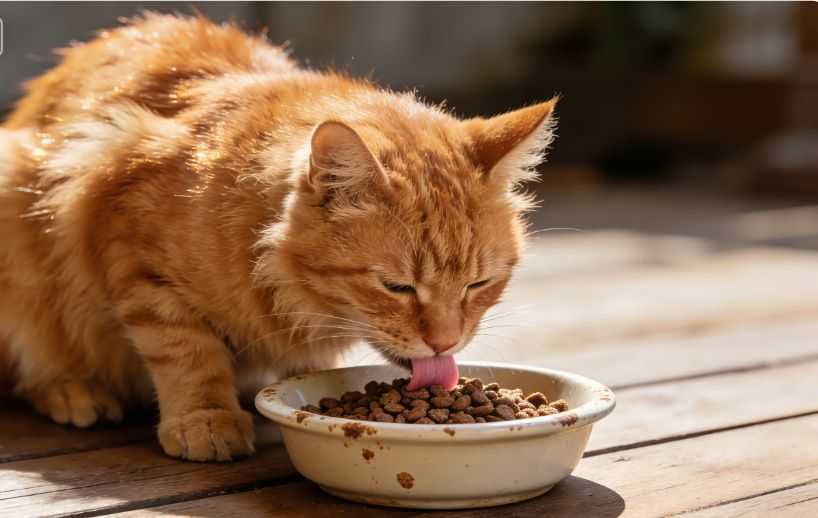
(I)Differences in Taste Adaptability
The taste perception systems of cats and dogs differ significantly:cats cannot perceive sweetness,and they have only about 470 taste buds,far fewer than the 1700 in dogs(humans have over 9000 taste buds for reference).Cat food formulas are specially optimized for palatability to better suit cats'taste preferences,thus accommodating their occasional picky eating habits.Dogs,on the other hand,are more accepting of the high protein content in cat food,while cats often refuse to eat dog food because it doesn't meet their taste preferences.
(II)Differences in Protein Content
As strict carnivores,cats have a much higher protein requirement than dogs.Although some dog food products label themselves as high in protein,overall,their protein levels still fall short of the standards required for a cat's health:
Most dog foods have a protein content of 18%-26%in the"actual feeding amount";
The recommended minimum protein content for cats'"feeding amount"is 30%-34%,and depending on their health condition,canned cat food with a protein content of 40%-50%can be used for nutritional supplementation.
(III)Differences in Key Essential Nutrients
Taurine
Cats,like humans,are among the few mammals that cannot synthesize taurine themselves and must obtain this essential nutrient directly from their food.If a cat's diet lacks taurine,it may develop symptoms such as dilated cardiomyopathy(heart weakness),vision loss,and digestive disorders.
Currently,commercially available cat food contains taurine according to standards,while dog food usually does not contain it or contains insufficient amounts.
Arachidonic acid(RA)is a fatty acid that cats cannot synthesize and must obtain from their food.Low levels of RA can lead to non-specific symptoms such as abnormal liver and kidney function and skin inflammation.
Dogs can synthesize RA themselves,so it is rarely added to dog food.
Vitamin A is also not synthesized by cats and must be obtained from their diet.Although dog food usually contains added vitamin A,the amount is far from sufficient to meet a cat's optimal nutritional needs.Vitamin A deficiency can lead to poor coat quality,muscle weakness and atrophy,and night blindness in cats.
Niacin is also not synthesized by cats and must be obtained from their diet.Animal tissues are the main high-quality source of niacin,while plants contain only small amounts.If cat food contains too little animal tissue and too much plant-based ingredients such as grains,it may lead to insufficient niacin supply.
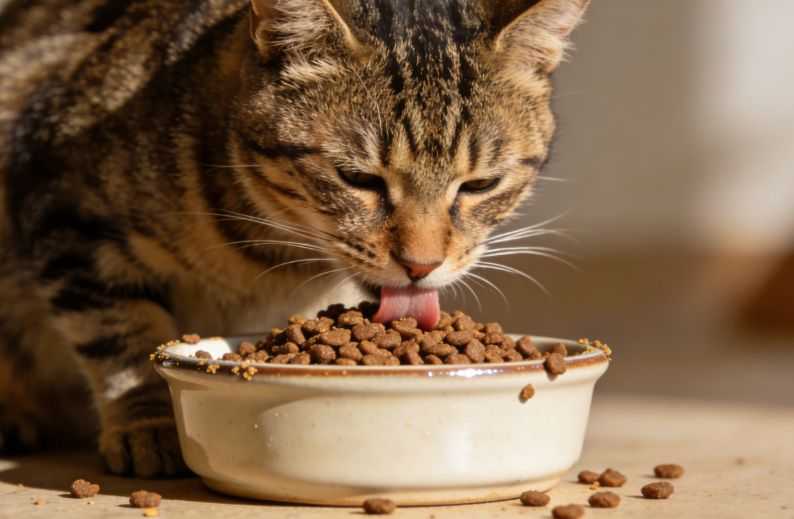
(IV)Differences in Life Stage Suitability
The American Association of Feed Control Officials(AAFCO)is a professional organization that regulates the pet food industry.Pet food that meets its nationally unified nutritional standards will indicate on the label that"the formula meets AAFCO's nutritional standards for cat food at XX(life stage)."
A cat's life stages are divided into growth stage,maintenance stage,and full life stage.The nutritional and energy requirements at different stages differ significantly:rapidly growing kittens require more nutrition and energy,while healthy senior cats require higher protein intake to maintain muscle mass.
Dog food,due to its low protein and other core nutrient content,cannot meet the long-term nutritional needs of cats at any life stage.
Feeding Recommendations:High-quality cat food is key to a cat's health
The core prerequisite for ensuring a cat's long-term healthy companionship is providing it with a healthy,high-quality diet that meets its nutritional needs.Although dog food is non-toxic and accidental ingestion of small amounts will not harm a cat,its formula is not designed for the physiological characteristics and nutritional needs of cats and cannot replace cat food as a long-term staple food.Pet owners are advised to prioritize high-quality cat food that meets AAFCO standards and is suitable for their cat's life stage to ensure a comprehensive and balanced nutritional intake.