Information
- Home
- dogs

Dogs are known for their intense love of food,especially treats offered by their owners.So,can dogs eat almonds?While small amounts of almonds usually won't cause immediate death,considering various factors,it's recommended to avoid feeding dogs almonds.Their size and composition may pose a potential risk to their digestive system,and pet owners should prioritize certified safe canine treats.The following details safety information regarding almonds for dogs,covering a safety analysis of almonds,almond butter,and almond milk.

I.Can dogs eat almonds directly?
Conclusion:Not recommended.
Although commercially available"sweet almonds"are not inherently toxic,their intake should still be strictly controlled.Dr.Nikki Graham,a veterinarian,points out that while sweet almonds are non-toxic to dogs,bitter almonds are lethal to pets due to their high cyanide content.Fortunately,bitter almonds are extremely rare in the US market,and if they are sold,the packaging will clearly indicate this.
The core risk is that even with sweet almonds,consuming more than one or two can cause health problems for dogs.
II.Potential Dangers of Almonds for Dogs

1.Risk of Gastrointestinal Obstruction
Dr.Graham explains that consuming too many almonds(such as two or more)can cause acute gastrointestinal upset in dogs,including vomiting and diarrhea.More seriously,whole almonds are difficult to digest completely,and small dogs are particularly prone to esophageal or intestinal obstruction,a life-threatening emergency that usually requires surgical intervention.
2.Risk of Choking
As a hard nut,almonds,especially small dogs,pose a significant choking hazard due to their size.Dogs chew almonds differently than humans,making it difficult for them to fully grind them,increasing the likelihood of them getting stuck in the airway.
3.Hazards of High Salt and Seasonings
Commercially available almond products often contain added salt,spices,and even chocolate coatings.High salt intake increases the burden on a dog's kidneys,and excessive consumption can lead to salt poisoning,causing edema and electrolyte imbalances.
4.Risk of High Fat and Pancreatitis
Almonds are high-fat nuts.Long-term or excessive consumption of high-fat foods significantly increases the risk of acute pancreatitis in dogs,a painful and potentially fatal inflammation.In addition,high-calorie snacks can lead to obesity in dogs and may cause them to become picky eaters,refusing to eat nutritionally balanced meals,thus disrupting their dietary balance.
III.Emergency Treatment for Dogs Ingesting Almonds
1.Small Amount Ingested(1-2 Plain Almonds)
If a dog ingests only a small amount of unseasoned almonds,especially a medium to large breed,pet owners should not panic excessively.Graham recommends close observation for 24 hours,focusing on monitoring for symptoms such as vomiting,dry heaving,diarrhea,or lethargy.If any of these digestive abnormalities occur,contact a veterinarian immediately.
2.Large Amount Ingested or Seasoned Almonds
If a dog ingests a whole bag of almonds,or consumes almond products coated with salt,chocolate,or flavoring,the situation is more urgent.In this case,contact a veterinarian immediately and take the dog to the nearest emergency veterinary hospital as soon as possible.Simultaneously,call the American Society for the Prevention of Cruelty to Animals(ASPCA)Animal Poison Control Center hotline:(888)426-4435 for professional emergency guidance.Timely medical intervention is crucial for ensuring your dog's recovery.IV.Can dogs eat almond butter and almond milk?
Conclusion:It is also not recommended to feed them almond butter and almond milk.
Almond butter and almond milk are equally unsafe for dogs,stemming from the same source of risk as almonds themselves:high fat content.Both products are made from almonds and have extremely high fat concentrations,which can easily induce or worsen pancreatitis.
Furthermore,commercially produced almond butter and almond milk may contain additives that are fatal to dogs,most notably xylitol.This is a common artificial sweetener that is highly toxic to dogs;even small amounts can lead to severe hypoglycemia and liver failure.
If you suspect your dog has ingested almond products containing xylitol,take them to an emergency veterinarian immediately for emergency treatment.Do not delay.
Summary and Safety Recommendations
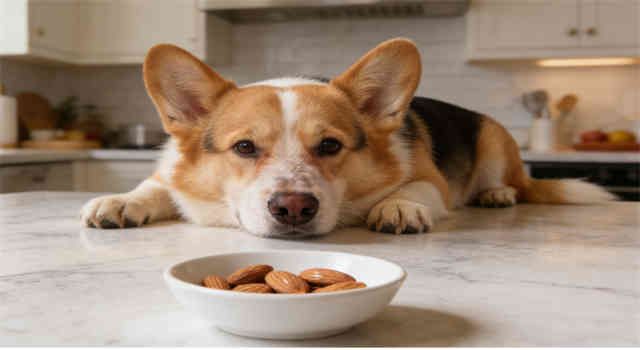
For your dog's health and safety,please add almonds,almond butter,and almond milk to your forbidden food list.Choose treats specifically designed for dogs with transparent ingredient lists to satisfy your dog's cravings while maximizing their safety.