Information
- Home
- dogs

If your refrigerator has an automatic ice maker,you might notice that your dog always comes running whenever you pour ice into a glass.It might be wondering if you've hidden away some delicious frozen treats you haven't shared.But a concern is:are ice cubes safe for dogs?
"The safest approach is to avoid feeding dogs ice cubes,"says Dr.Pam Nichols,a veterinarian and former president of the American Animal Hospital Association."While it may be amusing to watch dogs munching on ice cubes,this behavior is actually not beneficial."Are ice cubes harmful to dogs?
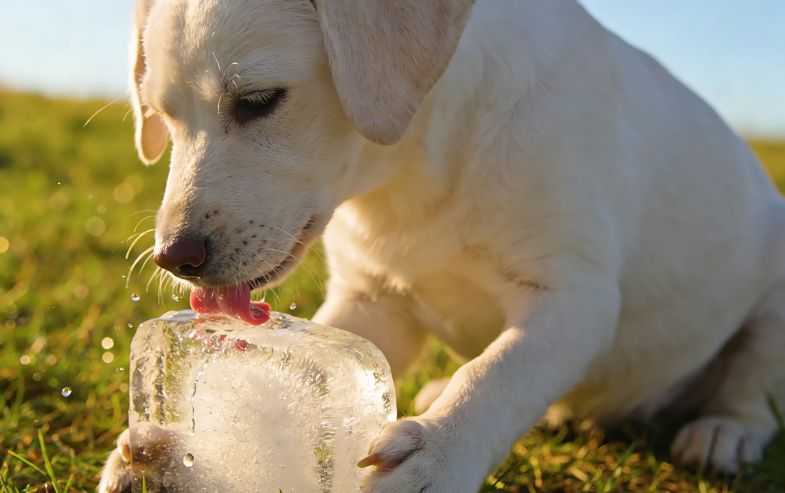
A popular blog post circulated online previously,in which a pet owner claimed that their puppy developed gastric torsion after drinking ice water.Gastric torsion is a life-threatening acute condition that causes the stomach to swell and twist,and is more common in larger breeds with deeper chest cavities.
This blog post sparked concern among pet owners worldwide,but currently,there is no scientific evidence to confirm a direct link between ice water and gastric torsion.The exact cause of bloating in dogs remains unclear,but some believe that drinking large amounts of water in a short period—regardless of whether the water is chilled—may be a risk factor for stomach upset.
In short,while eating ice won't directly cause death in dogs,this behavior poses other potential dangers for dogs that enjoy chewing on ice.For example,Dr.Nichols points out that the hard texture of ice can damage a dog's tooth enamel.
Are ice cubes beneficial to dogs?
The answer is no.Humans are accustomed to adding ice to drinks,so they might assume that dogs also enjoy drinking ice water.However,it's crucial to understand that there are fundamental differences in physiology and needs between dogs and humans.
After long walks or vigorous play(such as tug-of-war),dogs are adequately hydrated by drinking room-temperature tap water.Dr.Nichols emphasizes that giving dogs ice water or ice cubes does not provide any substantial benefit.As with any new food introduced to a dog's diet,owners should consult a veterinarian before introducing any new food to their dog to fully assess any potential additional health risks.
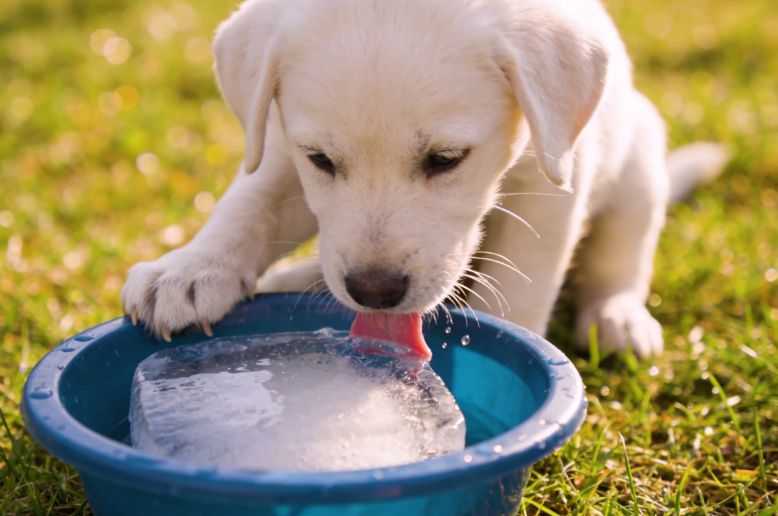
Is there a difference between crushed ice and whole ice cubes for dogs?
If you're always tempted by your dog's pleading eyes and want to share some ice with them while drinking cold beverages,Dr.Nichols advises prioritizing crushed ice over whole ice cubes.
It's important to reiterate that chewing on hard,whole ice cubes can cause teeth breakage in dogs,a risk even higher for breeds that enjoy chewing on hard objects.To avoid high veterinary costs and prevent injury,the ideal approach is to completely avoid frozen treats and only provide ample room-temperature drinking water.However,if it's necessary to give frozen treats,crushed ice pieces are generally safer than large,solid ice cubes.
Post-extraction care for dogs–Core principle:Leave it to professionals.
Can you give puppies ice cubes to relieve teething discomfort?
Puppies typically begin teething around two weeks after birth.After being adopted,puppies will enter their teething period between 4 and 6 months of age,during which their baby teeth gradually fall out to make way for permanent teeth.
It is not recommended to give puppies ice to relieve teething discomfort.Dr.Nichols suggests that to help soothe a puppy's swollen gums,a towel can be soaked and frozen for the puppy to chew on.However,this method has a drawback—it may lead to the puppy developing a habit of chewing on fabric,resulting in damage to pillows,clothing,and other items in the home.
Therefore,the safest way to help puppies relieve teething discomfort is to provide them with soft and flexible teething toys.

Will giving dogs ice help them cool down?
Dogs'body structure is different from humans;they cannot dissipate heat through sweating.For Scandinavian breeds with thick coats or short-headed,flat-faced breeds,high temperatures can pose a serious threat to their health.Whether it's a fluffy breed like the Samoyed or a flat-faced breed like the Boston Terrier,they are all prone to heatstroke.
During the hot summer,all dogs should be kept in a cool,well-ventilated environment with access to plenty of drinking water.If a dog shows symptoms of heatstroke,such as excessive panting,drooling,and abnormally red gums,the most effective way to cool it down is not by applying ice packs,but by wetting the dog's paws and abdomen with cool water and immediately taking it to a veterinarian for professional treatment.