Information
- Home
- dogs
When you prepare pork chops for dinner,your dog often looks on with anticipation.But is pork suitable for dogs?The answer depends on how the pork is cooked and how it's fed.Well-cooked pork without any added seasoning is safe for dogs when fed in moderation;however,processed pork products or seasoned pork may pose health risks.From potential digestive problems and excessive fat intake to seasoning irritation and the risk of parasites in undercooked pork,understanding the precautions for feeding pork to dogs is crucial for protecting your pet's health.
Can dogs eat pork?
Dogs can eat pork in moderation,but the following principles must be strictly followed before feeding to avoid health risks:
-The pork must be thoroughly cooked without any added seasoning to avoid irritating the dog's stomach or causing poisoning.
-Only feed lean cuts,such as tenderloin or pork loin,and remove excess fat to reduce digestive burden and disease risk.
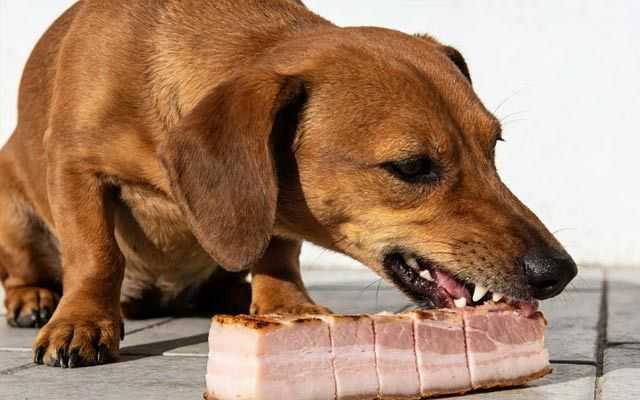
-Pork must be completely removed from the bones.Feeding dogs pork bones is strictly prohibited to prevent accidental injury.
-Control the amount of food precisely according to the dog's size.Please refer to the feeding guidelines below for details.
Can dogs eat pork bones?
While dogs can eat pork,pork bones,whether raw or cooked,are not suitable for feeding them.Pork bones are brittle and hard,especially after cooking,which further increases their brittleness.They are very easy to break during chewing and swallowing,potentially causing scratches to the mouth,gums,and cheeks,or even puncturing the digestive tract,leading to serious health problems such as bleeding,infection,and intestinal obstruction.
While raw pork bones are more chewable than cooked bones,their hardness far exceeds the tolerance of a dog's teeth,easily causing dental damage such as cracked teeth and wear.Furthermore,some pork bones are too small and may scratch the delicate tissues of a dog's mouth or pose a choking risk;these should be strictly avoided.
Nutritional Value of Pork for Dogs
Pork,as a high-quality meat,offers several nutritional benefits for dogs,specifically in the following ways:
-High-Quality Complete Protein Source:Pork is a complete protein source,providing dogs with all the essential amino acids necessary for growth and development.Protein is a core nutrient for maintaining muscle growth,stable immune function,and normal overall physiological function in dogs.
-Supplementation of Multiple Essential Nutrients:In addition to protein,pork is rich in essential vitamins and minerals such as vitamin B6,vitamin B12,potassium,and zinc.These nutrients work synergistically to aid in energy metabolism,maintain a healthy blood system,and support normal brain function.
-Highly Palatable Training Treat:Pork's naturally rich flavor is highly appealing to dogs,making it a suitable reward treat during positive reinforcement training to enhance training effectiveness.
-Easy Digestion and Absorption:Dogs'digestive systems are well-suited to meat,and pork is no exception.When fat is removed and the meat is thoroughly cooked,pork is easier for dogs to digest than other meats,reducing the likelihood of gastrointestinal upset.
Potential Risks of Feeding Pork to Dogs
The health risks of pork to dogs are largely related to cooking methods,ingredient selection,and feeding amounts.Therefore,it must be emphasized again:dogs should only be fed uncooked,thoroughly cooked pork.Specific potential risks are as follows:
-Parasite Infection Risk:Pork is prone to carrying parasites such as Trichinella spiralis.These parasites can cause symptoms in dogs such as vomiting,diarrhea,abdominal pain,loss of appetite,and weight loss.Trichinosis is a zoonotic disease and poses a risk of transmission to humans.Raw or undercooked pork is a major cause of parasite infection;therefore,pork must be thoroughly cooked.The U.S.Department of Agriculture(USDA)explicitly recommends that pork patties and ground pork mixes be cooked to a core temperature of 71.1 degrees Celsius(160 degrees Fahrenheit),and pork chops,chunks,and roasts be cooked to a core temperature of 62.8 degrees Celsius(145 degrees Fahrenheit)to completely kill parasites.
-Foodborne Illness:Raw pork may carry pathogens such as Salmonella and Yersinia,causing foodborne illnesses in dogs,manifesting as diarrhea,nausea,and abdominal pain.This also poses a potential threat to human health.
-Pancreatitis and Obesity Risks:Pork shoulder and ribs are high in fat.Excessive fat intake can easily induce acute pancreatitis in dogs.Affected dogs may experience severe discomfort such as arched back,abdominal pain,and vomiting yellow fluid.In severe cases,intensive care is required.Furthermore,long-term excessive feeding of pork(especially fatty pork)can lead to excessive calorie intake in dogs,causing weight gain,obesity,and related metabolic diseases.It is recommended to strictly control the total intake of treats;all treats(including pork)should not exceed 10%of a dog's total daily calories.
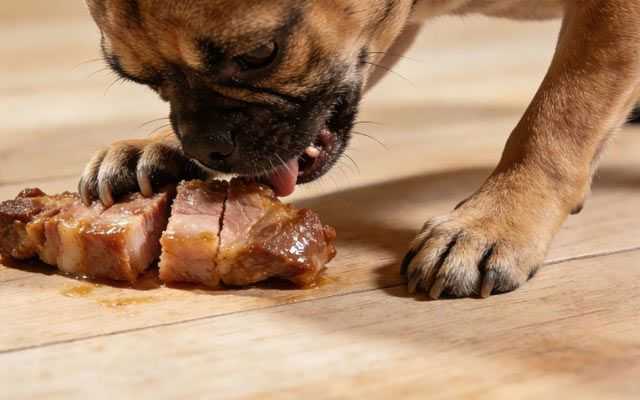
-Seasoning Poisoning Risks:Leftovers from human meals often contain seasonings such as garlic,onions,and excessive salt.These components are toxic to dogs and may cause poisoning symptoms.Therefore,it is strictly forbidden to feed dogs leftover pork containing seasonings;only plain,unseasoned pork should be provided.
-Health Risks of Processed Pork Products:Processed pork products such as bacon,sausages,and ham typically contain high levels of salt,preservatives,and other seasonings.Excessive salt intake can easily lead to dehydration and salt poisoning in dogs,manifesting as diarrhea and vomiting,and in severe cases,can be life-threatening.These products are also high in fat,further increasing the burden on the digestive system and metabolism,and should be strictly avoided.
Standard Pork Feeding for Dogs
Feeding pork should follow the principle of"moderation."The total intake of treats should not exceed 10%of a dog's total daily calories.The remaining calories should be provided by nutritionally balanced dog food to ensure a balanced nutritional intake.
When first feeding a dog pork,it should be introduced gradually,closely observing the dog's reaction.If diarrhea,gastrointestinal discomfort,or other abnormal symptoms occur,feeding should be stopped immediately,and a veterinarian should be consulted promptly.
The following are suggested feeding amounts.The recommended size for a single piece of pork is 0.5 inches(approximately 1.27 cm)long and 0.5 inches(approximately 1.27 cm)thick.These can be adjusted slightly based on the dog's actual size and digestive capacity:
Dog Size
Suggested Feeding Amount
Tottimate Dogs(2-10 lbs/approximately 0.9-4.5 kg)
1 piece
Small Dogs(11-20 lbs/approximately 5.0-9.1 kg)
1-2 pieces
Medium Dogs(21-50 lbs/approximately 1.5-2.5 kg)1 lb/approx.9.5-22.7 kg)
2-3 pieces
Large breed(51-90 lbs/approx.23.1-40.8 kg)
3-4 pieces
Extra-large breed(over 91 lbs/approx.41.3 kg)
4-5 pieces
Safe ways to feed pork to dogs
When feeding pork to your dog,ensure the pork is unseasoned,cooked thoroughly,and cut into pieces appropriate for your dog's size.Here are some methods:
-Cut cooked pork into small pieces and feed it directly as a treat,making it easy for your dog to chew and swallow.
-Fill a KONG classic dog toy with dog food and add a small amount of pork(measured according to size).This satisfies their appetite and provides entertainment.
-Mix pork pieces into your dog's regular kibble or sprinkle them on top of the kibble to increase their appetite.
-If you find it inconvenient to prepare your own,you can choose pork-flavored dog treats from reputable brands,such as Tylee's pork jerky.These treats are professionally formulated to better meet a dog's nutritional needs.
Frequently Asked Questions
Q:Can dogs eat pork chops?

A:They can eat a small amount.The pork chops must be thoroughly cooked and without any seasoning.Before feeding,the meat should be completely removed from the bones and cut into 0.5-inch thick and 0.5-inch long pieces,and fed in measured amounts according to the dog's size.
Q:Can dogs chew on pork ribs?
A:No.Pork ribs(especially cooked ones)are brittle and hard,easily breaking and injuring a dog's mouth,gums,and digestive tract.They can also cause intestinal obstruction,posing a serious safety hazard.
Q:Can dogs eat raw pork?
A:No.Raw pork may carry parasites and pathogens such as trichinella and salmonella,easily causing dogs to contract diseases.There is also a risk of zoonotic disease transmission.It must be thoroughly cooked before feeding.Q:Can dogs eat pork skin?
A:No.Pork skin is usually deep-fried or cured,resulting in extremely high fat and sodium content.This can easily cause gastrointestinal upset,obesity,and even pancreatitis in dogs,which is detrimental to their health.