Information
- Home
- others
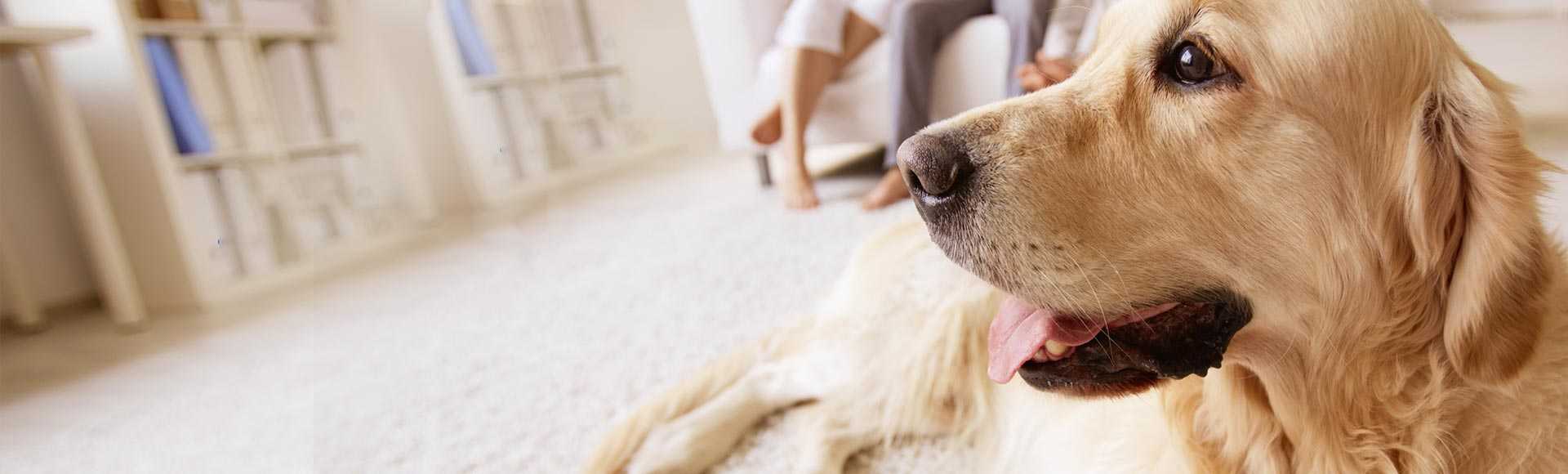
When dogs beg for food,they often first look at their owners,then may whimper,usually accompanied by pitiful eyes.When there is still food left in the owner's bowl(such as a few carrots),many owners can't resist sharing some with their adorable expressions.
From a canine nutritional perspective,occasionally feeding dogs safe"human food"usually won't harm their health,but this sharing behavior can lead to an annoying begging habit.
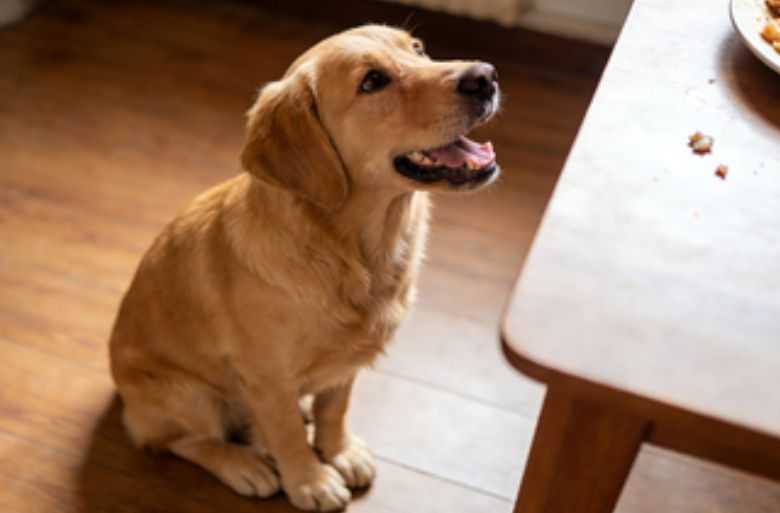
Once the dog realizes that it can get food from its owner's bowl by constantly begging,the owner may be caught in an endless"begging tug-of-war."A dog exhibiting begging behavior—or even more serious forced begging—can cause inconvenience and make its owner difficult to manage.
It's important to note that a dog's begging habit is not unchangeable.Owners can use scientific methods to correct their dog's begging behavior during meals,but the ideal approach is to take preventative measures from the outset to avoid this behavior altogether.
Causes of Begging Behavior in Dogs
For dogs,food is the primary reinforcer;its mere presence is enough to stimulate their desire to obtain it.Dogs possess an extremely keen sense of smell,easily detecting the scent of surrounding food.Furthermore,they often cannot distinguish between their owner's main meal(such as a steak dinner)and their own food,mistakenly believing that their owner's food is also theirs.
In addition,dogs have a strong learning ability.Through repeated attempts,they gradually master the methods of obtaining food,thus developing a fixed begging behavior.
Correcting Begging Behavior in Dogs
If a dog exhibits begging behaviors such as hiding under the table,whimpering,scratching its owner,or barking while its owner is eating,the owner can take the following measures to scientifically correct this behavior and help the dog establish good habits.
1.Training the Dog to Master Alternative Behaviors
Training a dog to stay quietly in a designated area(such as a mat or dog bed)is a highly practical skill that can effectively replace its begging behavior.
When the owner is eating,guide the dog to lie down in the designated area.If your dog remains lying down and relaxed throughout the meal,reward it with small treats at regular intervals.It's recommended to place the designated mat or dog bed near the dining table for easy rewarding without having to get up,improving training convenience.
As training progresses,gradually increase the interval between rewards until the dog remains quiet throughout the entire meal.Eventually,you can adjust the reward to one treat when the dog first lies down and another after the meal to reinforce the correct behavior.
Once the dog can skillfully follow the rules,gradually move its designated area(mat or dog bed)away from the dining table to further solidify the training.
2.Keep your dog busy while you eat.
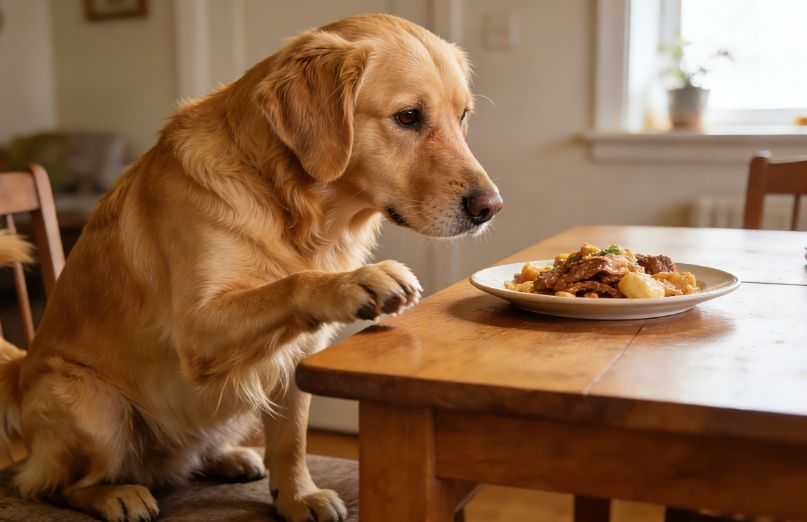
Providing your dog with suitable activities during your meal can effectively divert its attention,preventing it from focusing solely on the food in your bowl and instead directing its energy towards its own activities and food.
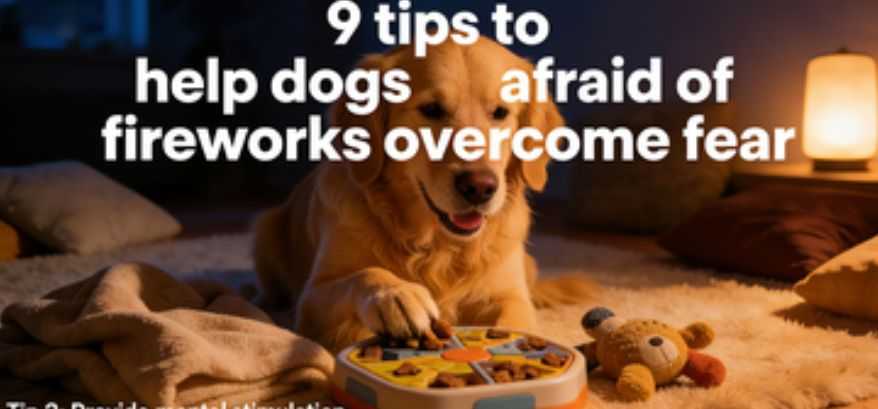
First,consider feeding your dog while you are eating.Divide your dog's daily food intake into several portions and place them in multiple treat-dispensing toys.This will make the process fun for your dog,while also consuming their time and energy.You can also mix dry and wet food and place them in suitable interactive toys to increase the fun.
Choose toys that require the dog to actively push to retrieve the food,such as treat-dispensing balls with holes.Let your dog push the toys around the room to get the food,thus preventing them from approaching your dining area.If using wet food,you can use a licking mat or licking bowl to prolong the dog's eating time and further distract them.
3.Create a separate dining space for your dog.
If your dog tries to approach you while you are eating(e.g.,rubbing its nose against your lap),you need to clearly guide it to maintain a certain distance.You can use routine dog training methods to have your dog stay still for extended periods at a distance of several feet from the table,reinforcing its sense of boundaries.
If your dog feels comfortable and safe in its crate,you can place interactive toys with food inside the crate while you are eating,allowing your dog to move around inside.A dog fence can also be used to separate the dog from the dining area,allowing the dog to enjoy its foraging activities while avoiding contact with the owner's food,creating a undisturbed environment.
4.Ignoring the Dog's Begging Behavior
If the owner chooses to correct the dog's begging behavior by"ignoring"it,be aware that the dog may experience a"regression outburst."This is because the dog will try to repeat previously effective begging techniques to get food,manifesting as louder whining,more vigorous pawing,faster pacing,and more frequent barking—behaviors that previously helped it obtain leftovers from the table.
In this situation,the owner must stick to their principles and not compromise.If the dog continues to beg,and the owner eventually gives in and gives food,it will reinforce the dog's belief that"persistence will get food,"thus exacerbating the begging behavior.Conversely,if the owner consistently ignores the behavior,the dog will gradually realize that begging is unrewarding and eventually stop begging.
Therefore,rather than simply ignoring it,it's recommended that owners combine the methods mentioned earlier to train their dogs to master alternative behaviors,or use interactive toys to distract them,preventing stress,frustration,and confusion caused by unresponsive begging.
Prevention Techniques for Dog Begging
While some dogs seem to be born with begging behavior,many others learn it.If you have a puppy or a newly adopted dog,you can effectively prevent it from developing a begging habit by following a simple rule:do not feed your dog in your own dining area.
The dining context has a significant impact on a dog's begging behavior.If a dog consistently receives food while its owner is eating,it will misunderstand this as a time when it can also receive food,thus forming a conditioned reflex for begging.
It's important to note that even outside of mealtimes,such as when the owner is walking around eating chips in the kitchen,if the dog begs for food and receives it,it can also develop a begging habit.This unintentional sharing of food teaches dogs that"asking will be rewarded as long as the owner is eating,"thus reinforcing their begging behavior.
Interactive toys filled with treats can also effectively prevent puppies from developing a begging habit.It's recommended to place toys in an area where the dog can play safely,ensuring its attention is focused on the toy while the owner is eating.Regular treats may be finished in minutes,but adding special treats(such as frozen peanut butter or mashed banana)or some dog food to the toy can extend playtime and eating time,allowing the owner to eat in peace.
The Correct Way to Share Food with Your Dog
Generally,sharing appropriate amounts of human food with your dog will not harm its health.As long as the owner pays attention to the time and place of sharing,the dog can effectively avoid developing a begging habit.
However,it's important to be wary of feeding dogs too much human leftovers,especially foods high in fat,nitrates,and other ingredients harmful to human health.This can lead to obesity,pancreatitis,and other health problems in dogs,endangering their well-being.
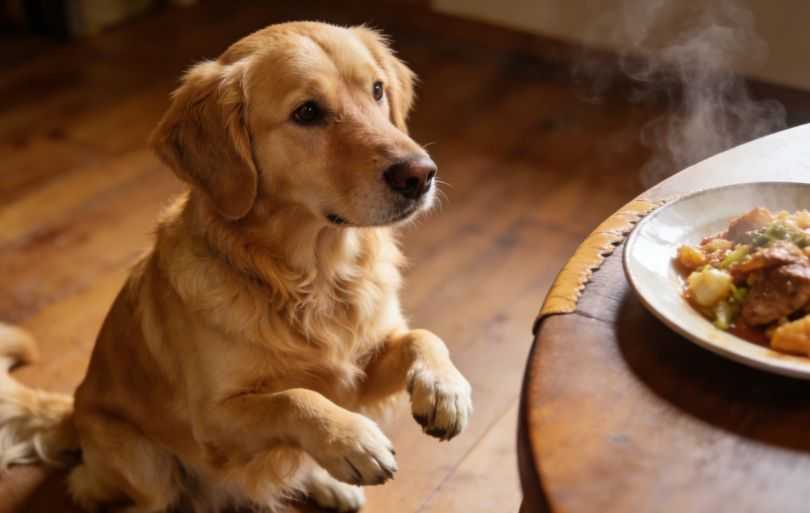
If owners occasionally can't resist sharing healthy human food with their dogs,they can use scientific methods to prevent the dog from developing an annoying begging habit.
Owners can train their dogs to go to a designated area and wait quietly until the owner is ready to share food.This training cultivates the dog's self-control and teaches it that it doesn't need to cling to its owner or beg for food.
For example,combining the mat training and quiet training methods mentioned earlier can guide the dog to patiently wait until the owner voluntarily gives it a small amount of food(such as a small piece of apple or the last bite of broccoli).This method achieves a win-win situation:the dog gets its favorite treat,and the owner has a well-behaved companion who doesn't disturb mealtimes.
Finally,it's crucial to remember to control the portion size when sharing food with your dog.90%of a dog's daily calorie needs should come from nutritionally balanced commercial dog food;the intake of treats(including shared human food)should never exceed 10%of its total daily calorie intake to ensure a balanced diet and good health.