Information
- Home
- others

Whether camping in a tent or traveling in a motorhome,camping is a wonderful way for the whole family to enjoy outdoor time.For many dogs,the new outdoor environment can be a fun-filled adventure,and it's a more convenient and hassle-free option than searching for pet-friendly hotels.
However,camping isn't suitable for all dogs(or humans),so it's essential to pay attention to relevant precautions beforehand to ensure a comfortable and enjoyable experience for everyone involved.Here are the core things to know about camping with your dog.
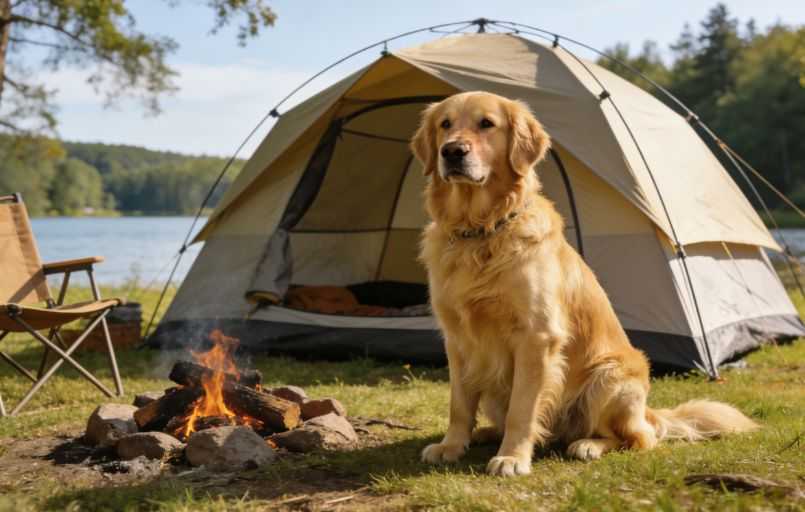
Pre-Camping Preparations
To ensure your dog has a safe and comfortable camping experience,planning ahead is crucial.
1.Do your research beforehand
While most campgrounds allow pets,not all are fully pet-friendly.If your dog doesn't meet the campground's entry requirements,do not bring them to avoid potential fines and a ruined vacation.
Additionally,confirm in advance that your dog can safely reach the planned campground.Senior dogs and small dogs may have difficulty traversing the challenging journey to the campground,so assess their physical condition beforehand.
If you are taking your dog on international or interstate travel,prepare all necessary official documentation in advance.Such trips typically require an official health certificate,which can only be issued by a designated veterinarian.The USDA Animal and Plant Health Inspection Service(USDA APHIS)Pet Travel Portal is a valuable resource for planning cross-border trips with your dog.Note that processing some documents can take several months,so allow ample preparation time.
2.Ensure your dog is vaccinated
Dogs participating in camping trips must be vaccinated with the latest vaccines.
Most areas have laws requiring dogs to be vaccinated against rabies,and campgrounds usually check vaccination certificates.
Canine distemper,leptospirosis,and Lyme disease can all be transmitted through wildlife commonly found at campgrounds(raccoons,rats,and ticks,respectively).Exposure to these pathogens can be fatal.
If you plan to stay at a campground with a large number of dogs,it is recommended to vaccinate your dog against kennel cough to reduce the risk of cross-infection.
3.Ensure your dog is microchipped
Unexpected situations are difficult to avoid—it's not uncommon for dogs to break free of their collars,chase wild animals(such as squirrels),and get lost in the woods during camping trips.
A microchip is crucial for quickly identifying your dog if it gets separated from you.Before you go camping,please ensure your contact information at the microchip registration point is up-to-date;otherwise,your dog may be difficult to find safely.
4.Prepare Appropriate Camping Gear
When camping with your dog,prepare the following items in advance:
-Dog Food:In unfamiliar environments,it's recommended to avoid changing your dog's diet.Bring their usual dog food and treats,and bring extra to ensure your dog doesn't go hungry.
-Drinking Water:Like humans,dogs are susceptible to waterborne diseases.It's recommended to bring plenty of drinking water,or prepare a human-grade water purifier to meet your and your dog's drinking needs.
-Bowls and Dishes:Foldable,lightweight food and water bowls are more suitable for camping and are easy to carry and store.
-Leash:Strictly adhere to the campsite and local leash usage regulations.A long leash allows for effective control of your dog while still allowing them some freedom of movement when walking in the woods.Depending on the campsite's conditions,portable tent pegs can be provided to ensure your dog's safety within the campsite.
-High-visibility gear:This type of gear is crucial,especially during hunting season.Equipping your dog with a high-visibility vest and/or LED light allows you to easily locate them and helps others distinguish them from wild animals,reducing safety risks.
-Camping bed:After a day of outdoor activities,dogs need a comfortable and easy-to-clean resting space.Bringing a dedicated camping dog bed will meet their needs.
5.Regularly protect your dog from parasites
Just as humans carry insect repellent when camping,dogs also need comprehensive parasite protection.Ensure your dog's flea,tick,and heartworm prevention regimen remains effective and uninterrupted.
Consult your veterinarian to confirm whether K9 Advantix(advantix for dogs)is suitable for your dog(even for short-term use).This product is one of the few pet protection products on the market that is effective against mosquitoes.Other popular and commonly used options include Simparica,NexGard,and Bravecto.
6.Find the nearest veterinary clinic
If your campsite is far from your usual residence,find a veterinary clinic near the campsite in advance,just in case.Note that many rural veterinary clinics may not provide emergency services to non-regular clients,so if your dog suddenly falls ill and needs treatment,you may need to go to a more distant medical facility.
If you frequently camp with your dog in the same area,schedule a non-emergency appointment in advance to make your dog a regular client of the local veterinary clinic.Once the veterinarian is familiar with your dog's health,they can provide more accurate and efficient medical services when needed.
7.Stock up on your dog's medication in advance
If your campsite is far from your usual veterinary clinic,replenishing pet medication in emergencies can be difficult.Therefore,if your dog needs to take a certain medication regularly,prepare a full supply before your trip and bring extra doses as a backup in case of shortages.
8.Conduct a Trial Camping Experience
If you've never camped with your dog before,we recommend a short trial trip.Choose a campsite near your home,or even set up a tent in your backyard to simulate a camping scenario.
While camping on your own lawn might be a little cumbersome,a one-night trial will allow you to fully understand how well your dog adapts to the new environment,especially their sleeping habits.If your dog shows signs of discomfort or difficulty adjusting,you can immediately bring them back indoors to avoid accidents during the actual camping trip.
During the Camping Trip
Upon arriving at the campsite,pay close attention to the following safety precautions to ensure the safety of your dog and family.
1.Supervise your dog at all times
Never let your dog out of your sight.Leaving your dog alone at the campsite exposes them to threats from strangers,wild animals,and natural disasters.Their curiosity or agitation can also lead to trouble(such as tearing up the tent or ingesting food).
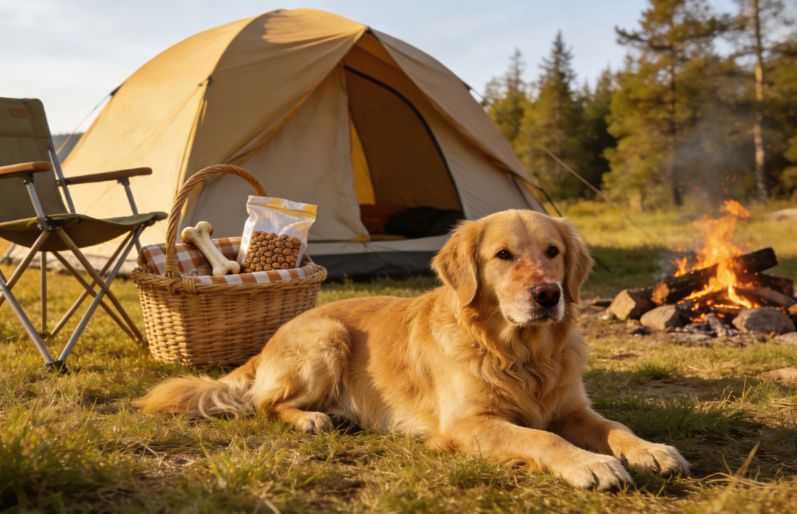
Ensure your dog cannot reach the campfire pit to prevent burns or other accidents.If using a leash and tent pegs to restrain your dog,check regularly to prevent the leash from getting tangled in tables,tents,or trees,which could injure or trap your dog.
Additionally,ensure the campsite has ample shade or shelter for your dog to rest,preventing heatstroke from prolonged sun exposure.
2.Let Your Dog Enjoy Camping
The core of a camping trip is relaxation and enjoyment for both you and your dog.Even if the campsite has trails,beaches,or other activity areas,it's recommended to bring your dog's favorite toys like balls and frisbees so they can move around and release energy.Also,bring your dog's favorite chew toys or educational toys so they can have fun while you relax,preventing boredom and unusual behavior.
After Camping
Upon returning to your accommodation,carefully check your dog's health to rule out any potential effects of outdoor activities.Although flea and tick prevention measures are now quite effective,and the probability of your dog showing signs of tick,flea,or insect bites is low,a thorough check is still necessary to ensure nothing is missed.
Giving your dog a medicated bath can not only remove dust and dirt from its fur,but also soothe skin discomfort caused by insect bites,allergens,or other factors,helping it recover quickly.
Pay special attention to your dog's paws and paw pads,checking for scratches or worn paw pads from walking on rough terrain.If you find any abnormalities or have any concerns about your dog's health,contact a veterinarian immediately for professional examination and treatment.
Common Dog Camping Questions
Is camping with your dog a good idea?
Camping is a great activity for the whole family,but not all dogs are suitable.Some dogs may prefer glamping or even staying in their familiar home.It's recommended to try camping in your backyard first,while consulting a veterinarian to determine if your dog is a good fit based on its health condition.
Is camping stressful for dogs?
Similar to humans,different dogs have varying levels of tolerance for camping.Dogs with anxious personalities or those sensitive to noise may prefer staying in a quiet,familiar home,and the camping environment may cause them stress.For dogs with strong hunting instincts,fear of strangers,or aggression towards other dogs,extra caution is needed when camping,as the complex environment of a campsite may trigger negative reactions and create safety hazards.
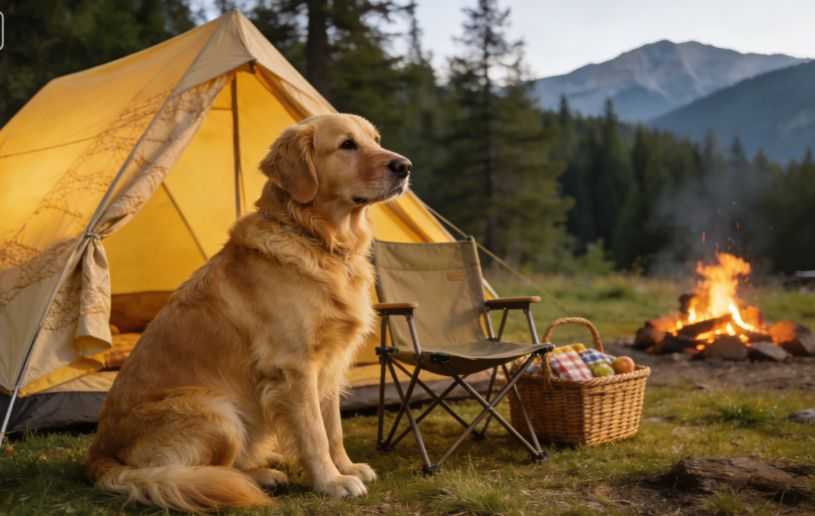
Where is a good place to camp with your dog?
Campsites that explicitly allow dogs are ideal.These campsites usually have specific pet management regulations that ensure the safety of dogs while also maintaining the experience of other campers.Before camping in state or national forests,check the relevant regulations in advance.These areas may contain protected areas and wildlife habitats;dogs should be kept away from these areas to prevent disturbance to wildlife and ensure their own safety.