Information
- Home
- dogs
The causes of vomiting in dogs are complex and encompass a variety of situations.Some causes,such as intestinal obstruction or ingestion of toxins,can be life-threatening;while others may only cause mild gastrointestinal discomfort due to food irritation,with minimal impact on the dog's health.
Regardless of the specific cause of vomiting,after a dog begins to recover,pet owners usually focus on how to feed it properly to prevent recurrence.
This article will discuss in detail the feeding plan and procedures for home care of dogs after vomiting.More importantly,it will clarify the various situations in which immediate veterinary attention is required when a dog exhibits vomiting,providing pet owners with scientific and standardized care guidance.
Key Points
-It is not recommended to feed a dog immediately after vomiting.
-If the dog's vomiting is accompanied by other abnormal symptoms,such as blood in the vomit,multiple vomitings within 24 hours,or signs of pain,contact a veterinarian immediately.
-If the dog is in good condition and the vomiting is mild,depending on its size,you can temporarily stop feeding it to allow its gastrointestinal tract to rest and recover.
Should you feed a dog after it vomits?
In short,it's not recommended to feed a dog immediately after vomiting.Regardless of the urgency of the vomiting,the dog's gastrointestinal tract should be allowed to rest fully until it recovers its normal function.Feeding should only be resumed gradually afterward to avoid irritating the damaged digestive system and worsening the vomiting.
Emergency Situations with Dog Vomiting
In some cases,immediate veterinary attention is necessary when a dog vomits.At this time,home care or feeding may pose risks.If your dog exhibits any of the following symptoms,please call a veterinarian or visit an emergency veterinary clinic immediately for prompt medical attention:
-The dog is too young(puppy)or too old(senior dog);
-The dog has an underlying health condition that makes it more susceptible to dehydration,malnutrition,or other vomiting-related complications;
-The dog vomits three or more times in 24 hours;
-The dog is dry heaving(attempting to vomit but no vomit comes out);
-The vomit contains blood or is bloody;
-The dog is lethargic,weak,confused,or shows obvious signs of pain;
-The dog has severe diarrhea,or exhibits other worrying symptoms such as lethargy,sudden weight loss,weakness,or difficulty breathing.
Nursing Care for Mild Vomiting in Dogs
Conversely,if your dog is a healthy adult and only vomits 1-2 times,and its mental state and behavior are normal after vomiting,the vomiting may be due to ingesting unusual food or mild gastroenteritis,which usually resolves on its own and does not require immediate veterinary attention.
The first step in home care for mild vomiting in dogs is to stop feeding them.Eating will irritate their already upset gastrointestinal tract,potentially worsening the vomiting.Allowing the digestive system to rest is crucial for its recovery.
If your dog experiences mild vomiting,you can provide home care as follows:
-Fasting duration:Puppies or small dogs should fast for 4-6 hours;adult dogs or large dogs should fast for 12 hours;
-During the fasting period,strictly prohibit feeding any snacks,leftovers,or other similar foods;
-Provide your dog with an appropriate amount of fresh water.If your dog has a habit of drinking large amounts of water at once,control the water level and encourage it to drink small amounts frequently to avoid irritating its stomach.
Special attention should be paid to the fact that while healthy puppies may tolerate brief periods of fasting for mild vomiting,some dogs should absolutely not be allowed to go hungry for extended periods.These include:
-Puppies:Irregular feeding can easily lead to hypoglycemia,endangering their health;
-Dogs with diabetes requiring insulin injections,or dogs with pancreatic tumors(insulinomas):Irregular feeding can easily induce hypoglycemia,with serious consequences;
-Any dogin poor health and over 1 year of age:Consult a veterinarian beforehand to assess whether fasting is suitable.
Feeding after Fasting
If the dog does not vomit after the fasting period(and meets the applicable conditions for fasting),and the vomiting is acute and mild,you can try gradually resuming feeding.Acute vomiting here refers to vomiting that starts suddenly and lasts no more than 3 days,similar to acute vomiting in humans caused by food poisoning,norovirus infection,etc.,with relatively mild symptoms.
Mild vomiting usually doesn't significantly impact a dog's overall health,and if it vomits no more than 2-3 times in 24 hours,it may be difficult to detect without careful observation.
If your dog experiences acute mild vomiting and has already completed a 4-12 hour fast(depending on its size and age),you can gradually reintroduce food using the following steps:
I.Gradually Reintroduce Food
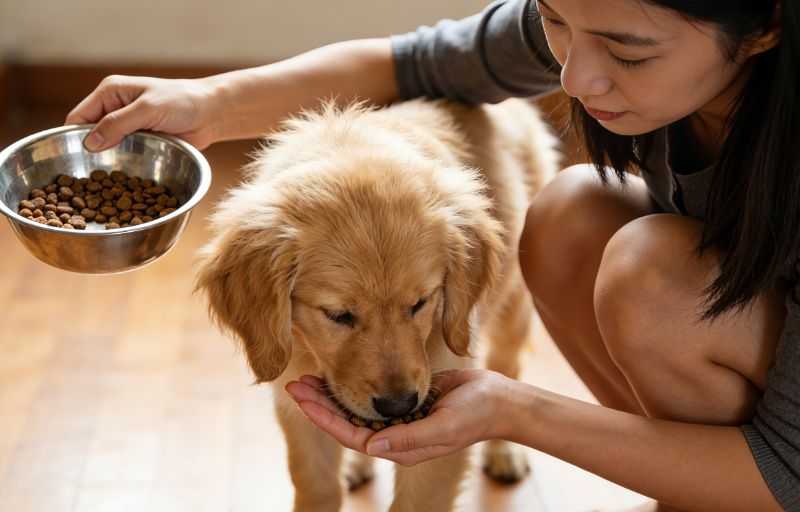
Feeding should follow a gradual approach,similar to how humans resume eating after vomiting:avoid immediately giving oily or hard-to-digest foods.Usually,start with easily digestible foods like toast or biscuits,and observe the dog's reaction.This approach should also be used for dogs,avoiding rushing the process.
II.Resuming the Dog's Regular Food
If your dog requires a special diet,or if easily digestible commercial dog food is unavailable,gradually reintroduce its previous regular diet.
In the short term,wet food is generally better than dry food.Wet food is easier to digest,and the extra moisture helps maintain the dog's fluid balance and prevent dehydration.
III.Daily Feeding Amount and Schedule for Dogs After Vomiting
The method of resuming feeding is just as important as the choice of food.The following feeding guidelines will help you gradually guide your dog back to a normal diet after vomiting,reducing the risk of recurrence:
Day 1
For healthy adult dogs only:Fast for 4-12 hours.If the dog does not vomit again during the fasting period,proceed to Day 2.
Day 2
-The first feeding is 10%of the dog's normal daily food intake.Observe for several hours after feeding.
-If the dog does not vomit,the second feeding is 25%of the normal daily food intake.Continue to observe for several hours.
-If the dog still does not vomit,the third feeding is 25%of the normal daily food intake.Observe for several hours.
-If there is no vomiting throughout the day,the fourth feeding is 50%of the normal daily food intake.
Day 3
-First feeding:50%of the dog's normal daily food intake.Observe for several hours.
-If the dog does not vomit,the second feeding:50%of the normal daily food intake.Observe for several hours.
-If there is no vomiting throughout the day,resume the normal daily food intake.
Day 4
Divide the dog's normal daily food intake into three evenly distributed meals,feeding at regular times and in measured amounts,gradually restoring a regular diet.
Day 5 and beyond
If the dog's appetite has recovered well and there are no vomiting symptoms,you can gradually transition to the dog's regular diet according to the above guidelines,depending on the actual situation.
Important Note:If the dog vomits again,refuses to eat,or the vomiting worsens during the gradual resumption of feeding,stop feeding immediately and contact a veterinarian to promptly investigate the cause and provide treatment.
Prescription Food Selection for Dogs with Chronic Vomiting
If the dog's vomiting symptoms persist for more than 2 days,it is considered chronic vomiting,not acute vomiting.Chronic vomiting in dogs can be caused by a variety of health issues,including:
-Intestinal parasite infections;
-Inflammatory bowel disease;
-Partial gastrointestinal obstruction;
-Viral or bacterial infections;
-Chronic or relapsing pancreatitis;
-Organ dysfunction(such as kidney disease,liver disease);
-Food allergies or intolerances;
-Side effects of certain medications;
-Cancer.
Dietary management plays an important supporting role in the treatment of many of these conditions.Specific examples are as follows:
-For dogs with inflammatory bowel disease,food sensitivities,or food allergies,veterinarians often prescribe hypoallergenic prescription foods(such as Hill's Prescription Z/D)to help reduce gastrointestinal irritation and alleviate symptoms.
-For dogs with chronic pancreatitis,a low-fat diet is more suitable(such as Royal Canin Veterinary Prescription Adult Low-Fat Gastrointestinal Dry Food)to reduce the burden on the pancreas.

-For dogs with chronic kidney disease,it is generally recommended to choose dog food containing an appropriate amount of high-quality protein.Common recommendations include Hill's Prescription K/D Kidney Care Formula,Purina Pro Plan Veterinary Prescription NF Kidney Function Formula,and Royal Canin Veterinary Prescription Adult Kidney Support D Gravy Flake Formula.
Dogs with persistent vomiting often experience loss of appetite.Some pet owners may choose to prepare home-cooked meals for them,but feeding them home-cooked meals long-term may pose health risks—most home-cooked meals are not nutritionally complete and balanced.Even for healthy dogs,long-term consumption can lead to nutritional deficiencies,let alone dogs with chronic diseases.
If a dog has a chronic illness,it's difficult to develop a healthy long-term diet plan without professional guidance from a veterinary nutritionist.
For dogs that are vomiting,a balanced and appropriate nutritional intake is crucial.Your veterinarian can recommend the most suitable food and create a personalized diet plan based on your dog's specific condition and health status.