Information
- Home
- cats

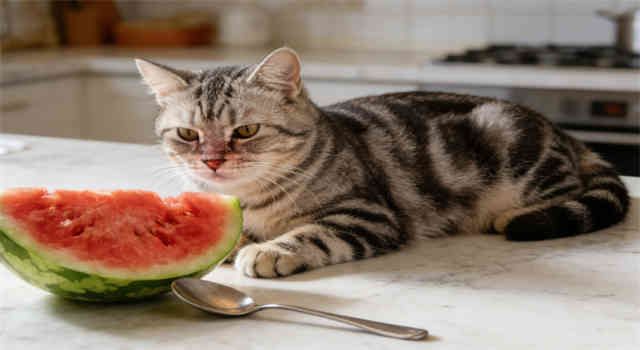
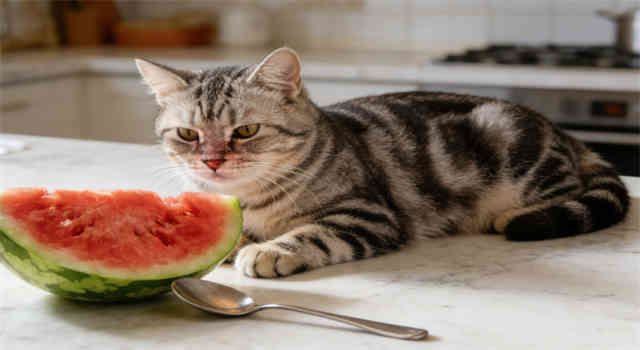
Watermelon is a healthy summer food that combines a refreshing taste with hydration—at least for humans.However,many cat owners wonder:can cats eat watermelon?If you're curious and want to let your furry cat try a bite,there's no need to worry excessively!From veterinary clinical experience and pet nutrition research,watermelon is generally considered a safe food for cats.However,before introducing watermelon into your cat's diet,it's recommended to first determine if it's suitable for your cat's health condition and to adopt scientific feeding methods and preventative measures to ensure your cat's health.
Nutritional Value and Limitations of Watermelon for Cats
As carnivores,cats have unique physiological and nutritional needs,and their required nutrients differ significantly from those of humans.Dr.Teresa Entriken,a veterinary consultant in Leywood,Kansas,points out,based on the nutritional and physiological characteristics of cats,that"cats do not have a minimum daily carbohydrate requirement,and watermelon,while relatively high in carbohydrates,cannot provide the core nutritional support needed for cats."
From a nutritional perspective,cats are strict carnivores.Key nutrients required for their growth,development,and physiological function(such as taurine and arachidonic acid)are found only in animal-based foods and cannot be replaced by plant-based foods.The Small Animal Clinical Nutrition Service at the University of Missouri-Columbia clearly states in its pet nutrition guidelines that"the simplest and most scientific way to meet a cat's comprehensive nutritional needs is to provide them with a complete and balanced commercial cat food formulated by a professionally certified veterinary dietitian or a PhD in animal nutrition.This type of cat food precisely matches the nutritional needs of cats at each stage."
This means that as long as a cat obtains all the necessary nutrients through its daily staple food,there is no need to supplement its nutrition with treats such as watermelon.Meanwhile,pet nutrition research shows that cats'nutritional intake needs to follow the principle of"precise matching,"not more is better.Excessive intake of non-essential nutrients may disrupt the nutritional balance in a cat's body,leading to digestive disorders,metabolic abnormalities,and other problems.
Watermelon Safety and Precautions for Cats
From a toxicity perspective,watermelon has no obvious toxicity to cats.Healthy cats usually will not experience poisoning reactions from consuming small amounts.However,the following three points should be carefully considered when feeding watermelon to cats to avoid potential health risks.
First,the suitability of feeding watermelon should be determined based on the cat's health condition.Dr.Entriken emphasizes that if a cat has metabolic diseases such as diabetes,watermelon should be strictly avoided—the monosaccharides(mainly glucose and fructose)in watermelon are easily digested and absorbed by cats,causing a rapid rise in blood sugar,worsening the condition,and hindering disease control.
Second,cats vary greatly in their individual tolerance to food.The Small Animal Clinical Nutrition Service at the University of Missouri-Columbia further explains:"A cat's reaction to food is individualized.It's necessary to consider each cat's age,weight,and gastrointestinal function to determine if a particular food is suitable.Some cats may experience no discomfort after eating a small amount of watermelon,while others may experience vomiting,diarrhea,or other gastrointestinal reactions."
Third,regarding the proportion of a cat's nutritional intake,their daily calorie intake should primarily come from their dedicated staple food.Human food(including watermelon)should only be given as occasional treats,and the intake must be strictly controlled.According to the general standards in pet nutrition,treats should not account for more than 10%of a cat's total daily calorie intake.Overfeeding can affect a cat's normal intake of staple food,leading to nutritional imbalances.
Scientific Guidelines for Feeding Watermelon to Cats
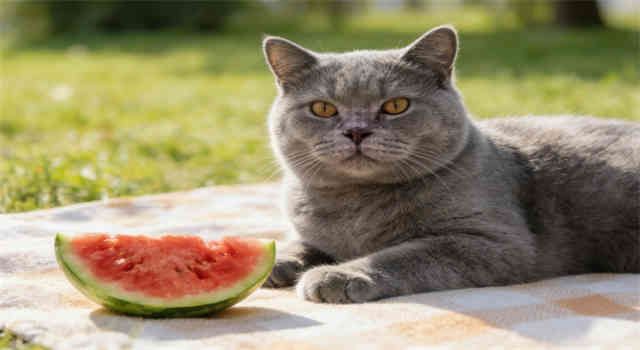
Based on the physiological characteristics and nutritional needs of cats,and the food properties of watermelon,the following are specific steps for safely feeding watermelon to cats,for owners'reference:
1.Consult a veterinarian beforehand:According to pet medical guidelines,before feeding a cat any new human food,even if the food is generally considered safe for pets,you should consult a veterinarian first.1.Veterinarians will assess a cat's age,health condition,and nutritional needs to determine if watermelon is suitable for them,avoiding health problems caused by individual differences.
2.Precisely calculate feeding amounts:To determine the safe amount of watermelon for a cat,it's necessary to calculate based on their daily calorie requirements.The Small Animal Clinical Nutrition Service at the University of Missouri-Columbia explicitly recommends that treat calories should be limited to no more than 10%of a cat's total daily calorie intake.For example,if a cat needs 250 calories per day,then treat calories should not exceed 25 calories.According to food nutrition data released by the U.S.Department of Agriculture(USDA),one cup(approximately 240 grams)of watermelon contains about 45 calories.Based on this,the daily watermelon feeding amount for a single cat should be strictly controlled to no more than 1/2 cup.Since each cat's weight and activity level are different,their daily calorie requirements and ideal weight vary.If you are unsure about your cat's calorie requirements or ideal weight,it is recommended to consult a veterinarian to develop a personalized nutrition plan.
3.Proper Food Preparation:Before feeding,thoroughly wash the watermelon with clean water to remove residual pesticides,dust,and other impurities.Then cut the watermelon into small pieces similar in size to cat food pellets for easy chewing and digestion.Completely remove the watermelon seeds—they are difficult for cats to digest and may irritate their stomach,causing bloating,diarrhea,and other discomfort.Never feed the watermelon rind;its coarse fibers are difficult for cats to break down effectively,easily leading to indigestion and even intestinal obstruction.
4.Close Observation:The Small Animal Clinical Nutrition Service at the University of Missouri-Columbia reminds cats that even foods considered safe can trigger unexpected allergic reactions or gastrointestinal issues.Therefore,after feeding your cat watermelon for the first time,observe them closely for 24-48 hours,paying close attention to any signs of gastrointestinal discomfort or allergies such as vomiting,diarrhea,lethargy,and decreased appetite.It is recommended to introduce only one new food at a time.If your cat shows signs of discomfort,the cause can be quickly identified and addressed promptly.If you notice an adverse reaction to watermelon,stop feeding it immediately and contact a veterinarian for a solution.
Summary:Should cats eat watermelon?
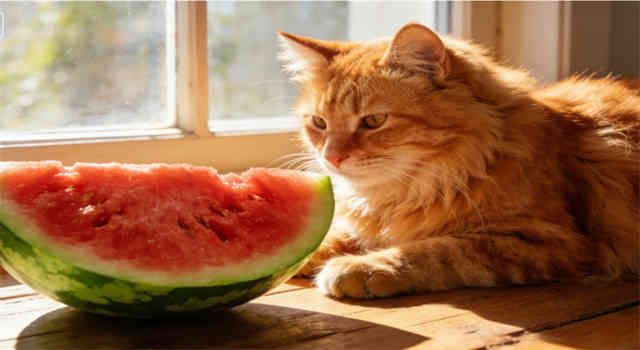
While watermelon is non-toxic to healthy cats and can be given as an occasional treat,this does not mean that cats"should"eat it.From a pet nutrition perspective,the core value of treats is to enhance interaction with the cat,not to supplement nutrition.Watermelon is not a necessary component of a cat's balanced diet,so there is no need to deliberately feed it to your cat.Dr.Entriken,based on clinical observations,adds:"Most cats lack interest in sweet foods;their taste buds prefer animal-based foods such as chicken and fish,and they have a lower acceptance of watermelon."
If your cat shows curiosity about watermelon and meows wanting to try it,following the above scientific feeding principles is the safest way to meet its needs.If you are unsure whether your cat is getting enough essential nutrients from its daily diet,it is recommended to consult a veterinarian promptly.The veterinarian will develop a suitable dietary plan based on the cat's specific situation.It is particularly important to emphasize the importance of consulting a veterinarian,which is a core principle for ensuring your cat's health.Maintaining open and honest communication with your veterinarian and promptly consulting on diet and health-related issues is key to mitigating pet dietary risks and ensuring your cat's safety and health.Any questions related to your cat's diet(including the feeding of various treats)are worth discussing in depth with your veterinarian.