Information
- Home
- others

The concept of canine aggression often instills fear in pet owners.As close companions to humans,dogs exhibiting behaviors beyond their usual cuteness and friendliness often cause concern.
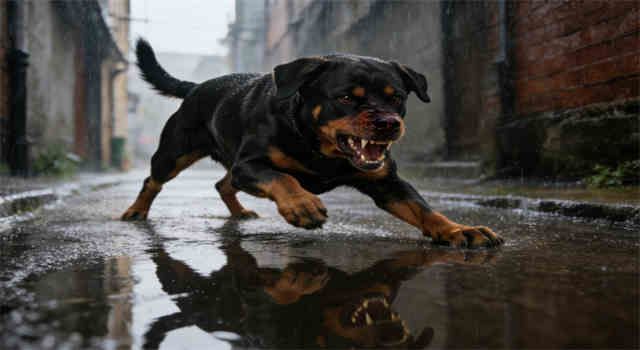
However,some forms of aggression are actually normal communication within a canine community.Aggression is an instinctive reaction in dogs to various situations,and its causes are diverse,including physical pain,fear,and cognitive confusion.Furthermore,not all such behaviors are intentionally aggressive.
Understanding the various manifestations of canine aggression not only helps in taking appropriate measures but also helps pet owners better protect their dogs—when a dog exhibits aggression due to fear or pain,it can be promptly removed from the dangerous environment or taken to a veterinary facility for treatment.
What are the specific signs of canine aggression?
"Aggression"is a broad term encompassing many canine communication behaviors that are easily misunderstood and difficult for humans to comprehend.
People often consider barking,biting,and other threatening behaviors as the primary manifestations of canine aggression,but this is not always the case.Some aggressive behaviors are subtle,and many pet owners often ignore these signals until the dog's reaction escalates into more obvious aggression,at which point they realize the warning signs.
In other words,typical aggressive reactions as perceived by humans are not the primary responses dogs exhibit when stressed or uncomfortable.Early,subtle signs of discomfort displayed before a dog's aggression escalates are often difficult for humans to detect.
Behaviors that can be categorized as aggressive reactions include early warning signs that can prevent further escalation of aggression,specifically:
-Yawning
-Freezing of the body
-Staring intently at the target
-Licking lips
-Baring teeth
-Nuzzling people or other dogs(equivalent to a mild warning,i.e.,an attempted bite)
-Biting the air
-Growl
-Pouncing bite
-Light bite followed by a quick release
-Forceful biting causing bruises or skin damage
Are some dog breeds inherently aggressive?Media reports often mislead the public,leading them to believe that certain dog breeds are"naturally fierce"and that aggression is an inherent personality trait.However,"aggression"is a broad term encompassing a range of aggressive and defensive behaviors and should not be used as a universal label for any specific breed.
Some breeds may be perceived as more aggressive by the public due to their size,physical characteristics(such as a large head and broad chest),and perceived aggression(e.g.,an aggressive Chihuahua is unlikely to cause serious harm to humans).However,there is no such thing as a breed being"naturally aggressive."
Canine behavior is the result of both innate factors and environmental influences.Aggressive behavior is usually caused by a combination of factors,including:

-Genetic factors:If the mother dog is shy,lacks social skills,and is easily frightened,her offspring may be more likely to exhibit similar aggressive behaviors.
-Developmental factors:Dogs raised in deprived environments may exhibit food guarding behavior while eating.
-Traumatic Factors:Dogs with a history of abuse(such as being kicked or punched)may exhibit aggressive behavior towards human feet.
Because canine aggression is a reaction to various scenarios and triggers,the term"aggression"cannot be simply attributed to a specific breed.
Types of Canine Aggressive Behavior
The following are some of the most common types of canine aggressive behavior:
-Leash Aggression:When walking a dog on a leash,the dog may bark or bite at stimuli such as other dogs,humans,vehicles,or bicycles.
-Barrier Aggression:Dogs isolated by a fence may bark or bite at stimuli passing by.
-Fear Aggression:Dogs in a state of stress may exhibit distancing behavior(such as yawning or stiffening).If forced beyond their comfort zone,they may exhibit more pronounced aggressive behaviors such as biting.
-Pain Aggression:This type of aggressive response usually occurs rapidly and includes barking,baring teeth,or biting.It may be a stress response to anticipated or subsequent touching.-Displacement Aggression:Excited dogs,unable to react as they please(e.g.,wanting to chase a squirrel on the other side of a fence),may shift their aggression towards nearby humans or other dogs.
-Possessive Aggression:Also known as resource possession aggression,this refers to defensive aggression exhibited by dogs when they possess valuable items(such as food bowls or trash).
-Territorial Aggression:Aggressive behavior exhibited by dogs when they perceive their territory(such as a yard,house,or room)as threatened.
-Inter-Canine Aggression:Aggression shown by dogs towards other dogs of the same species(whether unfamiliar or from a fellow dog).
-Canine Aggression towards Humans:Aggression shown by dogs towards humans.This general label can encompass any of the above types of aggression.For example,a dog's aggression towards humans may stem from fear,pain,or a need for distraction.
Why Do Dogs Suddenly Become Aggressive?
Sudden changes in canine behavior require prompt veterinary diagnosis,as physical pain can be a contributing factor.Furthermore,changes in the living environment(such as the presence of strangers in the home,nearby construction activities,or changes in sleep patterns)can also trigger sudden aggression in dogs.
However,labeling such reactions as"sudden"aggression may overlook subtle warning signs.Humans often fail to detect early signs of stress and discomfort in dogs,ultimately forcing them to adopt more overt behaviors to express their intentions.
For example,a dog may exhibit mild,persistent resource-possessing behaviors(such as eating faster than usual),which are often ignored until the dog feels it has no other choice but to bite or bark,at which point a clear aggressive response will occur.
How to soothe an aggressive dog?
The core principle when dealing with an aggressive dog is to avoid resorting to violence or punishment.
Aggression is a form of communication for dogs.Although humans may not approve of this method,only by understanding the message the dog is trying to convey can we find the root cause behind its aggression.Punishing a dog through methods such as collar correction,loud scolding,or even physical punishment may temporarily stop the aggressive behavior,but it cannot change the emotional drivers behind the behavior.Punishing a dog's reactive behavior can have unintended side effects—impairing its ability to communicate effectively.For example,if a dog growls when someone approaches its food bowl,a loud reprimand might cause the dog to abandon this warning growl;when pushed to its limit,the dog might resort to more violent and dangerous reactions(such as biting or tearing)to drive away the other person.
To calm an aggressive dog,the owner needs a comprehensive understanding of its behavioral characteristics,including:
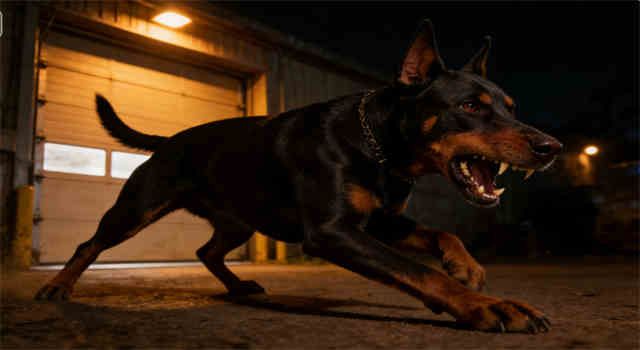
-Frequency/Predictability:For example,does the dog guard its food bowl at every meal,or only when eating special ingredients at dinner?
-Duration:Does the dog continue to guard its food bowl for several hours after finishing eating?
-Target of Attack:When guarding its food bowl,does the dog prevent everyone in the household from approaching,or is it only targeting specific individuals?
How to stop a dog's aggressive behavior?
Preventing canine aggression requires comprehensive,canine-centered socialization training during puppyhood,with continuous reinforcement throughout the dog's life.However,even with these preparations,dogs may still exhibit aggression,such as transferred aggression.
The best approach is to seek help from a qualified dog trainer who uses scientifically sound positive reinforcement methods to develop a personalized behavioral correction plan.Depending on the specific context,triggering factors,and individual canine differences,there are various methods for addressing canine aggression.
The trainer may teach owners behavioral management techniques.For example,if certain types of visitors cause stress,the dog can be kept in a quiet room to reduce stress.Desensitization training and counter-conditioning may also be recommended.Some types of aggression may require veterinary examination and anti-anxiety medication as supplementary treatment.
People often mistakenly believe that all canine aggression stems from threats or intimidation;however,aggression can be both defensive and offensive.Finding the root cause of canine aggression and adopting scientific and reasonable coping strategies can help restore harmony in the family.