Information
- Home
- others
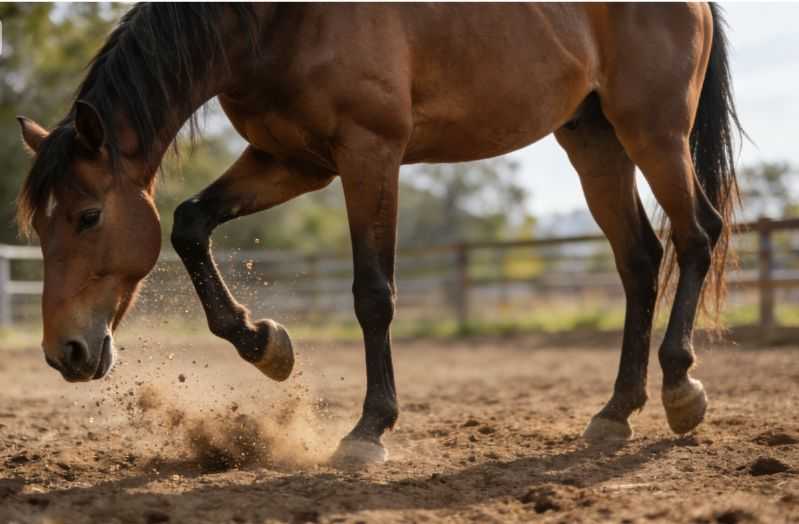
If you've ever observed your horse digging at the hitching post or in the stable,you might wonder,"Why does my horse dig like that?"
Digging is a natural behavior in horses,and it can convey a variety of signals,including excitement,frustration,boredom,curiosity,being bothered by flies,and sometimes even physical pain.Therefore,learning to identify the underlying causes of digging and taking timely,targeted measures to stop inappropriate digging is crucial for horse care.
I.The Core Meaning of Digging Behavior in Horses
Horses use digging to communicate with each other and with humans.Gentle and infrequent digging is a normal behavior for horses to interact with their environment and express their needs,and there's no need to worry excessively.
However,when digging becomes more frequent,stronger,and aggressive,it may indicate the following conditions that require the owner's attention:
-Anticipation of food or outdoor activity;
-Releasing stress due to boredom;
-Being in a state of fear or experiencing physical pain.
Sometimes,the reason behind a horse's pawing behavior alone is insufficient to accurately determine its underlying cause.Therefore,interpreting this behavior requires considering other relevant factors.If you observe a horse pawing,it is recommended to assess potential triggers from the following aspects:
-Timing(e.g.,is it close to feeding time or grazing time);
-Are there many flies in the surrounding environment?
-Have new wood shavings been laid in the stable,exercise area,or areas where the horse prefers to roll?
-Is the horse's environment lacking sufficient emotional stimulation,or is the stimulation too intense?
-Has the horse recently experienced a long journey?
-Are there any signs of physical pain?
II.Seven Common Reasons for Horse Pawing
1.Anticipation or Excitement
Pawing is a common way for horses to express anticipation,usually occurring when they anticipate an upcoming activity or journey to a certain location.This often happens before feeding,grazing,or riding activities and is a direct manifestation of the horse's excitement.
2.Seeking Attention
Horses possess high intelligence and can quickly recognize that pawing can elicit a human response.If a horse realizes that pawing gains attention or food rewards from its handler,this behavior will be reinforced and gradually evolve into a bad habit.
3.Stress,Anxiety,or Frustration
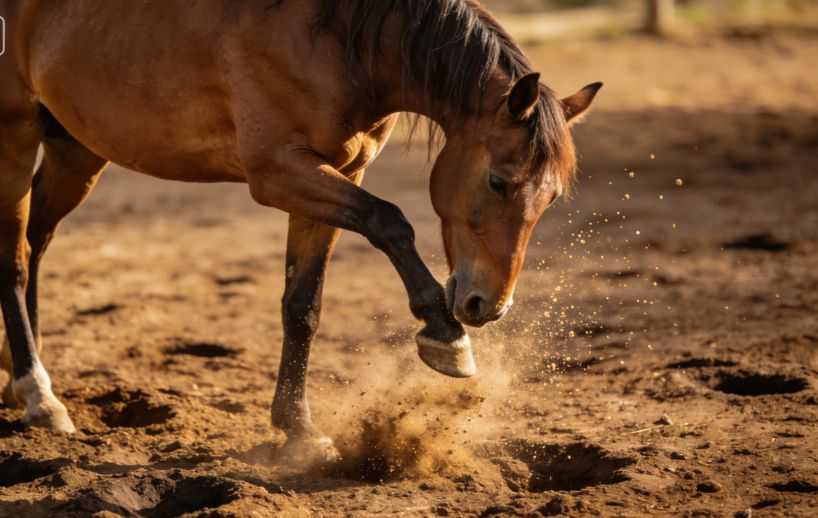
The lifestyle of domesticated horses differs significantly from that of wild horses.This change in lifestyle(such as prolonged confinement in stables,being ridden by humans,and consuming grains and other concentrated feeds)can lead to increased stress levels in horses.Horses may release stress from various stimuli by pawing.Common stimuli include:
-Confinement(e.g.,being unable to graze properly due to inclement weather,or being confined indoors for extended periods);
-Social isolation(e.g.,being separated from their companions due to medical needs);
-Unfamiliar or frightening environments(e.g.,participating in equestrian performances,traveling to unfamiliar locations in a trailer).
Pawing behavior triggered by anxiety is usually accompanied by other behavioral abnormalities such as pacing and swaying,which can be used as diagnostic indicators.
4.Boredom or Lack of Stimulation
Horses may also exhibit pawing behavior when bored or lacking sufficient stimulation.For example,a horse that has been resting in the stable for a long time may stand in front of the stable and repeatedly paw at the ground.In this case,providing toys or other toys can enrich the horse's mental life and alleviate boredom.
5.Physical Discomfort or Pain
Pawing behavior may be a sign of physical discomfort or pain in horses.Common causes include improper saddlery,musculoskeletal pain,with abdominal pain being the most typical.
If a horse is pawing the ground along with any of the following symptoms,contact a veterinarian immediately for examination to rule out serious health problems:
-Loss of appetite,or even complete refusal to eat;
-Frequent pacing,unable to stand still;
-Repeated rolling over,showing obvious pain;
-Biting the sides of the abdomen in an attempt to relieve discomfort;
-Lethargy,drowsiness,and sluggishness;
-Significantly reduced fecal output;
-Repeated stretching and abnormal posture;
-Significantly increased respiratory rate or heart rate;
-Absence of bowel sounds,abnormal abdominal tension.
6.Pawing to Explore or Gather Area
Pawing is an effective way for horses to explore their surroundings,and this behavior occurs in both wild and domesticated horses.
Horses use their hooves to dig up shavings or dirt to create more comfortable areas for rolling or lying down;they may also use pawing to turn over dry or green grass to select more palatable food.
7.Swatting Flies and Regulating Body Temperature
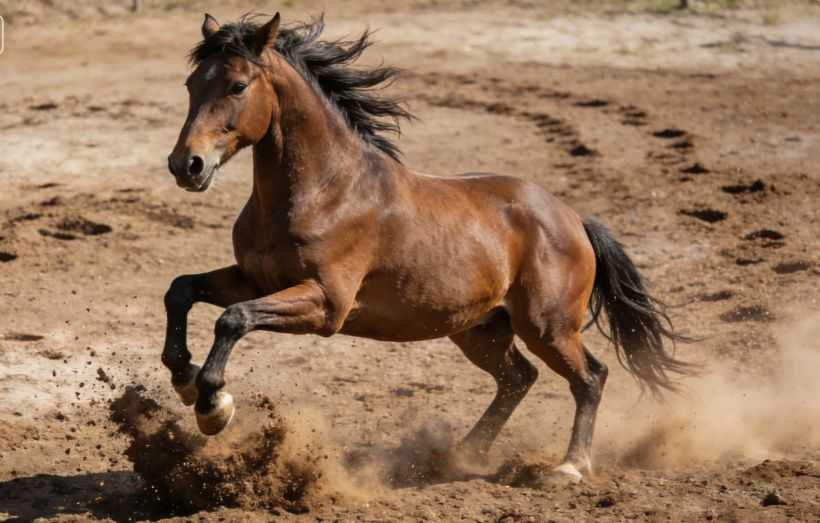
Fly bites are one of the most common causes of pawing in horses.Horses have extremely sensitive skin,and pawing or stamping their feet is the simplest and most direct way for them to get rid of annoying insects.
In addition,horses may also paw at the ground to play in mud or water,helping to regulate their body temperature and alleviate discomfort from the summer heat by contacting the moist soil.
III.How to Distinguish Between Normal and Abnormal Pawing
In most cases,pawing behavior in horses is a normal physiological and behavioral occurrence and requires no excessive concern.However,in some cases,pawing may indicate a serious health problem(such as abdominal pain)or simply a behavioral abnormality that needs correction.Therefore,accurately determining the nature of the pawing behavior and when intervention is needed is crucial for horse care.
When deciding whether to contact a veterinarian,it is recommended that owners ask themselves the following questions to comprehensively assess the horse's condition:
-Does my horse typically paw at the ground in these situations(such as before feeding or grazing)?
-Is the horse pawing occasionally,or is it pawing excessively frequently and forcefully,indicating an abnormal condition?
-Are there any abnormal reactions in other parts of the horse's body?Closely observe the horse's body language.If the ears are flattened back,the tail is raised or tucked between the legs,the body is overstretched,and the horse appears stiff and lethargic,it may indicate that the horse is in pain.
-Is the pawing behavior occurring in the stable or in the field?Is the horse with other horses or standing alone?
-Is the horse also experiencing a loss of appetite?
-Are there many flies in the surrounding environment?
If the owner has any concerns about the horse's pawing behavior,or if the behavior shows obvious abnormalities,it is recommended to consult a veterinarian promptly and have the horse undergo a comprehensive examination to rule out health causes such as pain,and avoid delaying treatment.
IV.Measures to Address Excessive Pawing in Horses
(I)Rule Out Medical Problems
If a horse exhibits excessive pawing behavior,the most alarming potential problem is abdominal pain.Because abdominal pain can be life-threatening for horses,owners must closely monitor their horses'condition and immediately notify a veterinarian if any abnormalities are observed.
If abdominal pain is suspected,immediately stop feeding the horse and ensure it is in a safe environment to prevent further injury from rolling around in pain.Do not administer any medication to the horse without consulting a veterinarian,and do not attempt to treat the abdominal pain yourself,as this may worsen the condition.
(II)Reducing Stress and Anxiety
If the horse's excessive pawing behavior is related to stress and anxiety,owners can take several measures to alleviate it,as follows:
First,if possible,adjust the horses'time spent in the stable and appropriately increase grazing time.This is an effective way to reduce horse stress,allowing them to be closer to their natural living state and alleviating discomfort from confinement.
Second,pay attention to the relationships between horses within the herd to avoid excessive stress caused by group conflicts.Similar to humans,not all horses can coexist harmoniously.If a horse is found to be ostracized or attacked by its peers,the feeding arrangement should be adjusted promptly to reduce conflict.
(III)Providing Sufficient Mental Stimulation
Providing horses with a variety of activities can effectively reduce their stress and boredom,thereby reducing excessive pawing behavior.Specific measures include:increasing grazing time,conducting diverse training activities,providing outdoor riding,or changing the horse's daily routine in other ways to enrich its life experience.
For horses that cannot increase grazing or riding frequency due to medical reasons,or that need to be kept in isolation from other horses,enrichment measures such as providing treats,toys,and hay nets can be used to divert their attention,help alleviate boredom,and prevent excessive pawing caused by idleness.