Information
- Home
- health
Dogs jump on humans usually to seek attention.With consistent positive training,dogs of any age can develop the good habit of landing on all fours.
Whether it's a lively puppy,a newly adopted dog,or an adult dog that has already developed a stubborn jumping habit,jumping on people is a problem that pet owners urgently need to correct.Although dogs often jump to greet people as a friendly gesture,this behavior can lead to scratches,knocking over visitors,and even various safety hazards.
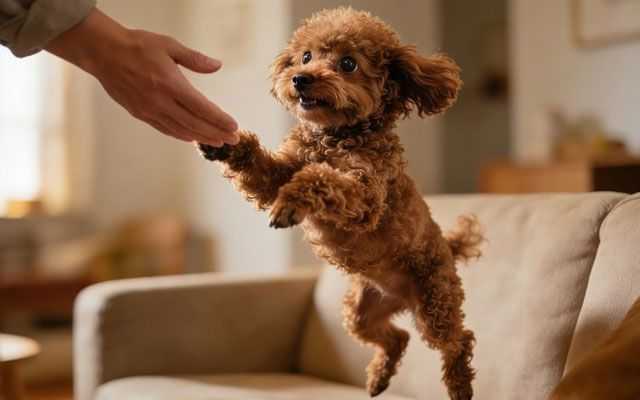
The key to correcting a dog's jumping behavior is not to punish it,but to accurately understand its motivation and guide it to learn more appropriate greetings.
Causes of Dog Jumping Behavior
As pack animals,jumping is an innate greeting behavior in dogs,stemming from multiple underlying reasons.This can be analyzed from the perspective of canine behavioral logic:
-Jumping shortens the distance to a human's face,allowing the dog to perceive the other person through scent and expression;
-Jumping often elicits petting,verbal responses,or laughter from humans,gaining attention;
-Any form of attention—even negative attention—reinforces this behavior;
-Dogs typically greet each other face-to-face,and jumping helps them bridge the height difference,achieving equal greeting interaction.
While jumping in puppies may seem harmless,it can gradually pose safety risks as the dog grows and gains strength.
Correcting Dog Jumping Behavior
For puppies,the best approach is to prevent the behavior from occurring in the first place.
If a puppy exhibits jumping behavior,inform those nearby beforehand and avoid giving it any attention until all four paws are firmly on the ground.Some people might instinctively yell"No!"or use their hands or knees to stop a jumping dog,but this often exacerbates the jumping problem—the dog may mistake this interaction for play.
Using fixed commands like"Down"is suitable for dogs of all ages.Associating specific actions with commands significantly improves training efficiency.Puppies that don't jump or obey the"Down"command need ample positive reinforcement,such as gentle praise or palatable treats.
Adult dogs face relatively higher difficulty learning new skills,but it's not impossible.The methods for correcting jumping behavior in adult dogs are the same as for puppies,only requiring a longer training period,as their jumping habit has been established for a longer time and requires more patience.
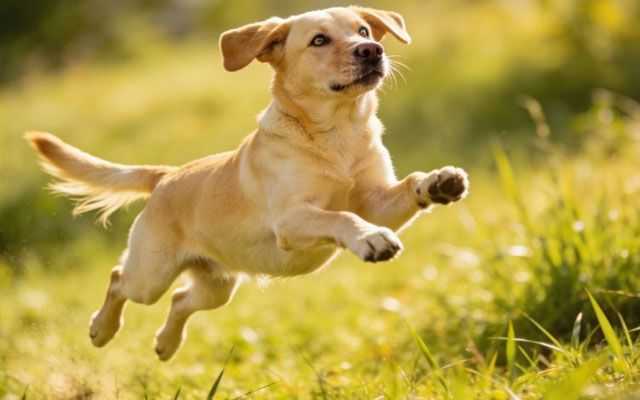
The core goal of correcting jumping behavior in dogs of all ages is to guide them to maintain a"four-paws"posture to gain attention.Training the dog to obey the"Sit"command is particularly important:mastering this command helps the dog control its excitement when visitors arrive,and timely praise and rewards are essential when the dog performs the action as instructed.Generally,dogs that haven't mastered the"sit"command are difficult to correct for jumping behavior.
Once a puppy has mastered the sitting posture,you can further train it to sit voluntarily when approaching humans,preventing jumping.You can ask family and friends to help by commanding the dog to sit when entering the house,reinforcing the training effect.
When new visitors arrive,it's recommended to restrain the dog on a leash for about 15 minutes until its excitement subsides before removing the restraint.Once the dog can maintain a sitting posture and refrain from jumping while on a leash,you can gradually transition to training without a leash.
Ignoring jumping behavior is a common and effective method for correcting this problem.However,due to differences in dog personalities,some dogs may react strongly to being ignored.If this happens,you can command the dog to sit,or ask a visitor to help give the"sit"command.If the dog continues to jump and refuses to obey,you should remove it from the area and allow it to calm down before continuing training.
Throughout the training process,the safety of yourself,visitors,and the dog must always be the top priority.Using physical punishment or emotional reprimands during training will only lead to more aggressive behavior in excitable and irritable dogs,potentially harming the dog and exposing the owner to the risk of attack.Consider using a gentle leash,which stops the undesirable behavior by pulling on the dog's nose(rather than the neck),offering greater safety.
With consistent positive reinforcement and a gradual approach,jumping behavior can be corrected regardless of the dog's age.
Training Taboos
When correcting a dog's jumping behavior,avoid the following inappropriate actions to ensure training effectiveness and the dog's physical and mental health:
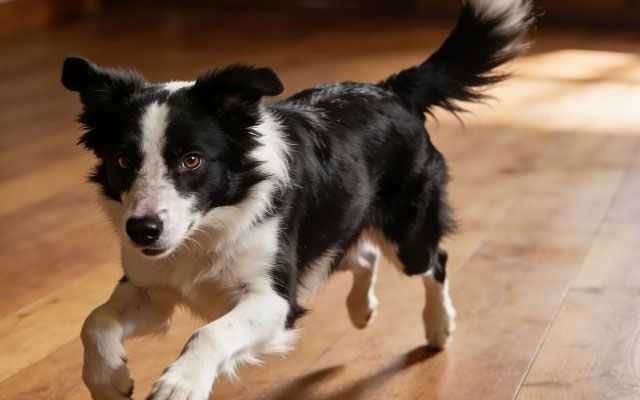
-Ignore the dog that is jumping,and prohibit others from paying attention to it until the dog is on all fours and quiet before interacting with it;
-Avoid pushing a jumping dog away or blocking it with your knee.Such actions may be misinterpreted by the dog as retaliation,reinforcing the jumping habit;
-Rewards should be timely and precise.After commanding the dog to sit,reward it while it remains seated,not after it stands up.This helps it establish the association between"compliant behavior=receiving a reward";
-Guide visitors to enter quietly,avoiding a noisy and chaotic entrance to create a suitable environment for the dog to develop good behavior;
-Never use negative punishment methods,such as kneeing the dog in the chest,stomping on its toes,hitting,or harshly scolding.These methods will seriously harm the dog's physical and mental health and increase the risk of attack on the owner.
While home training can correct behavior,seeking professional support is more reliable.Dog owners can enroll their dogs in professional training courses or invite certified dog trainers to provide one-on-one obedience training services at home to improve training efficiency and professionalism.