Information
- Home
- health

Based on veterinary research and the transmission characteristics of influenza viruses,influenza viruses are highly contagious and can spread across species between humans and ferrets.Existing studies have shown that the probability of ferrets contracting human influenza viruses from humans is far higher than the probability of humans contracting the virus from ferrets—this is mainly because the respiratory epithelial cell receptors of ferrets are highly homologous to those of humans,making it easier for them to bind to human influenza viruses.Similar to the pathogenesis of human influenza,the pathogen of ferret influenza is also an influenza virus(mainly influenza A and B viruses),and its infection mechanism is highly similar to that of human influenza.
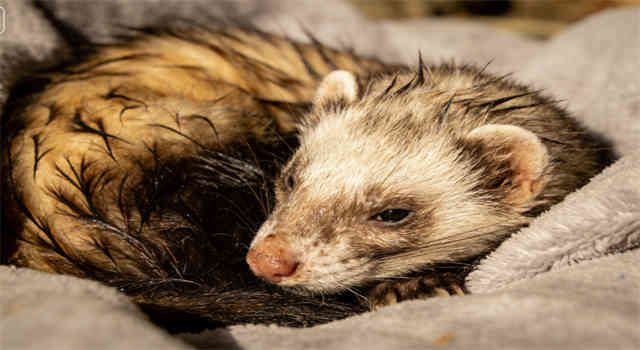
A significant difference from human influenza is that after ferrets are infected with influenza viruses,the disease progression may be more severe,and some cases can lead to death,especially for elderly ferrets with weakened immune systems,young ferrets,and individuals with underlying diseases,where the risk of death is significantly increased.Clinical data shows that after ordinary influenza virus infection in ferrets,secondary bacterial infections(such as Pasteurella and Staphylococcus infections)often occur due to decreased immunity,which can then develop into pneumonia,leading to a more severe condition and a longer treatment period.
Symptoms and Types
Based on clinical experience,the symptoms of influenza in ferrets closely resemble those in humans,primarily manifesting in the following categories.The duration of symptoms typically ranges from 5 to 14 days,depending on the ferret's immunity and viral load:
-Abnormal eye and nasal discharge:Clear to thick mucus discharge from the eyes and nasal cavity,initially watery,but may become purulent due to secondary infection;
-Respiratory symptoms:Frequent sneezing and coughing;in severe cases,rapid breathing and wheezing may occur;
-Eye symptoms:Eye inflammation,manifested as eyelid swelling and conjunctival redness;some cases may present with photophobia and tearing;
-Systemic symptoms:Loss of appetite or complete anorexia,lethargy,and drowsiness,accompanied by high fever(body temperature above 39.5℃;normal body temperature for ferrets is 38.5-39.5℃).
Etiology
The transmission routes of influenza viruses have been clearly established,mainly falling into three categories:First,direct contact transmission,where ferrets come into direct contact with infected individuals(humans or other sick animals),transmitting the virus through respiratory droplets and skin/mucous membrane contact.Second,indirect contact transmission,where ferrets become infected through the mouth,nose,and eyes after coming into contact with environments or objects contaminated with the influenza virus(such as food utensils,cages,clothing,etc.).Third,airborne transmission,where the influenza virus can be suspended in the air through droplets produced by an infected person's cough or sneeze,leading to infection when inhaled by the ferret.
Treatment
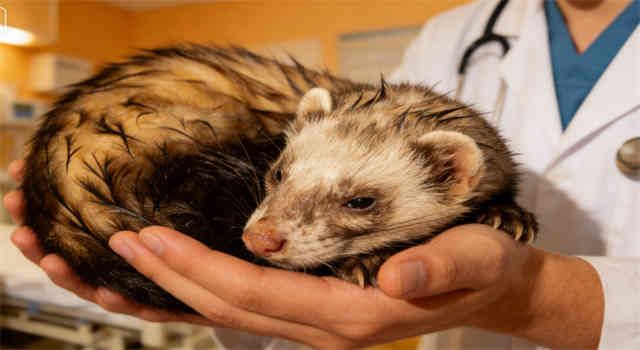
In clinical treatment,veterinarians need to determine the ferret's influenza virus infection status through symptom observation and virus testing(such as quantitative real-time PCR).Subsequently,based on the type of infection and severity of the illness,targeted antiviral drugs(such as oseltamivir,with dosage strictly adjusted according to the ferret's weight)are selected for antiviral treatment.If secondary complications(such as pneumonia or bacterial infection)have developed in the ferret,antibiotics and anti-inflammatory drugs should be used simultaneously to control the complications.
According to clinical recovery data,ferrets infected with influenza typically recover fully within 1 to 2 weeks with proper treatment.During recovery,owners must ensure ferrets have adequate hydration to prevent dehydration and strictly follow the veterinarian's recommended treatment plan,administering medication on time and monitoring their condition regularly.For ferrets exhibiting lethargy,refusal to eat or drink,electrolytes(such as veterinary electrolyte solutions)should be replenished promptly to maintain the body's water and electrolyte balance and prevent further deterioration.
Prevention

Based on the transmission characteristics of influenza viruses,preventing ferret infection with influenza should follow the principles of"isolation and control,reduced contact,and standardized protection":First,promptly isolate all ferrets suspected of having influenza virus infection,placing them individually in well-ventilated,clean cages,avoiding close contact with healthy ferrets and humans until symptoms completely disappear and virus tests are negative;second,if humans have influenza,they must strictly limit contact with ferrets to avoid transmitting the virus to ferrets through droplets or contact;third,strengthen daily protection,with owners washing their hands frequently before and after handling ferrets,and regularly disinfecting cages,food utensils,toys,etc.,to reduce virus residue in the environment and lower the risk of infection at the source.