Information
- Home
- health

Stomach ulcers in horses can severely impact their training performance,racing ability,and overall health.Therefore,a thorough understanding of the formation mechanism,scientific treatment methods,and effective prevention measures for equine stomach ulcers is crucial for horse husbandry and management.
I.What is Equine Stomach Ulcer?
Equine gastric ulcer syndrome(EGUS)is a common digestive health problem in horses of all ages.This condition is caused by persistent irritation from stomach acid,leading to ulcers or mucosal defects in the inner lining of the stomach,resulting in a series of health abnormalities.
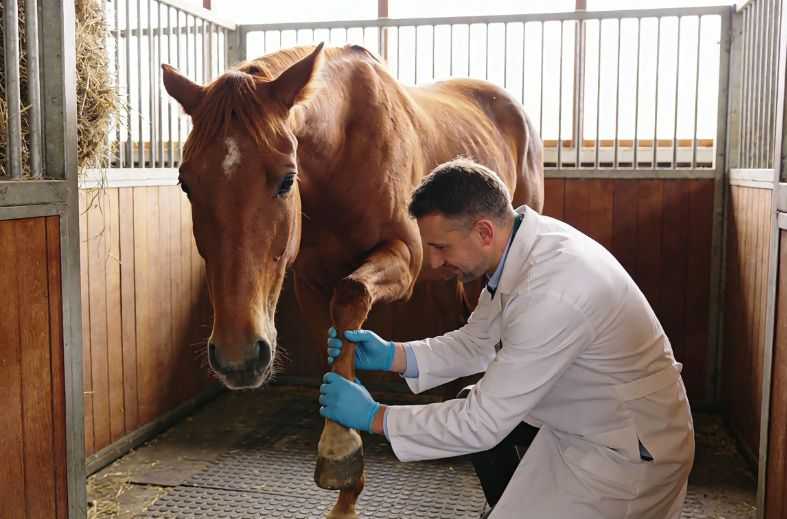
The equine stomach can be divided into two functionally distinct parts:the proventriculus and the non-proventriculus.Their structural and functional differences are as follows:
1.Proventriculus:Located in the lower part of the stomach,it is the main site of gastric acid secretion,which aids in the digestion of ingested food.
2.Non-proventriculus:Also known as the squamous part of the stomach,it is located in the upper part of the stomach and is primarily responsible for mixing and initial grinding of food.It is a common site for stomach ulcers.Unlike the proventriculus,the non-proven stomach lacks a protective mucosal layer,making it vulnerable to stomach acid erosion and prone to ulcer formation.
Unlike humans,who only secrete stomach acid during meals,horses secrete stomach acid continuously—even on an empty stomach,a horse's stomach can secrete up to 16 gallons of stomach acid daily.Stomach acid secretion levels may peak during exercise and between meals,causing more significant irritation to the gastric mucosa.
In terms of disease incidence,horses that graze freely on pastures have a significantly lower incidence of gastric ulcers than high-end racing horses.Multiple studies show that the prevalence of gastric ulcers in adult working horses exceeds 60%,while the prevalence in racehorses is as high as 90%-100%.Therefore,gastric ulcer prevention and control in racing horses requires close attention.
II.Symptoms of Gastric Ulcers in Horses
Horses suffering from gastric ulcers may exhibit one or more of the following symptoms,which can help breeders make a preliminary judgment:
1.Abnormal Behavior:Especially during saddlement and riding,exhibiting restlessness,resistance,etc.
2.Decreased Performance:Reduced endurance during training or competition,poor coordination,and difficulty reaching normal performance levels;
3.Abnormal Appetite:Loss of appetite,refusal to eat,or a significant reduction in food intake;
4.Poor Mental State:Showing lethargy,sluggishness,and lack of interest in external stimuli;
5.Abnormal Posture:Frequent lying down,or adopting an upside-down posture,or being confined to a corner of the stable(some foals may use this posture to relieve pain caused by gastric ulcers);
6.Deteriorating Body Condition:Weight loss,decreased body condition,and a rough,dull coat;
7.Abdominal Pain:Acute or recurrent abdominal pain,especially worsening after eating.
Recent studies have shown that some horses with gastric ulcers may not exhibit any obvious external symptoms,or the symptoms may be so mild that they go unnoticed by handlers.If any of these symptoms are observed in a horse,it is recommended to contact a veterinarian for professional diagnosis as soon as possible to avoid delaying treatment.
III.Causes of Gastric Ulcers in Horses
The formation of gastric ulcers in horses is the result of multiple factors working together.Core contributing factors include feeding methods that do not conform to the horse's natural anatomy and excessive environmental stress.For example,compared to free grazing,feeding horses only two large meals a day leads to a prolonged state of stomach emptiness.The continuous secretion of gastric acid and digestive enzymes from the gastric glands cannot be effectively buffered,thus continuously irritating the gastric mucosa and increasing the risk of ulcers.Simultaneously,stress responses also increase gastric acid secretion,further aggravating gastric mucosal damage.
IV.Diagnosis of Equine Gastric Ulcers
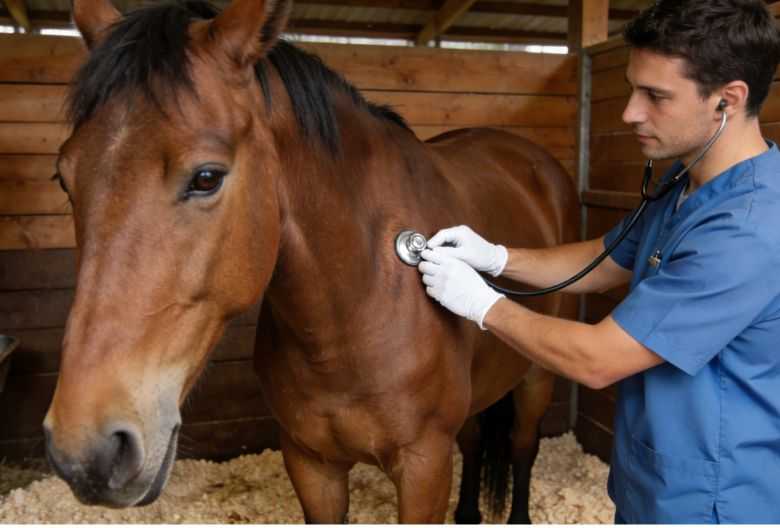
When diagnosing equine gastric ulcers,veterinarians typically follow a process of"history taking-physical examination-specialized diagnosis."First,they will inquire with the horse's handler about its daily feeding,exercise,and health status.Then,a comprehensive physical examination will be conducted to preliminarily determine if gastric ulcers are suspected.
If,based on the history and physical examination,the veterinarian strongly suspects gastric ulcers,they will usually recommend an endoscopy—the gold standard for diagnosing equine gastric ulcers.This allows direct observation of the gastric mucosa,clearly identifying the location,size,and severity of the ulcer.
The specific procedure for an endoscopy involves inserting a video endoscope(3 meters or longer)through the horse's nasal cavity,down the esophagus,and into the stomach.The veterinarian uses the endoscope's video imaging function to observe the surface of the gastric mucosa,checking for ulcers and other abnormal lesions.To ensure a smooth examination,the horse is usually given a small amount of sedative to keep it upright and reduce struggling.
This examination can be performed on farms,veterinary clinics,or animal hospitals.Most horses tolerate the examination well with almost no noticeable side effects.To ensure the accuracy of the results,necessary preparations are required before the gastroscopy.The veterinarian will provide detailed instructions to the horse handlers before the examination.Core preparations typically include:
1.Fasting preparation:Fasting for at least 14 hours before the examination ensures the stomach is empty,allowing the veterinarian to clearly observe the gastric mucosa;
2.Water restriction preparation:Withhold water 2-3 hours before the examination to prevent fluid accumulation in the stomach from obstructing the examination view;
3.Auxiliary protection:Some horses may chew on bedding or feces during the fasting period;a muzzle should be used to prevent interference with examination preparation.
V.Treatment of Equine Gastric Ulcers
The treatment plan for equine gastric ulcers needs to be tailored to the severity of the ulcer.The core treatment goals are:eliminating ulcer-inducing factors,reducing gastric acid secretion,protecting the gastric mucosa,and promoting ulcer healing.Currently,the U.S.Food and Drug Administration(FDA)has approved only one drug for the treatment of equine gastric ulcers—GASTROGARD®(whose main ingredient is omeprazole).This drug is effective in treating equine gastric ulcers and can prevent ulcer recurrence.
GASTROGARD®works by inhibiting the proton pump activity that secretes gastric acid,reducing gastric acid production and thus lessening the irritation of the gastric mucosa,creating favorable conditions for ulcer healing.The recommended routine use is once daily for a 28-day course.To monitor ulcer healing,a follow-up endoscopic examination is usually recommended after the course of treatment,and subsequent treatment or prevention plans should be adjusted based on the results.
It is particularly important to note that the safety of GASTROGARD®paste in pregnant or lactating mares has not been established and should be used with caution.This drug is suitable for horses and foals aged 4 weeks and older.When used on foals,strict adherence to veterinary instructions and controlled dosage are essential.
In some cases,veterinarians may prescribe sucralfate paste in combination to cover the ulcer surface,protect the gastric mucosa,and relieve pain.However,it is important to note that sucralfate paste and GASTROGARD®should not be used simultaneously;the interval between two administrations should be approximately 30 minutes to avoid drug interactions affecting treatment efficacy.
VI.Care of Horses with Gastric Ulcers
Horses with gastric ulcers generally have a good prognosis after treatment.Some horses may require long-term prophylactic administration of omeprazole after treatment,especially in situations where husbandry practices are difficult to optimize and the risk of ulcer recurrence is high.
Successful recovery and long-term control of equine gastric ulcers may initially rely on medications such as omeprazole,but a more ideal approach is to optimize the horse's living environment,lifestyle,and feeding patterns to reduce stress levels and fundamentally reduce the risk of ulcer formation and recurrence.
VII.Prevention of Equine Gastric Ulcers
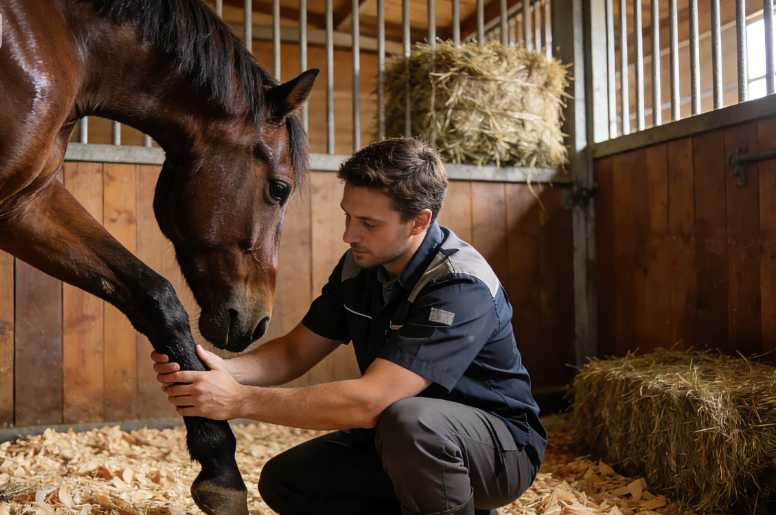
Effective treatment is also an important preventative measure.For horses prone to gastric ulcers,a combination of preventative medication and optimized husbandry practices is necessary to reduce the risk of ulcer development.
1.**Medical Prevention:**If the horse belongs to a high-risk group for gastric ulcers(such as racehorses and high-end competition horses),the veterinarian may recommend using ULCERGARD®(whose main ingredient is omeprazole)for prevention when the horse is under stress.This medication is administered once daily at a dose one-quarter of GASTROGARD®.Studies have shown that it can effectively reduce the risk of gastric ulcers in some horses.
2.**Feeding Prevention:**Guiding horses to long-term free grazing,instead of feeding them large amounts of grain twice daily,can significantly reduce the incidence of gastric ulcers in horses prone to them.Feeding horses a small amount of hay before exercise can buffer stomach acid and digestive enzymes,reducing the irritation of the upper gastric mucosa caused by stomach acid during strenuous exercise.
3.**Supportive Prevention:**The veterinarian may recommend digestive or sedative supplements based on the horse's specific lifestyle and temperament to help relieve stress,regulate digestive function,and further prevent the formation of gastric ulcers.