Information
- Home
- health

To prevent cats from encountering safety risks in cold weather,they should be kept indoors during winter and provided with a warm,safe place to rest.Do not assume that cats can independently withstand the harsh cold.
Key Points:
Cats will feel noticeably cold when the ambient temperature is below 45 degrees Fahrenheit(approximately 7 degrees Celsius);
Senior cats,kittens,and cats with underlying health conditions are less resistant to cold and more susceptible to its effects;
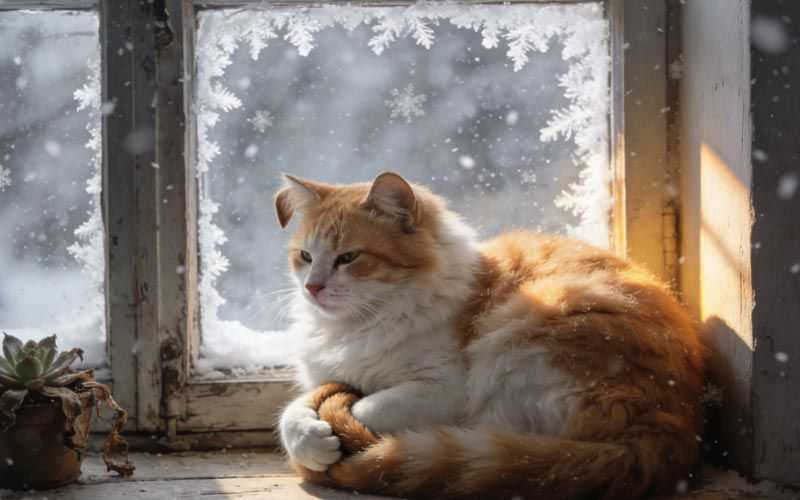
If caring for stray cats,ensure they have a warm,dry place to live,sufficient food,and unfrozen drinking water;
The best solution for a cat's safe wintering is indoor living,with warm bedding,a safe space to move around,and necessary winter gear.
I.Do cats sense cold?
The answer is yes.Cats are inherently more adapted to warm environments and have a lower tolerance for cold weather.Cats that spend long periods(or all day)outdoors are the primary group affected by cold weather.Cats are not only sensitive to low temperatures,but harsh weather conditions such as wind,snow,and ice further increase their risk of catching a chill.
Generally,45 degrees Fahrenheit(approximately 7 degrees Celsius)is considered a cold environment for most cats.If humans need to wear a coat to keep warm when going out,cats should be kept indoors first.
II.Common Feeding Mistakes in Cold Weather
When temperatures drop,avoid the following improper feeding behaviors:
1.Allowing cats to roam freely outdoors in cold weather
The core measure to protect cats from the cold is very clear:keep them indoors.The outdoor environment presents multiple risks,one of which is extreme temperature.Even if cats need to go outside,it should be done in a controlled manner,such as using an enclosed cat enclosure,a leash with a harness,etc.,to avoid unsupervised wandering;and in cold weather,the importance of indoor keeping is even more pronounced.
If cats go outside in cold environments,they may get lost or become stranded outdoors.Prolonged exposure to extreme cold can easily lead to frostbite and hypothermia in cats.These conditions not only harm their health but also reduce their ability to evade predators.Furthermore,outdoor puddles may contain de-icing salt,a toxic substance for cats.Ingestion can cause vomiting,diarrhea,convulsions,coma,and even death.
2.Infrequent grooming of cats
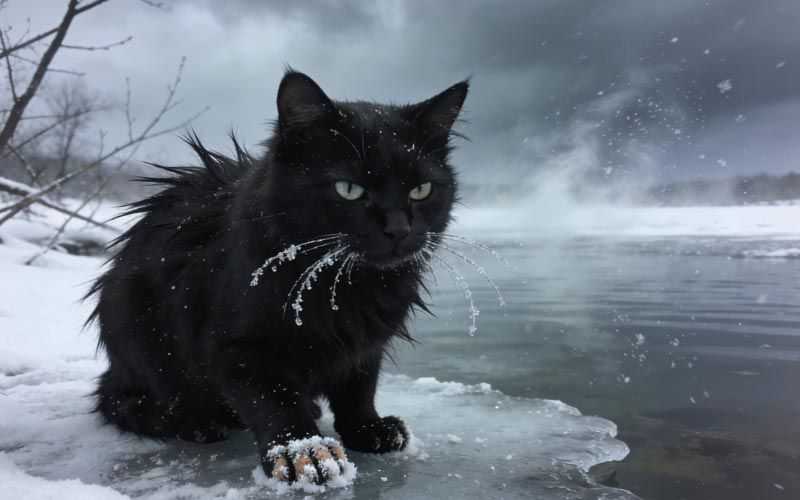
Tangled fur significantly reduces a cat's insulating properties,increasing their risk of exposure to cold environments and thus raising the probability of frostbite and hypothermia.Regular grooming is essential to maintain healthy fur–long-haired cats should be groomed more frequently than short-haired cats.
Frequent tangling in a cat's fur may indicate a decreased self-cleaning ability,which could be related to illness.In such cases,the cat should be taken to a veterinarian for examination.
3.Ignoring the Impact of a Cat's Age and Health on its Cold-Weather Response
Older cats are more susceptible to cold weather due to several factors,including weakened skin barrier function,decreased grooming ability leading to tangles,lower body fat reserves compared to younger cats,and potential underlying conditions such as arthritis,all of which impair their ability to regulate body temperature.
Kittens and sick cats are also generally less able to withstand the cold than healthy,robust adult cats.Providing them with a dedicated cat bed(such as a heated or self-heating cat bed),fluffy and warm blankets,or cat-specific sweaters can enhance their warmth.
Special attention should be paid to fire hazards when using electric blankets(especially for curious cats);a safety fence should be installed around fireplaces to ensure the safety of all pets.
4.Failure to Provide Suitable Habitat for Outdoor Cats
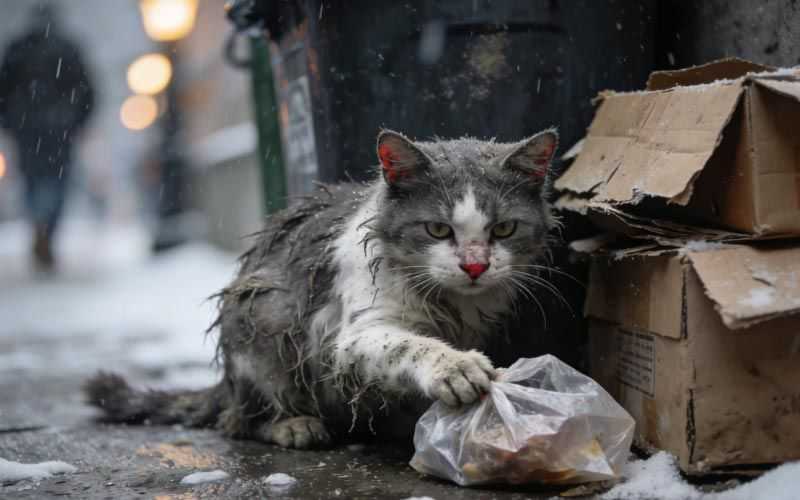
Stray cats often experience stress when brought indoors due to environmental changes.If you are keeping an outdoor cat,ensure it has shelter and a safe living environment year-round,especially crucial in winter.Choose a heated cat bed to provide a warm and safe haven for your outdoor cat.
Note that it's not recommended to put blankets in the cat bed.A thick layer of straw is a better choice,allowing the cat to build its own nest for warmth.When cats feel cold,they will instinctively seek warm shelter,but this behavior can lead them to dangerous areas—for example,hiding under a car hood for warmth,which poses a very high safety risk.If there are stray or outdoor cats in your community,honk your horn before driving to avoid accidental injury.
Furthermore,cats hiding under car hoods or in garages are easily exposed to toxic substances such as antifreeze(the main component of which is ethylene glycol),which can cause kidney failure if ingested.If you suspect your cat has ingested antifreeze,take it to a veterinarian immediately and call the pet poisoning hotline at 855-764-7661 for professional guidance.
5.Insufficient food and water supply for your cat
Your cat's food and water should always be readily available.If feeding stray cats,elevate their food and water bowls off the ground to prevent contamination from dust and debris;use heated water bowls to prevent drinking water from freezing.
Stray cats need to expend more energy to maintain their body temperature in winter,so they may require more food than usual;prepare extra cat food in advance.Also,ensure they have access to plenty of clean drinking water to prevent them from drinking contaminated water containing de-icing salt or antifreeze due to dehydration.
6.Potentially Hazardous Holiday Decorations
During the winter holidays,many families decorate their homes and yards,but some decorations may pose a threat to cats:
Some holiday plants are poisonous,such as mistletoe,poinsettia,holly,and lilies.Families with cats should completely avoid contact with these plants.Lilies are extremely toxic to cats and can be life-threatening.
Wire decorations,due to their bright shine and long,thin shape,easily attract cats'attention,but ingestion can lead to fatal intestinal obstruction.
Cats love to climb Christmas trees.If the tree falls,it can injure a cat.Ingesting Christmas tree fragments or decorations can also cause intestinal obstruction or suffocation.
After holiday gatherings,garbage should be placed in a safe location out of reach of cats.If cats are attracted by the smell of food and rummage through the garbage,they may accidentally ingest toxic substances such as onions,garlic,or chocolate.
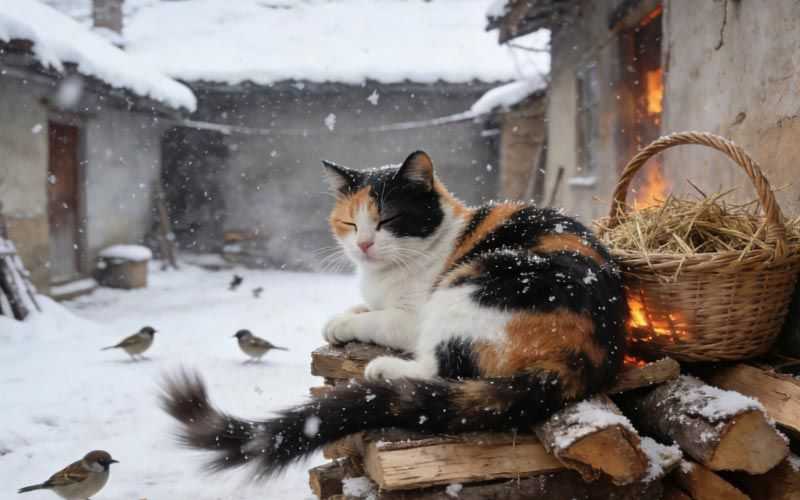
III.How to Ensure Your Cat's Warmth and Safety in Winter?
The only truly effective way to protect cats from the harsh winter cold is to keep them indoors.This ensures that both owner and cat can spend a safe and comfortable winter together.IV.Frequently Asked Questions about Cats and Cold Weather
How do outdoor cats survive the winter?
Stray cats primarily survive the winter by seeking shelter and expending extra energy to maintain their body temperature.However,they are highly dependent on humans for safe habitats,extra food,and unfrozen drinking water.
What temperature is considered too cold for a cat?
Generally,ambient temperatures below 45 degrees Fahrenheit(approximately 7 degrees Celsius)are considered too cold for most cats,especially for prolonged periods.Kittens,senior cats,and sick cats are less tolerant of cold and are more significantly affected.
Should domestic cats be taken outside in winter?
Not recommended.The safest way to care for domestic cats in winter is to keep them indoors,providing ample opportunities for activity and exercise in an enclosed cat enclosure to meet their physiological needs.