Information
- Home
- training

Does your dog always follow you around like glue?Eating,watching TV,even going to the bathroom—it has to stay close by?This could very well be a"clingy dog."But is this clingy behavior a normal expression of affection,or a sign that requires intervention?The following analysis,based on animal behavior research and veterinary clinical experience,will provide a detailed explanation.
"Clingy dog"is a common term for dogs with a strong need for companionship.In animal behavior,this falls under the category of"high attachment behavior,"and typical manifestations include:
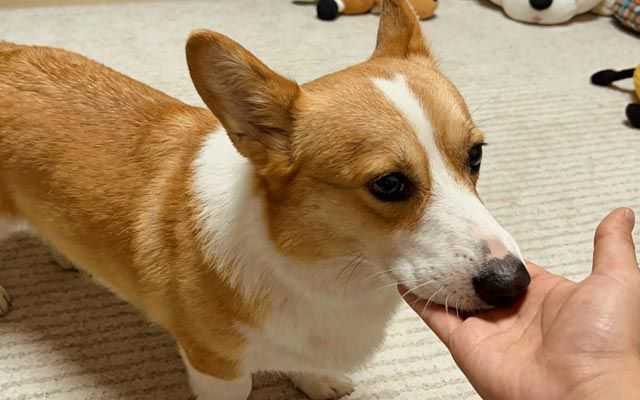
Following the owner from room to room when the owner is home,without a clear purpose(such as asking for food or a walk);
Frequently seeking physical contact,such as lying on the owner's lap,snuggling close,or rubbing against the owner;
Highly sensitive to the owner's movement,immediately following when the owner gets up,and even maintaining close proximity when the owner is still.
This behavior itself is not necessarily a"problem behavior"—as social animals,dogs developing attachment to their owners is a normal social instinct(refer to the American Kennel Club(AKC)behavior guidelines).However,when clinginess affects the owner's normal life(such as inability to work or do housework independently)or is accompanied by other abnormal behaviors,it's necessary to investigate the underlying causes.
A dog's clingy behavior is not accidental,but rather the result of multiple factors.The following are common causes verified by veterinary clinical practice:
1.Learned Reinforcement Behavior
This is the most common cause,consistent with the"reinforcement theory"(one of the core theories of animal behavior).Dogs gradually associate"clinginess"with"reward"by observing their owner's reactions:
For example,if a dog receives treats every time it follows them into the kitchen or is petted when it lies down,this positive feedback will encourage the dog to repeat the clingy behavior.

If puppies receive continuous,uninterrupted attention from their owners during their growth period(such as 24-hour companionship and immediate responsiveness),they will gradually lose the ability to be alone,forming the perception that"they only feel safe with their owners."Research from Cornell University's College of Veterinary Medicine shows that the period from 3 to 6 months in puppies is critical for developing the ability to be alone;excessive companionship can easily lead to clinginess in adulthood.2.Lack of Security Due to Illness or Aging
When dogs are unwell or aging,clingy behavior may be a signal of seeking security.Clinical data shows that:
Senior dogs(usually over 8 years old)experiencing vision/hearing loss or cognitive impairment(similar to Alzheimer's in humans)may become clingy due to decreased environmental awareness,seeking comfort by being close to their owners;
Sick dogs(e.g.,those in pain,experiencing gastrointestinal upset,or suffering from endocrine disorders)may use clinginess to convey a distress signal.Some dogs will continue to snuggle towards their owners when sick,a natural defensive reaction;
Dogs that lack companionship or interaction for extended periods may also become clingy due to boredom—a survey by the Royal Society for the Prevention of Cruelty to Animals(RSPCA)in the UK showed that dogs spending more than 8 hours a day alone without toys or interaction are 40%more likely to become clingy.3.Anxiety and Environmental Stress
Dogs with anxious personalities,or those in stressful environments,may become clingy to relieve stress:
Dogs have a far superior sense of smell and perception than humans,allowing them to keenly detect their owner's stress and anxiety(such as heart rate and hormonal changes when the owner is nervous).They will seek comfort by getting close to their owner,while also providing emotional soothing(two-way emotional support,see research in*Applied Animal Behavior Science*);
Environmental changes are a significant stressor.Moving,changing owners,adding a new family member(human or pet),or adjusting sleep schedules can all cause dogs to become clingy due to a lack of security.The American Veterinary Behavior Association(AVSAB)points out that increased clinginess in dogs within 1-2 weeks after a sudden environmental change is a typical stress response.4.Breed and Individual Genetic Tendencies
The degree of attachment varies significantly among different dog breeds,which is closely related to the breeding purpose:
Companion dogs(such as Shih Tzus,Maltese,Havanas):Bred primarily for companionship,they are naturally more attached to their owners and more likely to be clingy.
Sporting or working dogs(such as Vizsla,Labrador Retrievers,Golden Retrievers):Some breeds,due to the need for close cooperation with their owners,also have a strong need for companionship.
Individual differences are equally important—even within the same breed,outgoing and sensitive dogs are more likely to be clingy than independent dogs,which is related to genetics(see research in the journal*Genetics&Molecular Biology*).
5.Early Signs of Separation Anxiety
Note:Clingy behavior may be a precursor to separation anxiety,but the two are clearly distinct.Separation anxiety is a serious behavioral disorder,and its core diagnostic criteria(based on the AVSAB guidelines)include:
When the owner prepares to leave(e.g.,to get keys,put on a coat),the dog exhibits significant anxiety(e.g.,whimpering,scratching at doors,inappropriate urination/defecation);
After the owner leaves,the dog continues to exhibit destructive behaviors(chewing furniture,tearing clothing),excessive barking/whimpering,pacing,and refusing to eat,and these behaviors only occur when alone;
A normally clingy dogmay be slightly quieter when its owner is not home,but will not exhibit panic or destructive reactions,and can eat and rest normally.
If a dog's clingy behavior is accompanied by the above characteristics of separation anxiety,professional intervention should be sought promptly to prevent the condition from worsening.To determine whether clingy behavior is a"problem,"consider two key dimensions:
Does it affect the owner's normal life?If the dog's clinginess is within an acceptable range(e.g.,only during rest periods)and there are no other abnormalities,no intervention is needed;it's a normal close relationship.
Is it accompanied by separation anxiety or health problems?If the clingy behavior escalates into separation anxiety,or is caused by illness or aging,it needs attention—long-term untreated separation anxiety can lead to psychological trauma and physical injury in the dog(e.g.,excessive licking leading to dermatitis).
Fortunately,the vast majority of clingy dogs do not develop separation anxiety and can be guided to develop independence.
If the dog is only clingy but has no separation anxiety or health problems,the following methods can be used to gradually cultivate its ability to be alone.All methods have been verified by AKC and AVSAB and are safe and effective:
1.Increase targeted exercise
A dog's clingy behavior partly stems from"excess energy"—sufficient exercise can expend energy and reduce the time it spends focusing on its owner.Recommendations:
Exercise intensity should be matched to the dog's age,breed,and health condition(e.g.,puppies should primarily engage in short walks,while adult working dogs need 1-2 hours of high-intensity exercise daily);
Prioritize exercises that require both physical and mental exertion,such as fetch games and sniff walks(allowing the dog to freely sniff its surroundings).Studies show that mental exertion is more effective than simple physical exercise in reducing clinginess.
Note:If the dog has joint problems,heart disease,etc.,consult a veterinarian to develop an exercise plan.
2.Enrich mental stimulation and reduce boredom
Boredom is a major trigger for clingy behavior.Interactive toys and brain-training games can help dogs focus on their own activities rather than relying on their owners:
Recommended tools include treat-dispensing balls,sniff mats,and puzzle toys(toys that require the dog to think to get treats).These tools simulate a dog's natural foraging behavior and stimulate its independent exploration desire;
Consistently engage in interactive games(such as tug-of-war or hide-and-seek)for 10-15 minutes daily.After satisfying their social needs,the dog will be more willing to rest alone.3.Establish a Dedicated Safe Space
Create a"separate area"for your dog(such as a crate,a corner of its kennel),allowing it to perceive this as a"safe and comfortable place to be alone":
Materials:Place the dog's familiar bed,favorite toys,and old clothes with the owner's scent(using scent to soothe emotions);
Training Method:Use clear commands such as"Go to your kennel"to guide the dog into its designated space.Immediately reward it with a treat after it stays quietly there,gradually increasing the time it stays(from 1 minute to over 30 minutes),letting the dog understand that"being alone can also bring rewards."
4.Desensitize the"Trigger Action"
Dogs may associate specific actions(such as taking the keys,putting on a coat,or entering the kitchen)with"owner rewards"or"owner leaving,"causing them to become clingy upon seeing these actions.The core of desensitization training is to"make these actions meaningless":
Example 1:Frequently practice the"get the key"action—after picking up the key,don't go outside.Instead,turn on the TV,give the dog water,or sweep the floor.After repeated practice,the dog will understand that"getting the key≠going outside"and will no longer overreact.
Example 2:When entering the kitchen,occasionally give treats and occasionally don't.Break the fixed association of"entering the kitchen=having food,"reducing the dog's following behavior.
Key:Training should be gradual,avoiding sudden stimulation of the dog.Each training session should be controlled to 5-10 minutes,maintaining positive feedback.