Information
- Home
- training
One of the most important initial tasks after bringing a puppy home is potty training.
Training a puppy to use the correct time and place for elimination requires the owner's unwavering determination and ample patience.The key is that successful puppy potty training should be based on repetitive training and positive reinforcement,rather than punishment.
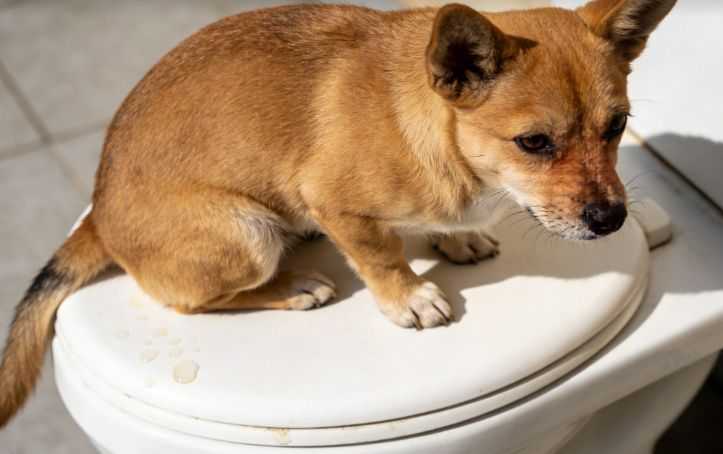
The following will detail the key aspects of puppy potty training to help owners and puppies successfully complete the training and achieve the desired goals.
I.Core Methods of Puppy Potty Training
Potty training should begin with establishing a schedule that both the owner and the puppy can strictly adhere to.Each time the puppy is led to the elimination area,the owner can use a consistent and repeatable command,such as"potty"or"potty bowl,"to help the puppy establish a clear association between the command and elimination behavior.
It is crucial to maintain a regular schedule.This not only helps the puppy understand the training goals and behavioral norms but also helps it anticipate elimination-related behaviors,thereby improving training efficiency.
II.Practical Tips for Puppy Toilet Training
(I)Regular Outdoor Toilet Training
Newly acquired puppies,especially those 8 weeks old and under,should be taken outside to relieve themselves every 1-2 hours.Frequent guidance is necessary because puppies under 8 weeks old still have developing bladder control and limited bladder capacity;without timely guidance,accidents can easily occur at home.
It's important to understand that accidents during puppy toilet training are normal.Owners should be patient and avoid interrupting training or scolding the puppy due to accidents.
(II)Regular Feeding Schedule
It is generally recommended to feed puppies three times a day at fixed times.Puppies have a regular elimination pattern,usually relieving themselves shortly after eating.Therefore,establishing a regular feeding schedule helps puppies develop a clear elimination pattern,preventing confusion caused by inconsistent feeding times and reducing the occurrence of accidents at home.
(III)Proper Use of Puppy Pads for Toilet Training
Puppy pads are an excellent tool to assist puppies in toilet training,especially suitable for puppies whose bladder control is not yet fully developed and who need to urinate frequently.For example,Pet Life Unlimited puppy pads have strong absorbency and efficient odor control,making them an ideal choice for puppy toilet training.
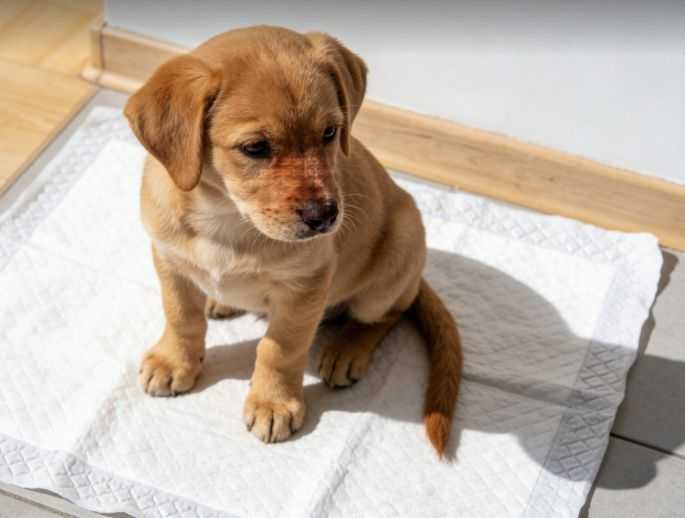
During training,the pads can be used as the puppy's designated elimination spot at home.For example,the pads can be placed near the back door to guide the puppy to recognize this area as a safe place to eliminate.If the owner is unable to take the puppy outside in time,the pads make it easy to clean up excrement and protect the floor from stains.
Note that puppies may need multiple introductions to remember the location of the pads;owners need to be patient.If the puppy eats and rests in its playpen,it is recommended to place a pad at the bottom of the playpen,which can absorb the puppy's excrement and provide a soft and comfortable surface for activity and rest.
Puppy pee pads are not only useful for indoor potty training,but also an important tool for helping puppies transition to outdoor potty training.When using pee pads to assist in potty training,the following points must be strictly followed:
1.Place the pee pad in the designated potty area that the owner wants the puppy to recognize,avoiding frequent changes in location;
2.Ensure the area where the pee pad is placed is clearly visible,allowing the owner to easily monitor the puppy's behavior,guide it to that area promptly,or reward it immediately after it has finished potty training.The area near the back door or side door are suitable placement locations.For example,Pet Life Unlimited's Smart Prints series of pee pads offers a variety of patterns,enhancing the aesthetics of the space while ensuring the pads are clearly visible and easy to use for guiding puppies.
3.As puppies grow into adulthood and even senior years,if related health problems arise,pee pads need to be placed in the dog crate or other easily accessible areas,where they become very useful.
4.If puppies experience urinary tract health abnormalities,such as frequent urinary tract infections,pee pads like the Health Tracker Dog Pad can be used to monitor changes in urine pH.The pH-sensitive dyes in these pads visually indicate changes in the puppy's urine pH,helping owners to detect health problems early and contact a veterinarian promptly.
5.Puppy pee pads can also be used as padding for playpens and spaces with unusual shapes.For example,Pet Life Unlimited's Create-A-Size series of dog pee pads offers modular coverage to fit various floor types and space sizes.
6.For nighttime training,dog pee pads designed for all-night use,such as the Overnight Smart series,are recommended.Print series pee pads can be placed outside the dog crate or inside the playpen to meet the nighttime elimination needs of growing puppies,while also making nighttime cleaning easy for owners.
(IV)Using Crate Training to Assist Toilet Training
Crate training is not only an effective way to assist puppies in completing toilet training,but it also creates a safe and comfortable space for them.The crate serves as a quiet place for puppies to eat and rest,meeting their need for security.
Dogs have a natural instinct not to eliminate in their own eating and resting areas;therefore,training puppies to adapt to crate life can effectively prevent accidents caused by elimination within the crate.
It is particularly important to emphasize that the crate should never be used as a tool to punish puppies.It should only be used when the puppy cannot be directly supervised,such as during nap time or nighttime bedtime.Furthermore,feeding puppies in the crate helps them quickly adapt to the crate environment and strengthens their positive perception of the crate.
Choosing the right size dog crate is crucial,especially for large breeds whose puppies grow quickly.Sufficient space must be provided to ensure the puppy can move and turn freely within the crate,avoiding discomfort caused by a crate that is too small.
(V)Consistently Adhere to Positive Reinforcement Training
Positive reinforcement training is key to successful potty training in puppies.Its core is to make the puppy understand that it will receive a reward after relieving itself outdoors,thus establishing a positive behavioral association.
Each time the puppy successfully relieves itself outdoors,the owner should immediately provide positive feedback.Rewards can include verbal praise,a special training treat,or the puppy's favorite toy.Rewards should follow the elimination behavior closely,ensuring the puppy establishes a direct association between outdoor elimination and a positive,enjoyable experience,thus encouraging active cooperation during training.
(VI)Accurately Identify the Puppy's Elimination Needs
Continuous behavioral monitoring is another important aspect of successful potty training in puppies.Owners need to be familiar with the puppy's signals and cues indicating the need to eliminate,and promptly guide it to the designated elimination area to effectively reduce the occurrence of accidents at home.
During training,owners need to closely observe the puppy's behavior.When the puppy shows an intention to go to the designated elimination area,it should be promptly guided and led outdoors to reinforce the correct elimination behavior.
(VII)Always use a leash when eliminating outdoors
When taking a puppy outdoors to eliminate,always use a leash.This not only helps the puppy gradually adapt to being on a leash,making it easier for the owner to control its activity range,but also allows the owner to reward the puppy promptly after it has eliminated,reinforcing positive behavior.
After rewarding,it is recommended to interact and play with the puppy outdoors for a few minutes to prevent the puppy from associating"going home"with"the end of a pleasant experience,"which could lead to negative emotions towards going home and affect cooperation in subsequent training.
III.The Potty Training Cycle for Puppies
Puppies vary greatly in individual differences.Different puppies have different learning abilities and adaptation speeds.Some puppies master potty training more quickly,while others require more time and guidance.
However,as long as owners strictly follow the training methods described above and maintain patience and persistence,most puppies can basically complete potty training within a few months and develop good elimination habits.