Information
- Home
- health
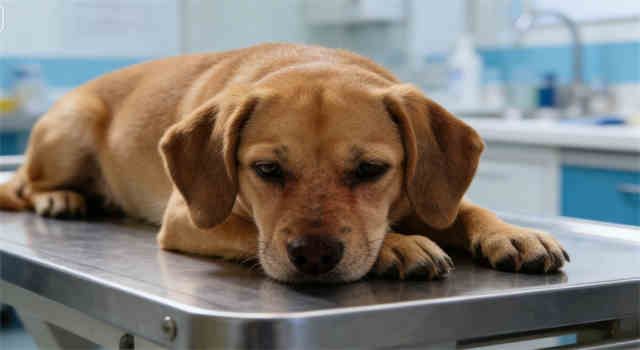
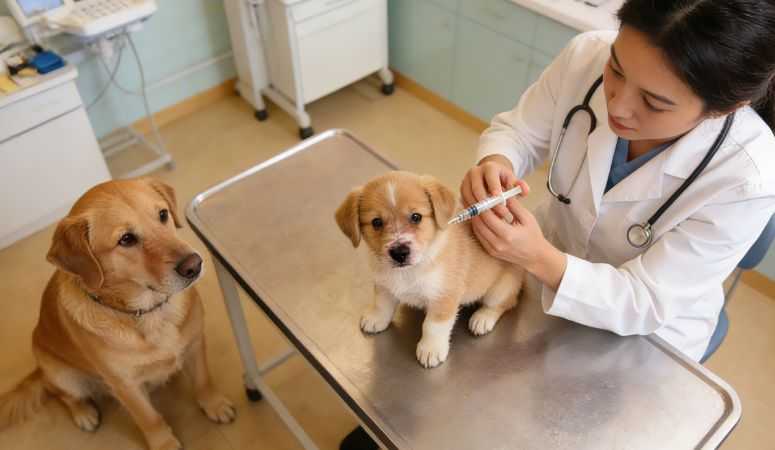
Abdominal palpation is a core examination item during every puppy check-up.I use palpation to check for pain,organ enlargement,abnormal lumps,etc.Specifically,using the navel as the center,I probe downwards along the midline of the abdomen with my fingers to check for umbilical hernias.Simultaneously,I carefully palpate the groin area to confirm the presence of any groin lumps.In clinical practice,the detection rate of puppy hernias is quite high.
Puppy hernias have a high incidence rate,and the types and causes are diverse.Fortunately,the vast majority of hernia cases can be cured with proper treatment,and most can be detected early in the course of the disease.Below is a detailed explanation of puppy hernias to help with scientific prevention and management.
I.What is a Hernia?
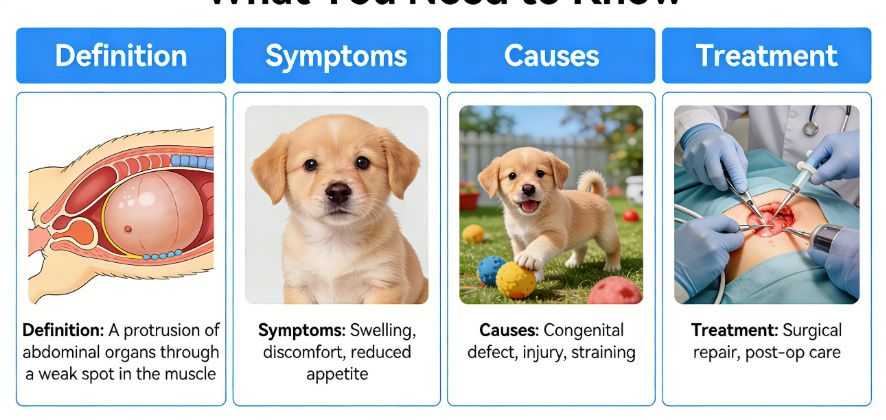
A hernia is a condition where abdominal organs or adipose tissue protrude outwards through weak points or defects in the abdominal wall muscles or connective tissue.Its severity depends mainly on the size of the abdominal wall defect and the nature of the herniated contents.In mild cases,only a small amount of abdominal fat may intermittently protrude from the defect,which can be easily reduced with gentle pressure.In severe cases,abdominal organs such as the intestines may prolapse through the hernia orifice,causing compression of blood supply and leading to organ ischemia and necrosis.If not intervened in time,such situations can endanger the puppy's life within a short period.It is worth noting that even with a large defect,if a diagnosis and treatment are initiated before organic damage to the herniated organ occurs,a good prognosis is usually achieved.
II.Common Types of Hernias in Puppies
The most common types of hernias in puppies are as follows:
(I)Umbilical Hernia
The umbilicus is the area where the puppy connects to the placenta during fetal development(commonly known as the belly button),and it usually closes naturally within a short period after birth.If it does not close completely,a defect orifice remains in the abdominal wall,allowing abdominal contents to protrude outwards,forming an umbilical hernia.
(II)Inguinal Hernia
The inguinal canal is the physiological opening in the groin region.In male puppies,the testes can descend through this canal into the scrotum.Female puppies also possess the inguinal canal structure;therefore,both male and female puppies can develop inguinal hernias.
(III)Diaphragmatic Hernia
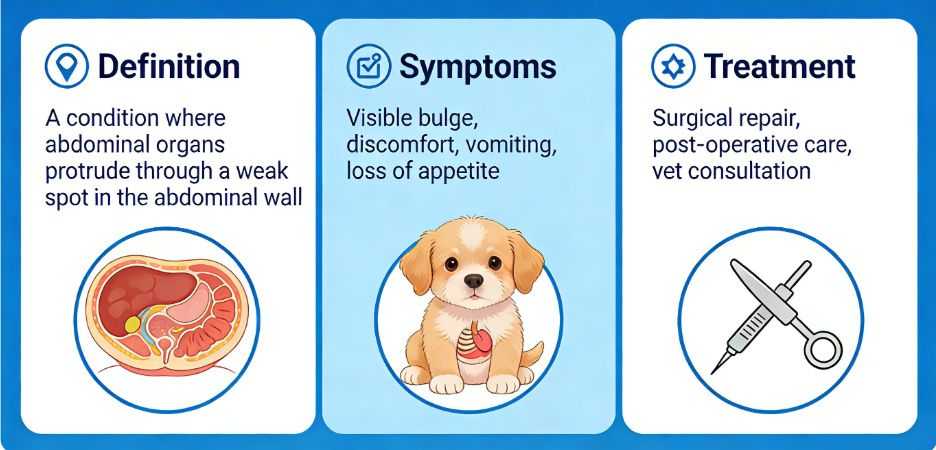
The diaphragm is an important muscle separating the thoracic and abdominal cavities.Trauma or congenital developmental defects can lead to diaphragmatic defects,resulting in diaphragmatic hernias.Two specific subtypes of diaphragmatic hernias are caused by congenital defects in puppies:
-Hiatal Hernia:The esophageal hiatus is the physiological opening in the diaphragm through which the esophagus(the digestive organ connecting the mouth and stomach)passes from the thoracic cavity into the abdominal cavity.If this opening is over-dilated,stomach tissue may herniate into the thoracic cavity through this opening.
-Peritoneal hernia:This condition refers to an abnormal opening between the peritoneum(the mucous membrane lining the abdominal cavity)and the pericardium(the sac-like tissue surrounding the heart).It is caused by malformations during embryonic development and is the most common type of congenital pericardial defect in dogs.
III.Etiology of Puppy Hernias
Puppy hernias are divided into congenital and acquired types.Congenital hernias are the most common type in puppies,mostly caused by spontaneous structural abnormalities during embryonic development,and some can be inherited from parents genetically.
Trauma is a common cause of acquired hernias in puppies.Blunt force injuries,such as vehicle collisions or body impacts,can cause tears in the abdominal wall or diaphragm,allowing abdominal organs to protrude through the tear,forming a hernia.In addition,diseases and aging can lead to a decrease in the strength of the abdominal wall tissue,thus inducing acquired hernias,but this is relatively rare in puppies.
IV.Symptoms of Puppy Hernias
The symptoms of hernias vary significantly depending on the location of the hernia,the size of the defect,and the presence of complications.In mild cases with small defects,only fatty tissue protruding,and no complications,the owner may not notice any obvious abnormalities,only a soft,localized mass palpable in the navel or groin area.As the condition progresses,the defect enlarges,and vital organs are involved,puppies may exhibit the following symptoms:pain response,vomiting,loss of appetite,continued enlargement of the abdominal or groin mass,difficulty urinating,coughing,difficulty breathing,and arrhythmia.
V.Diagnostic Methods for Puppy Hernias
Umbilical and inguinal hernias can often be diagnosed through physical palpation.However,to confirm whether the hernia contents include intestines or other abdominal organs,further imaging examinations may be necessary.
For cases involving the thoracic cavity,such as diaphragmatic hernias,imaging examinations such as X-rays and ultrasound are required to determine the type and degree of displacement of the affected organ,providing a precise basis for treatment planning.
VI.Treatment Options for Puppy Hernias
A hernia is essentially an abnormal defect in the body wall.Clinical treatment primarily involves surgical intervention.The core goal is to reposition the herniated abdominal contents to their normal anatomical position and repair and suture the defect to ensure the organ is stably fixed within its original cavity.Surgical prognosis depends mainly on the size of the defect,whether the herniated organ has suffered ischemic necrosis or other organic damage,and the puppy's overall health.
For small umbilical hernias with only fatty tissue protruding,veterinarians usually recommend performing hernia repair during spaying/neutering surgery to reduce trauma from a second surgery.If the hernia defect is large or the herniated contents include abdominal organs,surgery should be scheduled as soon as possible to avoid organ damage or even death.If a hernia is suspected in a puppy,it is recommended to consult a veterinarian promptly for evaluation and to develop a personalized treatment plan.
VII.Prevention of Puppy Hernias
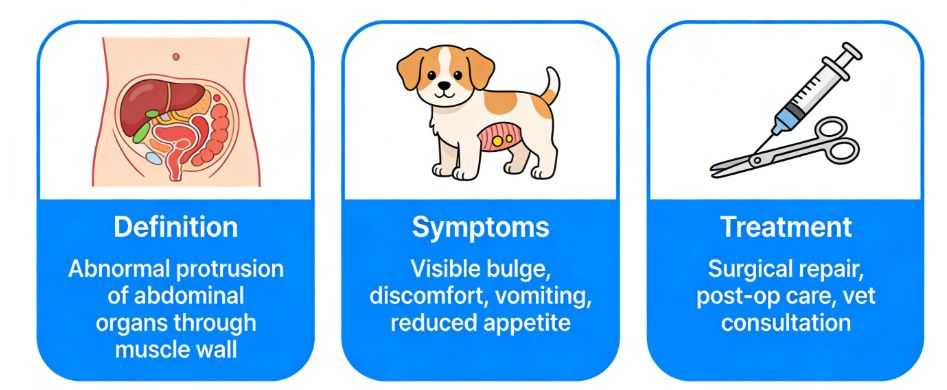
The onset time and location of most congenital hernias are difficult to predict in advance,but some breeds have a higher incidence of hernias:for example,Shar Peis and English Bulldogs are more prone to hiatal hernias,and Weimaraners are more prone to pericardial hernias.
Puppies with any type of congenital hernia are not recommended for breeding to prevent the transmission of this genetic defect to their offspring.
Although hernias can cause pain in puppies,and some severe cases can even be life-threatening,most affected puppies can recover completely with timely diagnosis and proper treatment,and subsequently live normal,healthy,and long lives.If any abnormal swelling or lumps are found on the puppy's body surface,even if there are no obvious symptoms,it is necessary to take it to the vet for examination immediately.Early diagnosis is key to ensuring effective treatment.