Information
- Home
- cats
The absence of rigorous longitudinal studies on feline onychectomy has historically led to underestimation of its consequences.However,our Québec-based research demonstrates that this intervention precipitates irreversible neurological damage and persistent discomfort.This irreversible surgical alteration warrants universal prohibition.
My professional engagement with animal pain management commenced early in my veterinary career.While specializing in anesthesia and analgesia,I observed pervasive minimization of declawed felines'distress.This clinical concern evolved into a two-decade research focus through the Groupe de recherche en pharmacologie animale du Québec(GREPAQ)at Universitéde Montréal.
Our team secured exclusive access to a feline cohort with spontaneous osteoarthritis—a progressive age-associated condition.We pioneered non-invasive assessment techniques including:
Multidimensional pain quantification protocols
Gait pattern diagnostics
Advanced neuroimaging modalities
Electrophysiological nerve function analyses
These methodologies enabled differentiation of osteoarthritis-related discomfort from declawing-induced pathology.Core findings published in Nature Scientific Reports revealed:
▸Persistent neuropathic sequelae post-onychectomy
▸Heightened nociceptive sensitivity
▸Accelerated mobility impairment(notably in larger felines)
▸Early-onset neurological overload precipitating chronic fatigue and compromised welfare
Surgical Realities
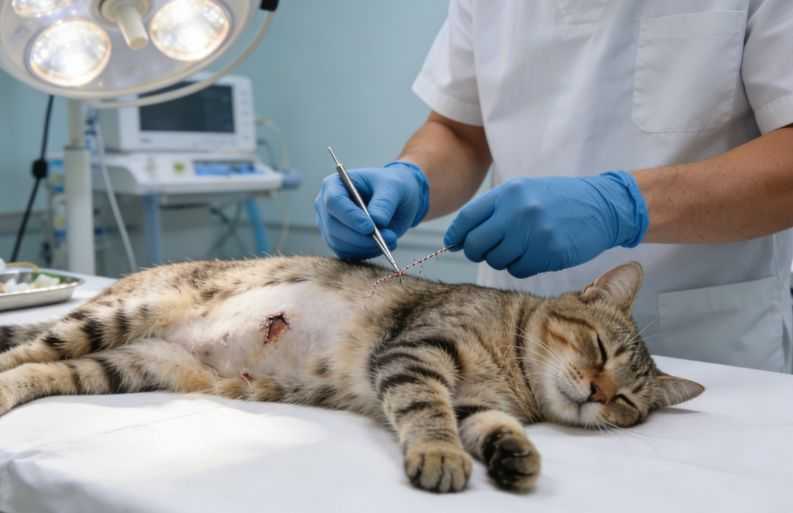
Contrary to common perception,declawing constitutes phalangeal amputation—typically of forelimb digits,occasionally all paws—utilizing scalpels,lasers,or specialized clippers.While veterinary literature compares techniques and analgesics,the procedure remains contentious despite claims of animal preservation.
The American Veterinary Medical Association's 2022 position acknowledges"inconclusive evidence regarding declawing implications."This scientific ambiguity reflects insufficient investigation into chronic post-operative pain—a gap our research addresses.
Ethical Imperatives
Having obtained my Doctorate in Veterinary Medicine during the EU's 1992 declawing prohibition,North America's prevalent practice proved concerning.As noted by ethologist Dr.Michael W.Fox(2006):
"Conscientious caregivers habituate cats to scratching surfaces...rather than electing routine onychectomy—convenience-motivated anatomical alteration."
Contrary perspectives among veterinary professionals persist,with some dismissing associated discomfort as"negligible"relative to alternative surgical interventions.These practitioners defend onychectomy through a consequentialist framework,positing its acceptability when preventing feline abandonment by owners.Consequently,this procedure remains prevalent across numerous U.S.jurisdictions and select Canadian regions,notwithstanding its prohibition in Québec since 2024.Projections indicate approximately 25 million North American felines will undergo onychectomy by 2025.
Definitive Empirical Evidence
Our longitudinal investigation involved comparative analysis of three cohorts:healthy felines,arthritic subjects,and arthritic individuals post-onychectomy.Assembling a sufficient sample size for uniform non-invasive assessment protocols required over a decade of meticulous data collection.The outcomes yield unambiguous insights:arthritic cats exhibit heightened tactile sensitivity,markedly exacerbated in onychectomized specimens.Their neural systems experience progressive overload,culminating in neurosensitization and eventual exhaustion.Concurrent biomechanical alterations impair ambulatory function,disproportionately affecting higher-weight individuals.
Behavioral pathologies accompany these physiological deficits,manifesting as:
Avoidance of vertical locomotion
Litter box neglect secondary to pododynia
Tactile hyperesthesia with withdrawal reflexes
Aberrant aggression episodes
Dr.Aude Castel's neurological investigations provide electrophysiological corroboration,revealing irreversible neural damage.These structural changes validate neurosensitization phenomena—characterized by depleted neurological reserves—aligning precisely with documented behavioral anomalies.
Ethical Imperatives and Professional Advocacy
Veterinary medicine's fundamental mandate to safeguard animal welfare is compromised by continued onychectomy performance.Contemporary evidence unequivocally reclassifies this not as routine surgery,but as ethically indefensible practice with profound iatrogenic sequelae.Clinicians must therefore:
Implement owner education initiatives highlighting chronic consequences
Promote non-invasive alternatives:behavioral modification,claw trimming,scratching substrates
Discourage tenotomy(flexor tendon transection)due to analogous chronic pain induction
Regulatory entities—including the Canadian and American Veterinary Medical Associations—must integrate these findings into policy frameworks to ensure feline protection.Universal prohibition,particularly across North America,constitutes an urgent ethical necessity.