Information
- Home
- dogs

Puppies grow rapidly,with changes observed almost daily.However,this growth is not indefinite,leading to two common concerns among owners:When will the puppy stop growing?And what will be the final size of their puppy?
The following provides a detailed overview of core knowledge related to puppy growth and development for owners'reference.
I.Key Factors Affecting Puppy Growth
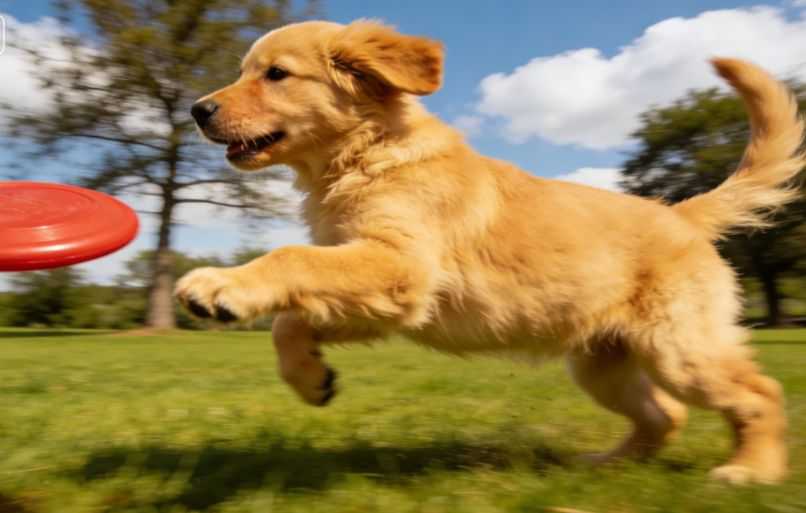
A puppy's growth rate and final size are determined by a variety of factors.Some of these factors can be controlled by the owner,while others are constrained by natural conditions.Specifically:
(I)Breed
Breed is the most critical factor determining a puppy's growth rate and the time it takes to reach its adult size.Small breeds typically reach adulthood significantly faster than large breeds.
(II)Genetics
A dog's genetic makeup lays the foundation for its size and growth rate,determining the approximate range of its growth and development.
(III)Nutrition
Insufficient food intake,underfeeding,or overfeeding can all lead to abnormal growth rates and,in severe cases,lifelong growth deformities,affecting its health.
(IV)Spaying/Neutering Age
The age at which a dog is spayed/neutered affects the timing of epiphyseal plate closure—the epiphyseal plate is the tissue at the end of the bone responsible for growth,and its closure time is directly related to the dog's growth cycle.
II.When Dogs Stop Growing
Generally speaking,small breeds grow faster but have relatively shorter growth cycles;large and giant breeds grow slower and have longer growth cycles.The typical ages of full adulthood for different breeds are shown in the table below:
Breed Size
Typical Age at Full Adulthood
Toy(5-12 lbs)
8-12 months
Small(12-24 lbs)
9-12 months
Medium(24-59 lbs)
12-15 months
Large(59-99 lbs)
15-18 months
Giant(over 100 lbs)
18-24 months
It should be noted that individual growth varies from dog to dog,but the general pattern is the same:a puppy's growth stops once the epiphyses responsible for active growth in its skeleton have completely closed.
III.Methods for Estimating the Final Size of a Puppy
While it is impossible to accurately predict a puppy's final size,veterinarians can make reasonable estimates based on their experience.The accuracy of these estimates depends on the breed of the dog.
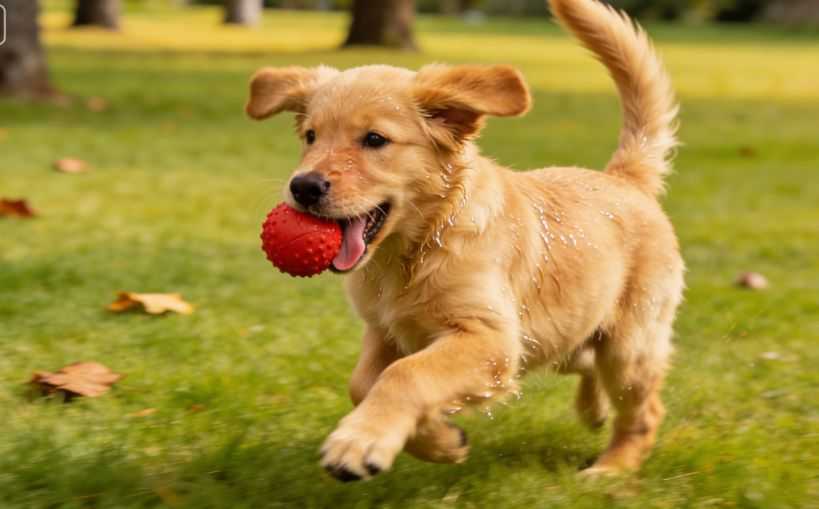
Size estimation is most accurate for purebred puppies because the weight range of adult dogs of the same breed is usually relatively fixed.Size estimation for mixed-breed puppies is more complex,as it is significantly influenced by the genetics of their parents.
If DNA testing results are available for the puppy,the accuracy of size estimation can be significantly improved.If such testing is unavailable,the veterinarian will consider multiple factors,including the size of the puppy's parents(if known),paw size,leg length,body shape,and sex.
In addition,veterinarians may sometimes use palpation of the puppy's skeletal structure or take X-rays to check the closure of the epiphyses,further aiding in size estimation(once the epiphyses close,the dog's growth essentially stops).
IV.Methods for Determining if a Dog is Fully Adult
The most scientific method for determining if a dog is fully adult is to check its epiphyseal plate closure via X-ray.
If an X-ray examination has not been performed,a rough assessment can be made by referring to the typical adult ages and size changes of the dog in the table above:If the puppy has reached the corresponding adult age and its size is no longer showing significant growth,it can be preliminarily determined that it has stopped growing.
It is recommended that owners consult a veterinarian to understand the correct care methods for puppies approaching adult size.Prematurely determining that a puppy has stopped growing and arbitrarily adjusting care measures(such as changing puppy food to adult dog food)may hinder its normal growth and development.
If the puppy's age is known,its adult weight can be roughly estimated using the following basic weight calculation formulas:
-Small and toy breeds:Multiply the puppy's weight at 6 weeks of age by 4,or its weight at 8 weeks of age by 3.The result can be used as a rough reference for its adult weight.
-Medium and large breeds:Multiply the puppy's weight at 4 months of age by 2.The result can be used to preliminarily estimate its adult weight.
V.Key Points of Puppy Care During Growth
Generally,the most crucial factor influencing a puppy's normal growth and development is scientific daily care,primarily including a balanced diet and appropriate exercise.
(I)Nutritional Care
A balanced diet is the foundation for a puppy's normal growth and development,especially ensuring that puppies consume scientifically formulated and appropriately portioned food.
Puppy-specific dog food is rich in fat,protein,and calories,fully meeting the nutritional needs of a puppy's growth and development.In addition,there are specially formulated dog foods for large breed puppies available on the market,which can effectively prevent excessively rapid growth and reduce damage to their developing joints and bones.
Poorly formulated dog food can lead to stunted growth,fragile bones,and various health problems such as hip dysplasia.Overfeeding can also damage a puppy's bones and joints,as excess weight puts undue stress on their bones.
(II)Exercise Care
Exercise is crucial for a puppy's muscle development and joint health.

Puppies need regular exercise,but overexertion should be avoided,especially for large breed puppies.In the early stages of growth,excessive jumping,running,and other strenuous activities can put significant stress on their developing joints and bones.A balanced and reasonable exercise plan helps puppies grow healthily and reduces the risk of sports injuries.
(III)Health Management
Potential health problems can also affect a puppy's normal growth and development.The most common are parasitic infections and various chronic diseases,including:
-Intestinal parasites:These can steal nutrients from a puppy's diet,hindering its growth and development;
-Chronic diseases:These can slow down a puppy's growth rate and impair its immune function;
-Growth plate damage:This can lead to uneven limb development and even deformities.
(IV)Spaying/Neutering Recommendations
As mentioned above,the age at which a puppy is spayed/neutered affects the closure time of its growth plates.Owners need to weigh this factor against the potential risks that early spaying/neutering can avoid(such as breast cancer).
It is recommended that owners consult a veterinarian to determine the most suitable time for spaying/neutering,taking into account the puppy's breed,size,and health condition.
The veterinarian will monitor the puppy's growth rate during each health check.If the owner notices abnormal growth and development,excessive weight gain,or symptoms such as bone or joint pain,it may indicate a growth-related problem,and the puppy should be taken to the vet for examination promptly.