Information
- Home
- raise
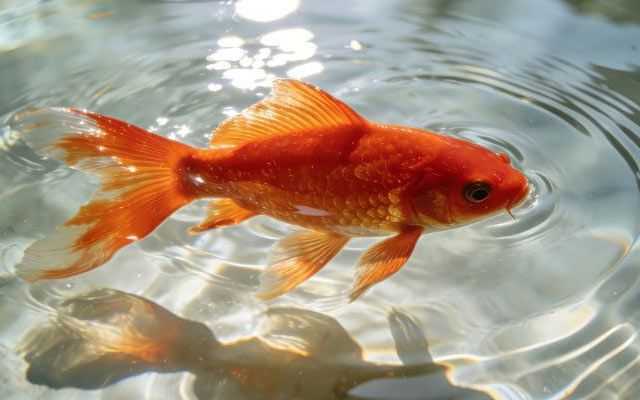
Goldfish are the most widely distributed freshwater ornamental fish in the world.Scientific and reasonable husbandry and management are crucial for extending their lifespan and ensuring their health and well-being.
Goldfish originated in Tang Dynasty China,when golden variants were discovered in common silver carp populations,and selective breeding of these variants was conducted for generations.In the 17th century,goldfish were first introduced to Europe as a symbol of good fortune,and in the 19th century,they spread to North America,gradually becoming a globally popular ornamental fish.
I.Classification of Common Goldfish and Ornamental Goldfish
Through generations of artificial breeding,there are now over 200 varieties of goldfish.Goldfish that pet owners can purchase daily mainly fall into two categories:common goldfish and ornamental goldfish.Both types exhibit rich diversity in body color,patterns,body shape,and the morphology of fins,eyes,and tails.
(I)Common Goldfish
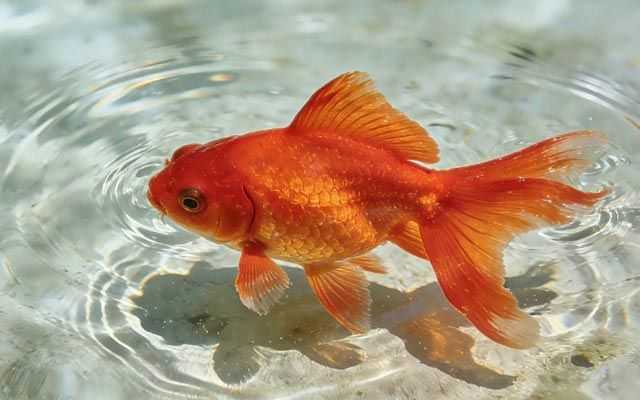
Common goldfish are relatively small,swim relatively fast,and are all single-tailed,meaning they have only one caudal fin and one anal fin.Common varieties include the Comet Goldfish,the Red-crowned Goldfish,and the Salosa Goldfish.
(II)Ornamental Goldfish
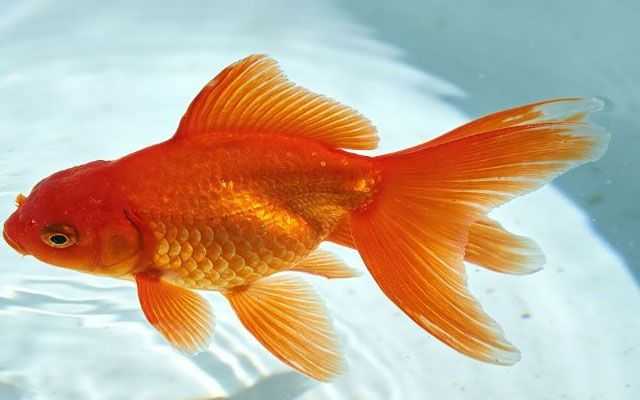
Ornamental goldfish are generally larger and swim more slowly.After artificial breeding,they are more vibrant and elegant in appearance than ordinary goldfish.The number of fins varies depending on the variety.Common varieties include Fairy Goldfish,Jade Goldfish,Wagyu Goldfish,Fan-tail Goldfish,Ryukin Goldfish,Telescope Goldfish,Butterfly Tail Goldfish,Pompom Goldfish,Lionhead Goldfish,Ranchu Goldfish,Sky Eye Goldfish,and Bubble Eye Goldfish.
II.Lifespan Range of Goldfish
The natural lifespan of goldfish is usually 10 to 15 years.With excellent breeding conditions,some individuals can live up to 20 years.Meticulous care is a key factor in extending the lifespan of goldfish.
III.Core Requirements for Goldfish Care
(I)Aquarium Size Requirements
The size of the aquarium needs to be determined according to the goldfish variety and adult size.Different varieties of goldfish have different water space requirements.Generally,each goldfish requires approximately 20 gallons(76 liters)of water.Some larger species require more space,with a water volume of 50 to 100 gallons(equivalent to 140 to 300 liters).
(II)Water Quality Standards
High-quality water is essential for the health of goldfish.The pH level of the aquarium water should be maintained between 7.0 and 8.4,and regular water quality testing is necessary.If using a freshwater aquarium,it is recommended to test the water quality weekly using a water quality test kit.
Water aeration is crucial for maintaining the oxygen content in the aquarium.This can be achieved using an air pump with an air stone,or by using a filter that produces noticeable water flow to ensure that the dissolved oxygen level meets the goldfish's survival needs.
(III)Filtration System Configuration
A filtration system is an essential piece of equipment for goldfish keeping.Its core function is to remove fine particulate matter from the water while simultaneously creating a biological filtration system.The filter selection should meet the requirement of completing at least 5 water cycles per hour.For example,a 20-gallon aquarium should be equipped with a filter that can process at least 100 gallons of water per hour.
(IV)Heating Equipment Requirements
Goldfish thrive in water temperatures ranging from room temperature,specifically 72 to 76 degrees Fahrenheit(equivalent to 22 to 24 degrees Celsius).Whether heating equipment is needed depends on the ambient room temperature of the enclosure,ensuring the water temperature remains stable within this range.Temperatures exceeding this range can lead to increased appetite,accelerated water pollution,and negatively impact their health.
(V)Optimal Keeping Temperature
While goldfish are classified as cold-water fish,they can also thrive in relatively warm environments.The key is to maintain a stable water temperature and avoid drastic fluctuations.
(VI)Aquatic Plants and Decorations
Installing aquariums with aquatic plants and decorations can simulate their natural habitat and enhance the aesthetic appeal of the enclosure.Note that goldfish are omnivorous and may eat or remove some of the live plants.It is recommended to choose plant varieties with a less palatable taste,faster growth rate,and less likely to be completely consumed by goldfish,such as*Vallisneria spp.*,*Anubias*,*Java fern*,and*Cryptocoryne*.
Gravel substrate can be laid at the bottom of the aquarium to enhance the artificiality of the environment.Goldfish will take the substrate into their mouths and then spit it out;this is a normal physiological behavior.Goldfish keeping kits are available commercially to help beginners easily get started.
IV.Goldfish Feeding and Management
(I)Food Type Selection
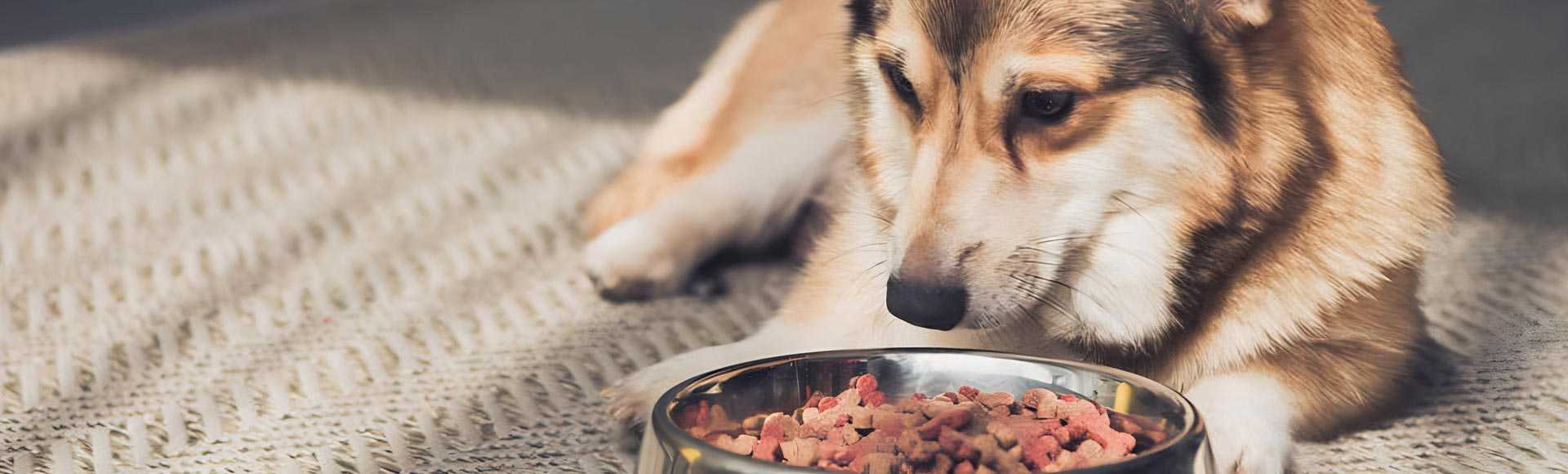
Goldfish are primarily omnivorous and can be fed sinking pellet food.Their daily diet should contain approximately 30%protein.Pellet food has a longer shelf life and better stability than flake food;extra care should be taken when feeding flake food,as it mostly floats on the surface.If goldfish frequently feed at the surface,it may cause buoyancy problems.
Supplementary foods include live or frozen brine shrimp,daphnia,and krill.Occasionally,vegetables such as romaine lettuce can be added to increase nutritional diversity.
(II)Feeding Frequency Standards
Adult goldfish only need to be fed once a day.Juvenile goldfish,during their growth and development period,can have their feeding frequency increased appropriately to meet their growth needs.
V.Aquarium Cleaning Procedure
Goldfish keeping requires regular aquarium cleaning.The cleaning frequency should be determined based on the aquarium size,stocking density,and filtration system efficiency.Special attention should be paid to thoroughly washing hands before and after cleaning the aquarium to avoid cross-contamination.Specific cleaning steps are as follows:
1.Turn off the filtration system,heating equipment,and lighting to ensure safe operation.
2.Remove all decorations from the aquarium and place them on a dedicated bucket or clean towel.Use a dedicated brush and/or toothbrush to scrub them clean.
3.Use an acrylic or glass brush to scrub the inner walls of the aquarium to remove attached dirt and algae.
4.Insert the siphon tube into the aquarium and activate the siphon function to direct wastewater into the bucket.Move the siphon tube up and down,sucking in a small amount of substrate each time,circulating the water for 1-2 seconds before lifting the siphon tube to stop the siphoning.Repeat this process until all substrate at the bottom of the aquarium is cleaned.
5.Remove the filter media(sponge,filter balls,filter lines,or filter stones)from the filtration system and rinse them thoroughly in the bucket containing the aquarium wastewater.Do not use tap water to rinse them directly,as this will kill the beneficial bacteria that decompose ammonia and nitrite in the water and disrupt the biological filtration system.
6.Rinse the bucket thoroughly and add fresh water.Use a thermometer to check the water temperature,ensuring it matches the aquarium water temperature to avoid stimulating the goldfish with a large temperature difference.
7.Add the water conditioner according to the manufacturer's instructions.Slowly pour the treated fresh water into the main aquarium,then return the decorations,lighting,heating equipment,and filtration system to the tank in that order,restoring normal fishkeeping conditions.
VI.Principles of Keeping Goldfish Together
Most goldfish prefer to live alone,but some individuals may exhibit aggression towards other fish.Goldfish can be kept alone or coexist harmoniously with other fish,depending on individual personality differences.
If planning to keep multiple goldfish,it is recommended to prioritize keeping them with the same breed;they can also be kept with other cold-water fish such as white cloud mountain minnows,but it is essential to ensure that the water temperature requirements and habits of the mixed species are compatible.
Goldfish make vibrant and fun family pets.With a suitable environment and proper care,they can live long and healthy lives.Goldfish are relatively easy to keep and are suitable for beginners(including children),becoming excellent companions for many years.
VII.Frequently Asked Questions about Goldfish Keeping
1.How long do goldfish live?
With proper care and management,goldfish can typically live for 10 to 15 years.
2.Can goldfish be kept in tap water?
No.Tap water contains harmful substances such as chlorine and chloramine,which are toxic to goldfish.Tap water used in fish tanks must be treated with a water conditioner beforehand to remove harmful chemicals before use.
3.Can goldfish be kept in small fish tanks?
A long-standing misconception about goldfish keeping is that they can thrive in small fish tanks,which is incorrect.Small tanks and other confined spaces severely restrict the goldfish's activity range,disrupt the aquatic ecological balance,and affect their survival and health.
4.Do goldfish need companions?
Goldfish can be kept alone,but they are inherently schooling fish,and having at least one companion is beneficial to their physical and mental health.Goldfish enjoy interaction with their own kind;keeping multiple goldfish can increase their activity level and provide a sense of companionship.Some goldfish are less compatible with their own kind and require interaction and social stimulation from their owner.