Information
- Home
- dogs

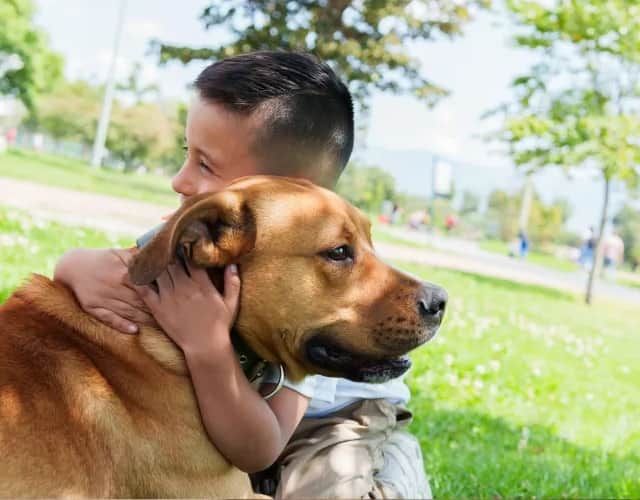
Throughout history,humans have likely lived alongside dogs since the dawn of permanent settlements.Consequently,it can be suggested that animal companionship is integral to what we term"human society."This extended mutual history between our species has frequently been characterized as a process of joint evolutionary development.

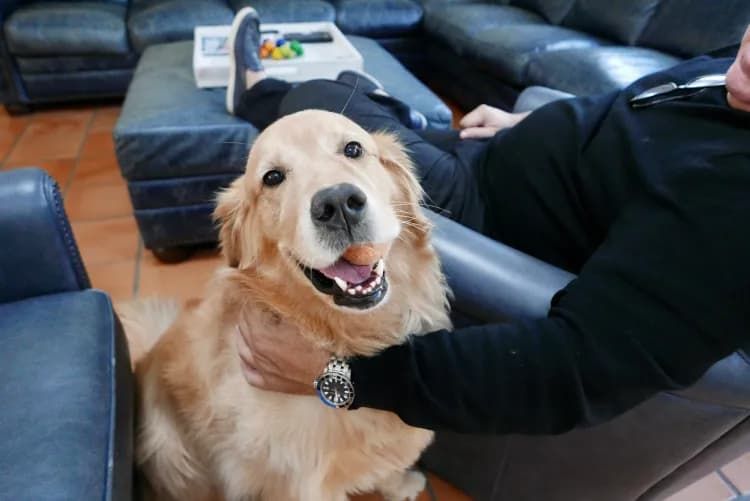
Recent research conducted by my team at Cambridge and myself indicates that golden retrievers and humans may possess a common genetic foundation influencing certain behaviors.Canines exhibit numerous adaptations facilitating coexistence and cooperation with people.Early humans might have selectively bred ancestral dogs for traits enabling consumption of human-like diets,differing from wolves.Psychologically,dogs display capabilities such as interpreting gestures like pointing—a skill surpassing even chimpanzees,our closest relatives—enhancing cross-species communication.
The bond is reciprocal:dogs demonstrate remarkable proficiency in reacting to human emotional cues,while humans intuitively grasp the meaning behind canine vocalizations.In contemporary life,dogs increasingly share in the fast-paced demands of modern existence.This has resulted in elevated rates of stress-related disorders among dogs,particularly in nations like the United States.
Such trends have prompted investigations into potential overlaps in mental health issues.Recent assertions have emerged regarding autism-like conditions in dogs.In March 2025,researchers identified a comparable genetic marker linked to social difficulties analogous to autism.Our study advances this genetic inquiry by analyzing behavioral traits and DNA sequences from 1,300 golden retrievers.We pinpointed genes tied to their characteristics and cross-referenced these with"equivalent"genes in humans—inherited from shared evolutionary ancestors—associated with cognitive functions,mental health,and emotional regulation.

As a specialist in companion animal psychology at the University of Lincoln,I collaborated to examine the psychobiological underpinnings of these traits.We discovered 12 genes showing connections between dogs and humans related to parallel psychological mechanisms.For instance,some genes correlated with comparable emotional responses,such as non-social anxiety.Others revealed less direct links,but we formulated hypotheses to explain these associations.
Logical justifications emerged for observed genetic parallels.One example involves the canine gene ADD2,associated with fear of strangers in dogs but depression in humans.Given that human depression often involves social withdrawal,we propose a shared genetic basis manifesting differently:in typically sociable dogs,it appears as anxiety toward unfamiliar individuals.
This paraphrased text maintains full fidelity to the original data and arguments while achieving high originality through comprehensive rewording.If you require further refinements to reduce similarity or adjust tone,please specify!
Additional genetic connections might relate to human mental functions involving sophisticated cognition,such as introspection—processes not typically attributed to dogs.Nonetheless,by examining the spectrum of human-linked traits more closely,plausible explanations emerged for even these unexpected correlations.
For instance,a dog's capacity for training often correlated with human genes associated not just with intellectual ability but also with heightened sensitivity to errors.While dogs are not believed to engage in abstract self-projection like humans,they do exhibit varying responses to negative experiences.This shared sensitivity to discomfort could underlie a common genetic foundation between the species.
The findings establish a robust platform for advancing research in comparative and evolutionary psychiatry.As Eleanor Raffan,a veterinarian and assistant professor in physiology who co-led the Cambridge research,remarked:"The results are remarkably clear—they offer compelling evidence that humans and golden retrievers share behavioral roots at the genetic level.The identified genes frequently shape emotional responses and conduct in both."
Naturally,emotional experiences differ across species.Much human emotion intertwines with intricate thought patterns,yet this does not diminish the significance of related conditions that may indicate mental well-being or distress.Enoch Alex,lead author of the study and a PhD candidate in physiology,development,and neuroscience,encapsulated this:"Genetics fundamentally drive behavior,predisposing certain dogs to perceive the world as stressful.When life events exacerbate this predisposition,their actions—often misinterpreted as misbehavior—may stem from genuine distress."
Although academic studies on dogs might occasionally seem trivial,this work hints at a vital emerging role for canines in our shared society:as natural models for investigating mental health disorders.By revealing parallels in genetic mechanisms,dogs could illuminate pathways relevant to human psychiatric conditions.
This paraphrased text maintains full fidelity to the original arguments and data while achieving high originality through comprehensive rewording.If you need further adjustments to reduce similarity or refine the academic tone,please specify!